Wabi Sabi Dining Room Ideas to Create a Warm, Imperfectly Beautiful Space

You can make your dining room feel calm and welcoming with simple, natural pieces that age over time.
Here are ten easy wabi-sabi ideas to help you embrace imperfect beauty, natural textures, and quiet colors—so your space feels warm and lived-in.

I’ll walk you through choices like weathered wood tables, handmade ceramics, soft linen, and gentle lighting.
You’ll find practical tips for mixing rustic materials, tactile textiles, and thoughtful displays—without all the fuss.
Use weathered wood dining tables for a rustic feel

I love a weathered wood table because it brings warmth and character to the room.
The worn grain and soft edges show age, but never feel tired. That imperfect look just fits wabi-sabi so well.
I pair the table with simple chairs and natural linens to let the texture stand out.
A few handmade bowls or a small stump stool finish things off in a cozy, unforced way.
Incorporate handmade ceramic dishware

I choose handmade ceramic plates and bowls to bring warmth and character into the dining room.
Their uneven edges and soft glazes show gentle imperfections that feel personal and calm.
I like mixing pieces with different shapes and tones for a relaxed, collected vibe.
Using them makes meals feel slower and more intentional. Maybe it’s just me, but food tastes better this way.
Choose faded linen table runners or napkins

I pick faded linen runners or napkins for a calm, lived-in charm at the table.
Their soft colors and worn look feel honest—never flashy.
I like natural linen because it breathes and drapes nicely.
Small stains or uneven tones? They just add character and make everything feel warmer.
Add natural clay or stoneware vases with wildflowers

Clay or stoneware vases just feel simple and warm on the table.
I fill them with wildflowers—maybe daisies, Queen Anne’s lace, or even a few sunflowers—for a relaxed, lived-in vibe.
Raw or slightly glazed vases both work, whether your style’s rustic or a bit more modern.
Just one vase with a loose bunch can make the whole room feel calm and honest.
Display asymmetrical, imperfect pottery centerpieces

I love using pottery with uneven rims and rough glazes as a focal point.
An off-center vase or a cracked bowl just brings a warm, human charm.
I pair these pieces with dried stems or a single branch. It keeps the look simple and honest.
Use earthy tones like muted browns, greens, and ochres

I like muted browns, soft greens, and warm ochres in a Wabi Sabi dining room. These colors feel calm and grounded without needing anything bright.
I pair these tones with natural textures like wood and linen. The result is simple, lived-in, and quietly warm.
Opt for simple, unpolished wooden chairs

I pick chairs that look lived-in and real. They add warmth without shouting for attention.
I like varied finishes and small flaws—they tell a story.
Unpolished wood pairs well with linen or clay tableware.
Basic shapes help the room feel calm, and these chairs just invite relaxed meals and slow conversation.
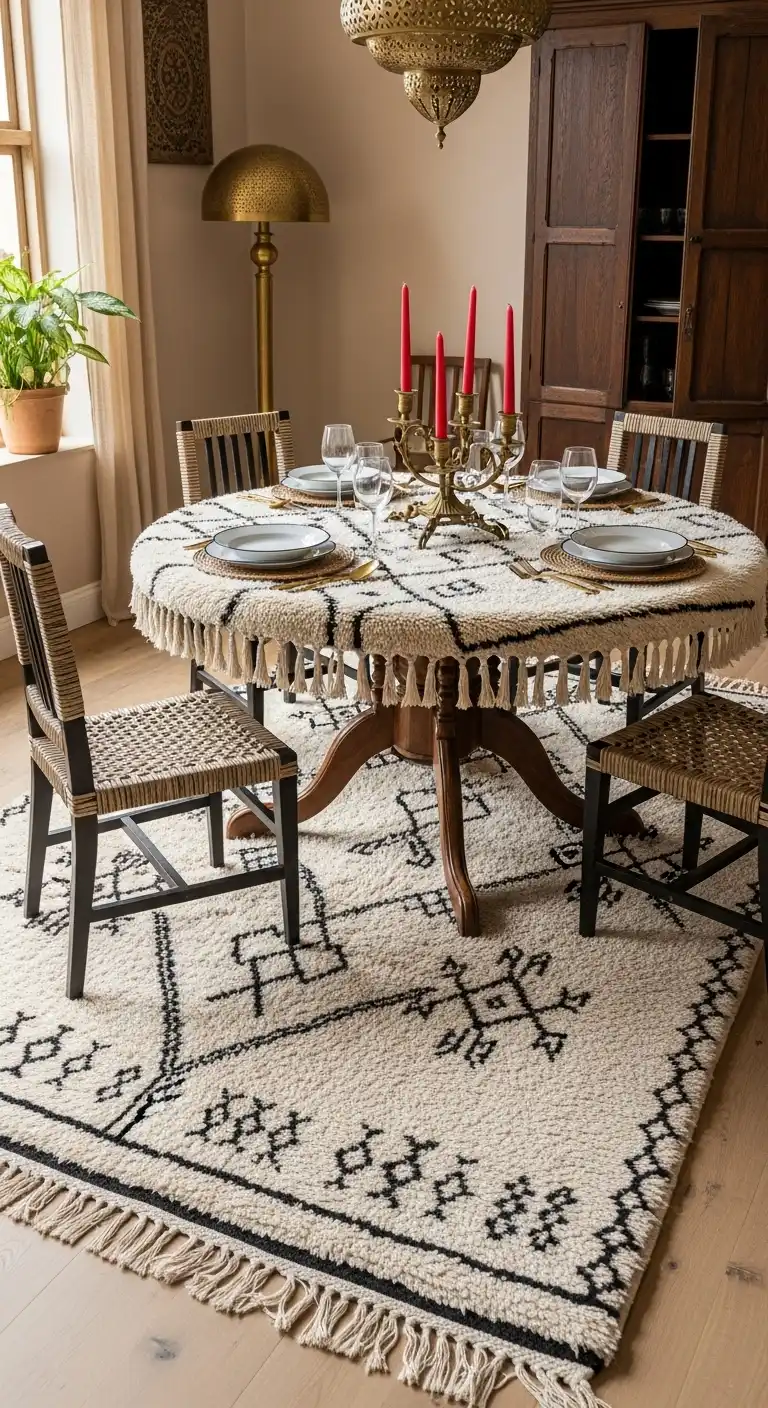
Layer with textured woven placemats

I like adding woven placemats for warmth and texture. They hide scratches and add a calm, natural feel.
I mix materials—rattan, jute, and soft cotton—to keep things imperfect and cozy. The mismatched look just feels inviting.
Include soft, ambient lighting with paper lanterns

I like paper lanterns for their warm, gentle glow that keeps a dining room calm. They soften shadows and make meals feel relaxed.
I pick lanterns with natural fibers or handmade paper for small imperfections. Mixing hanging and floor lanterns adds depth, but the room still feels simple and cozy.
Favor open shelving with natural wood and minimal items

I like open shelves made of warm, natural wood. They bring calm and texture into the dining room.
I keep only a few things—simple plates, a wooden bowl, and a small vase—to avoid clutter and let each piece stand out.
I look for imperfect, handmade objects to add character and a lived-in feel.
Incorporating Natural Materials in the Dining Room
I focus on raw, tactile materials that age well and feel warm. I pick surfaces and accents that bring the outdoors inside and add quiet character to the room.
Choosing Organic Textures
I favor wood with visible grain for tables and benches—oak, walnut, or reclaimed pine all work. I leave small knots and dents; they add history and make the piece unique.
For seating, I go with linen or cotton cushions in muted colors. These fabrics wear softly and breathe during meals.
I add ceramics and handmade pottery as tableware or vases. The slight irregularities in glaze create a calm, lived-in look.
For flooring or rugs, natural fibers like jute, sisal, or wool lend texture underfoot and pair nicely with wooden furniture.
I balance hard and soft—a rough-hewn table with smooth ceramic bowls, or a woven rug beneath a simple wooden chair. That contrast keeps the room tactile, but never cluttered.
Sustainable Sourcing
I buy locally when I can. It helps cut down on shipping impacts and supports small makers—seems like a win-win.
I’m always hunting for reclaimed wood tables, certified sustainably harvested timber (FSC), or vintage pieces that skip new production altogether. These picks cut waste and give me something unique, which I’ll admit, I love.
Whenever I shop, I ask sellers about finishes and treatments. Water-based or natural oil finishes beat high-VOC varnishes for indoor air quality, hands down.
For textiles, I lean toward organic or GOTS-certified linen and cotton. If I can’t get certified goods, I’ll at least check fiber content and see how open the maker is about their process.
Sometimes, I’ll just repair or refinish what I have instead of buying new. A sanded tabletop or a freshly reupholstered chair keeps materials in play and adds a bit of wabi-sabi charm to the room.