8 Dining Room Wall Decor Ideas to Refresh Your Space with Friendly Style

You want your dining room to feel finished and welcoming, not like some afterthought.
Here are some simple, stylish wall decor ideas that help you create a warm focal point and lift the room’s mood, without needing a big budget or major work.
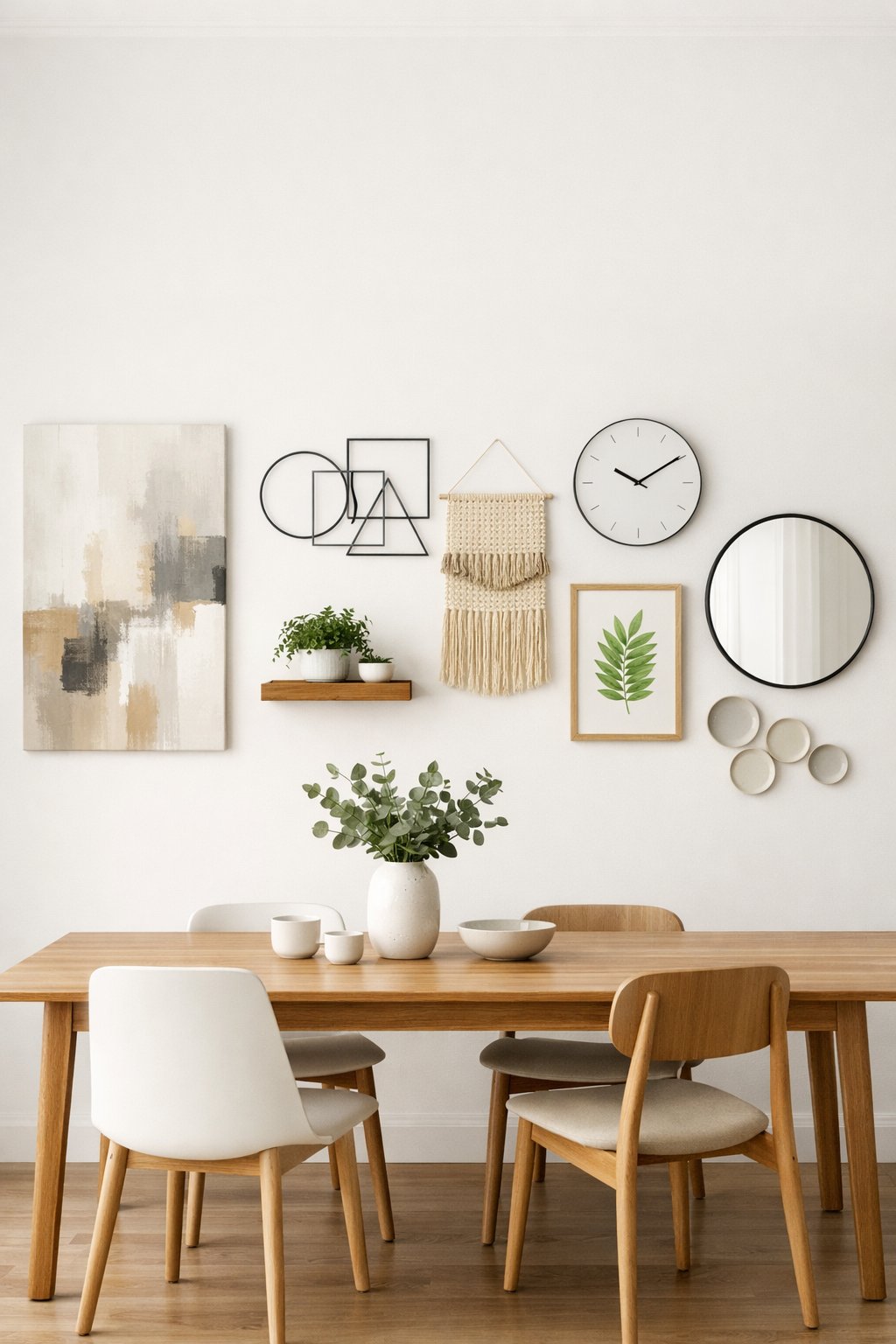
These eight ideas give you clear options—art, mirrors, wallpaper, shelves, and textures—that make picking wall decor feel less overwhelming.
I’ll walk you through mixing frames, mirrors, plants, patterns, and objects so your space looks thoughtful and balanced, but still personal.
Gallery wall with mismatched frames
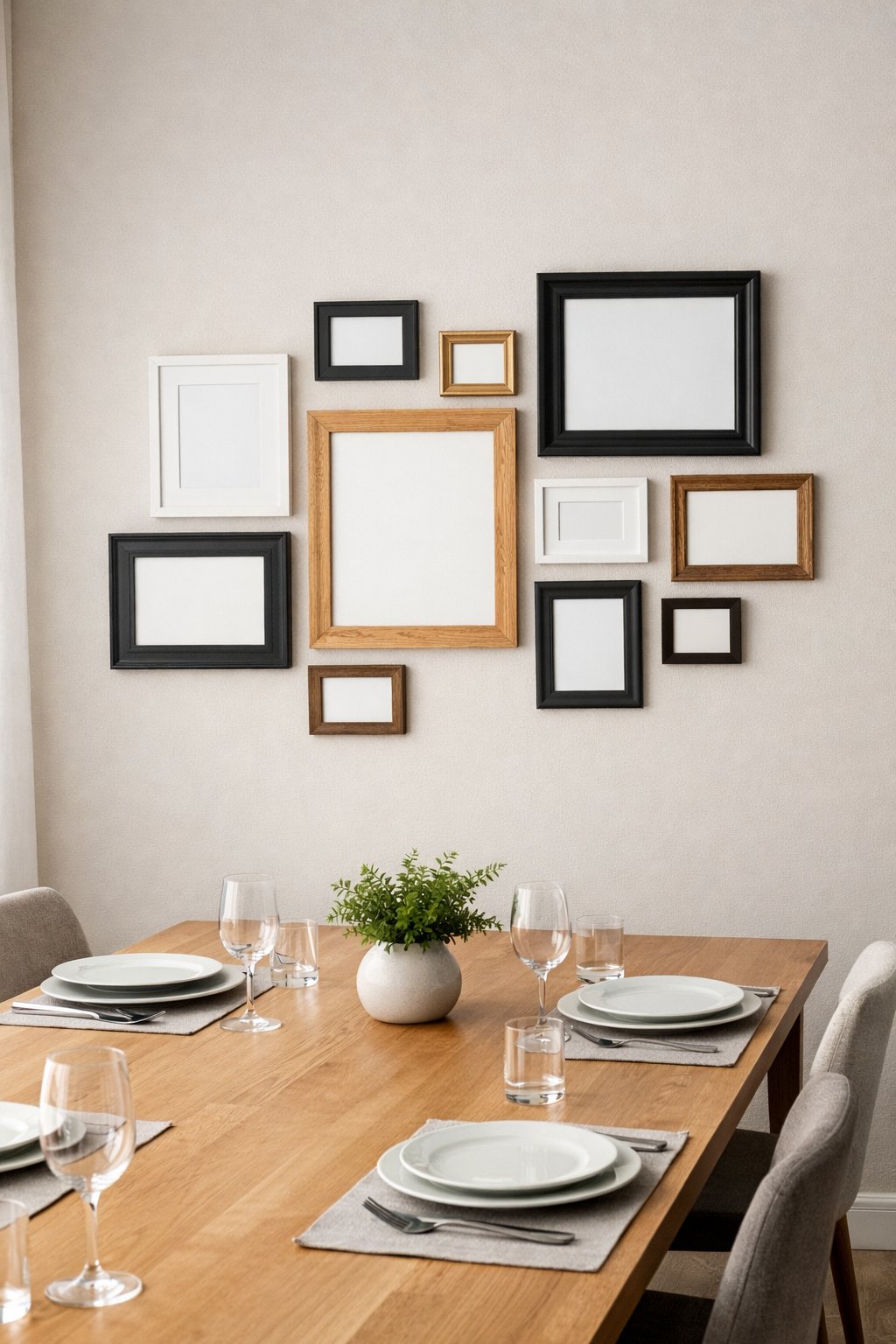
I mixed photos, paintings, and prints in all sorts of frames to make my dining room feel collected and cozy.
The varied frames add texture and keep your eyes moving without making things feel too busy.
I balanced colors and sizes so the wall reads as one piece, even though every frame is different.
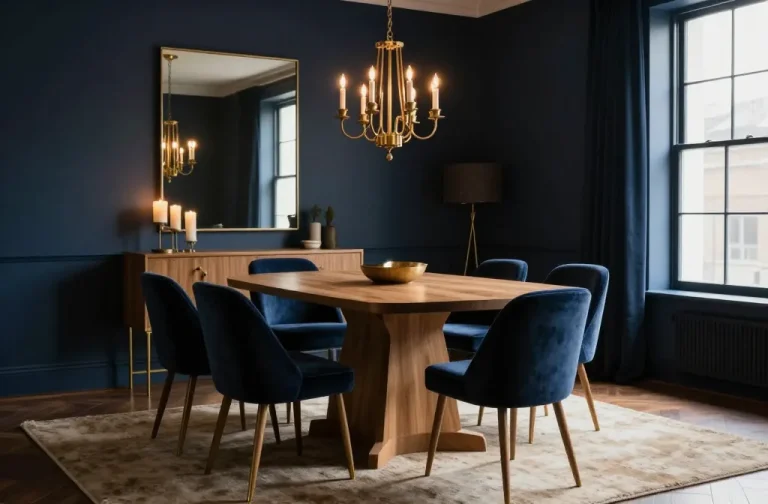
Large vintage mirror as focal point
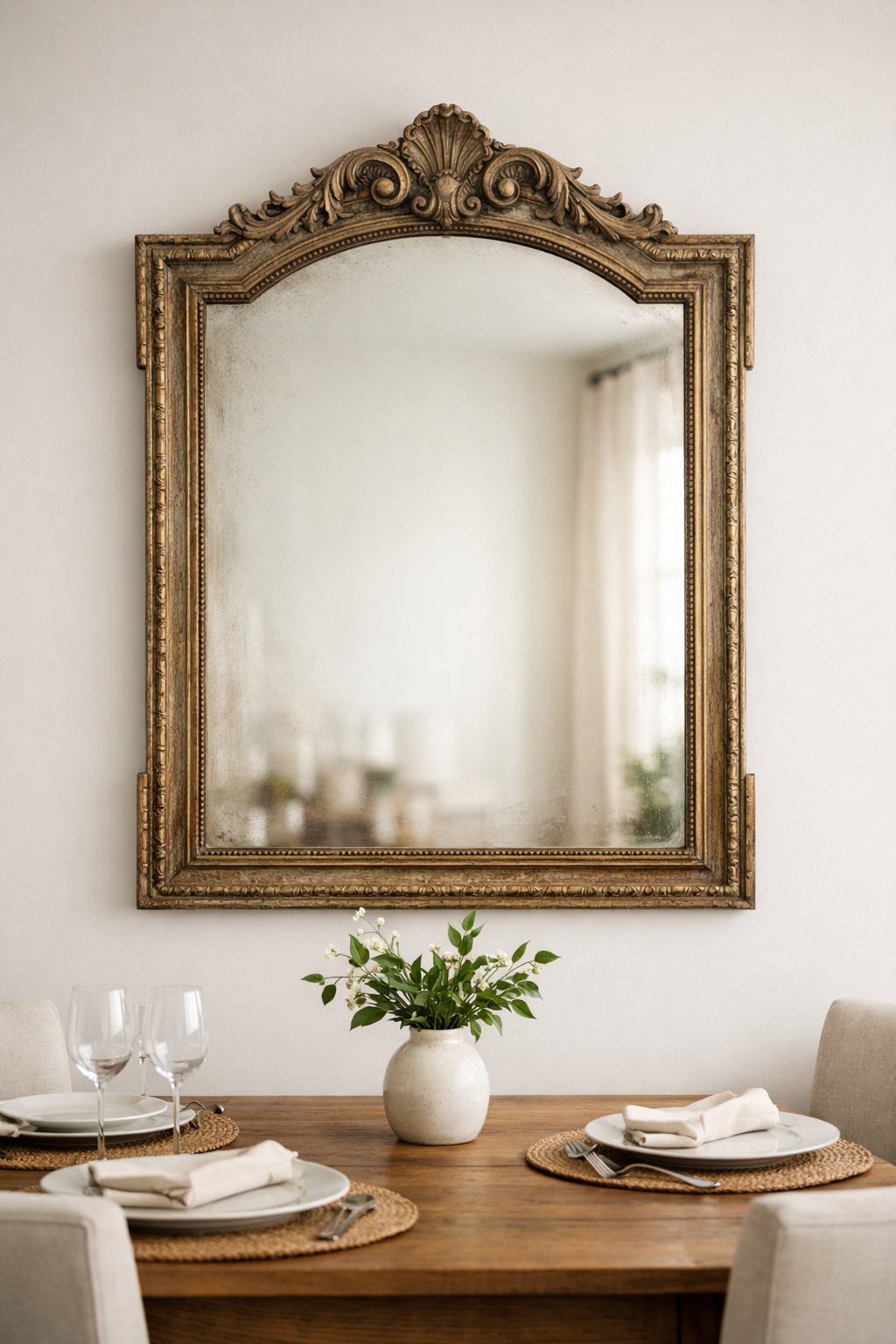
I picked a large vintage mirror to anchor my dining room, and it instantly adds warmth. The aged frame brings some real character without taking over the whole room.
I placed it behind the table, so it reflects light and makes the space feel bigger.
It works especially well with simple furniture and a soft color palette.
Botanical prints in wooden frames
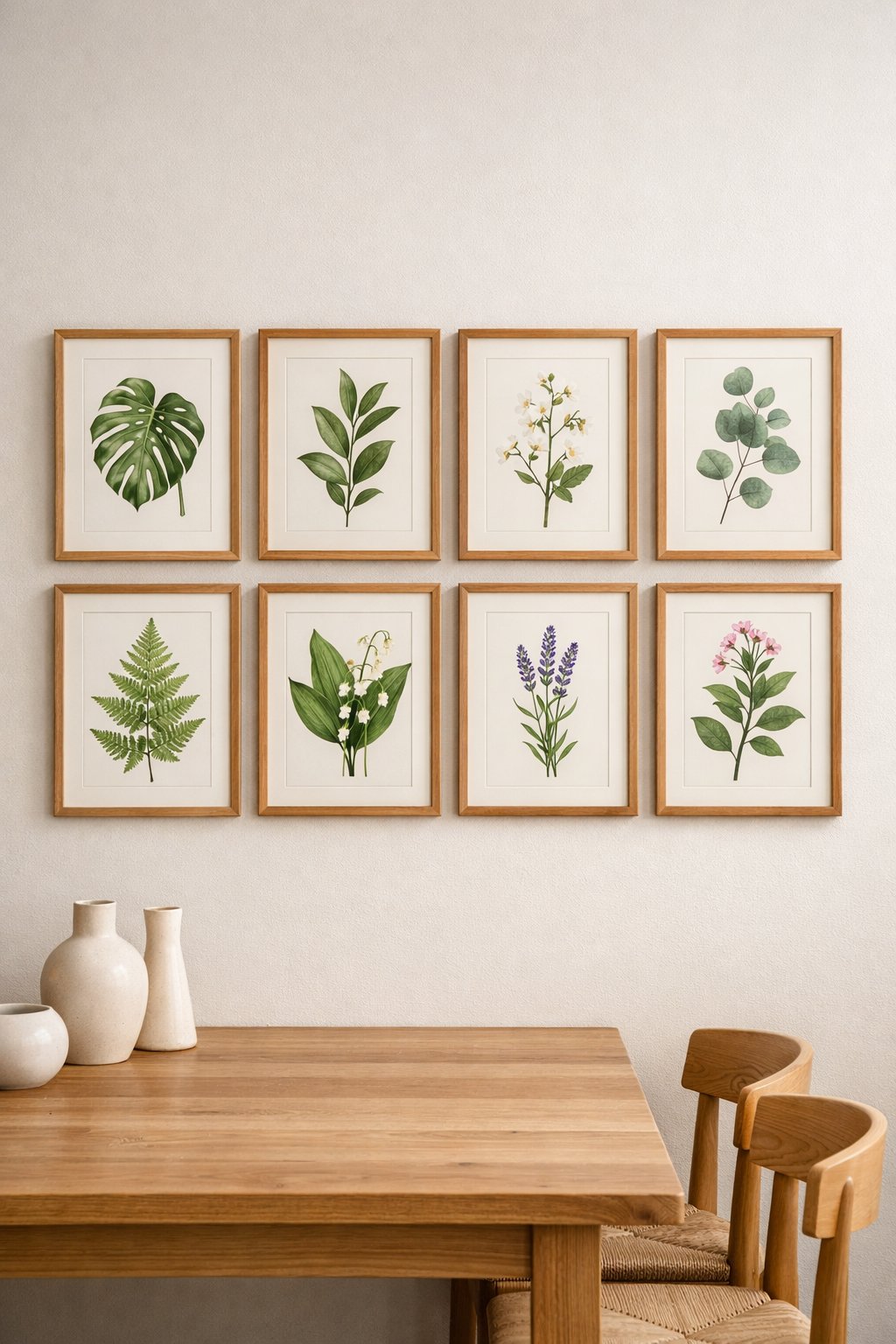
Botanical prints just bring calm to a dining room, don’t they? I use wood frames for a bit of warmth and a natural feel.
Hanging a mix of sizes helps keep things balanced.
Small plants on the table echo the art and tie everything together.
Geometric patterned wallpaper
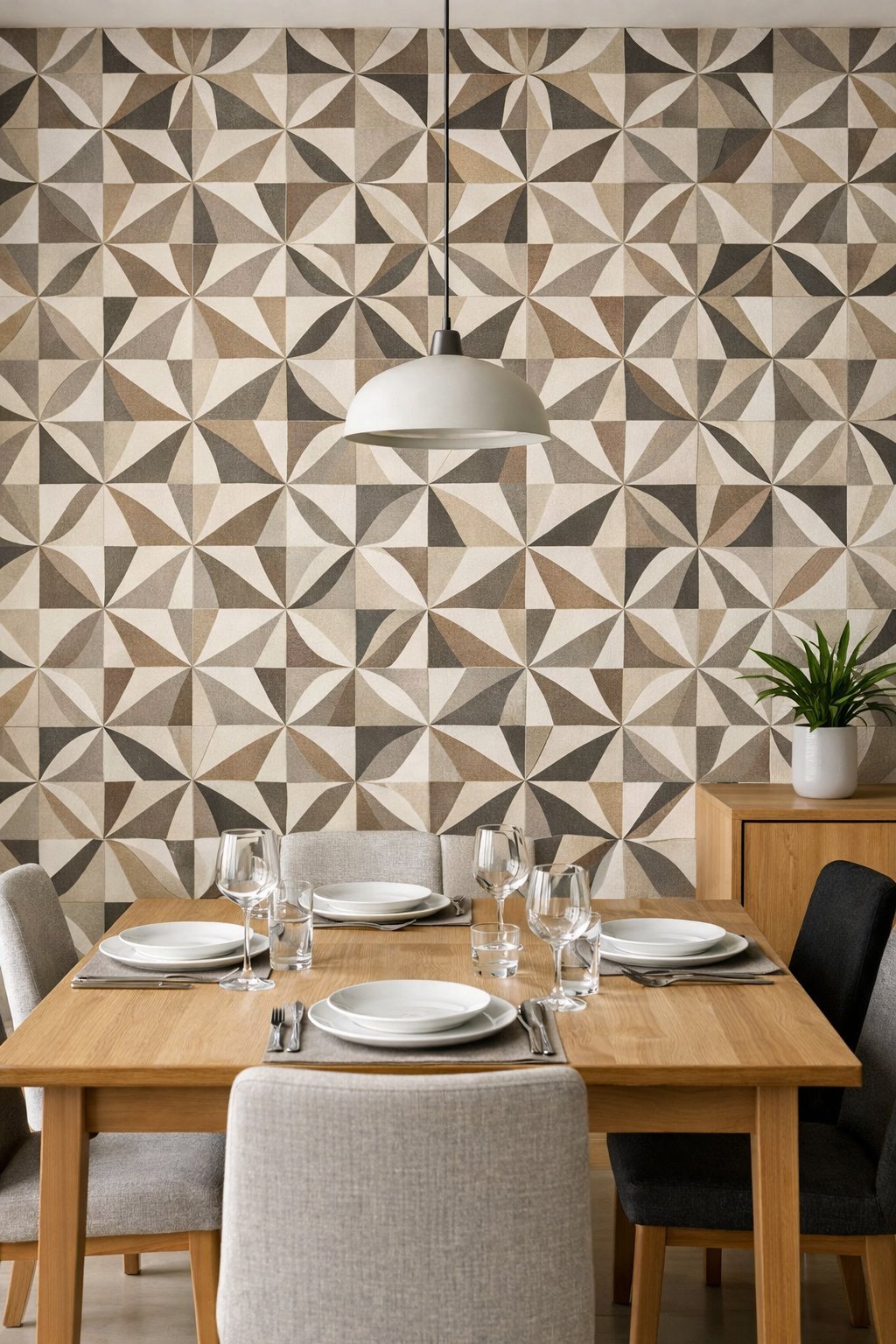
Geometric wallpaper just works—clean lines, bold shapes, and it adds energy without needing much else.
I like triangles, hexagons, or mid-century motifs for a focal wall.
Pairing the pattern with simple furniture keeps things fresh and balanced.
Floating shelves with ceramics
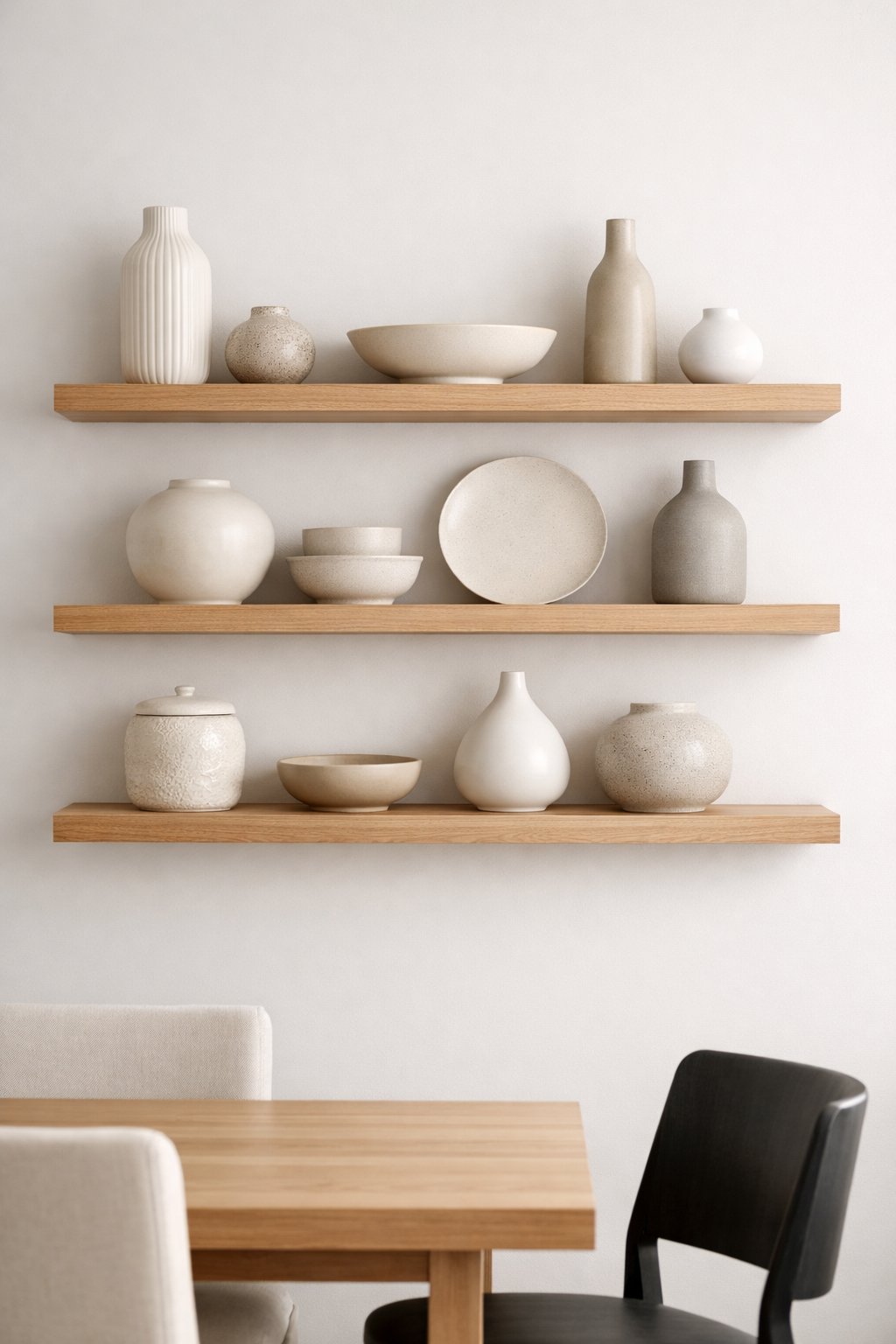
Floating shelves are my go-to for showing off ceramics—they feel light and tidy.
I mix plates, pitchers, and small bowls for color and shape without crowding the space.
I put taller pieces at the back and smaller ones in front for balance.
A couple of plants or a framed photo make the shelves feel more personal.
Statement metal wall sculpture
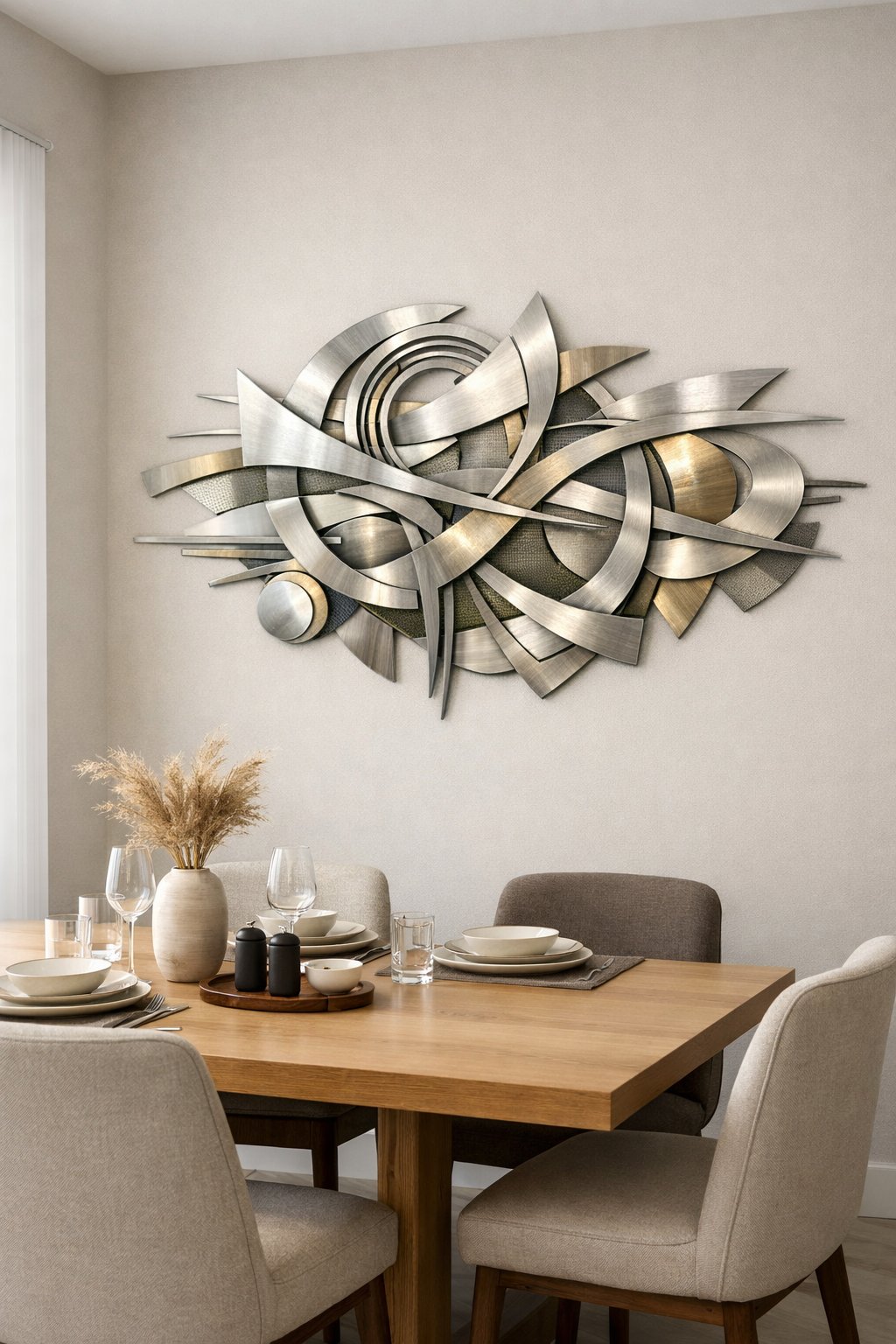
I went for a bold metal sculpture to anchor my dining room wall.
It adds texture and a modern vibe, and you don’t lose any floor space.
The piece bounces light around and shifts depending on where you stand.
I like mixing finishes—brushed bronze, a bit of copper—for subtle contrast.
Textured woven wall hangings
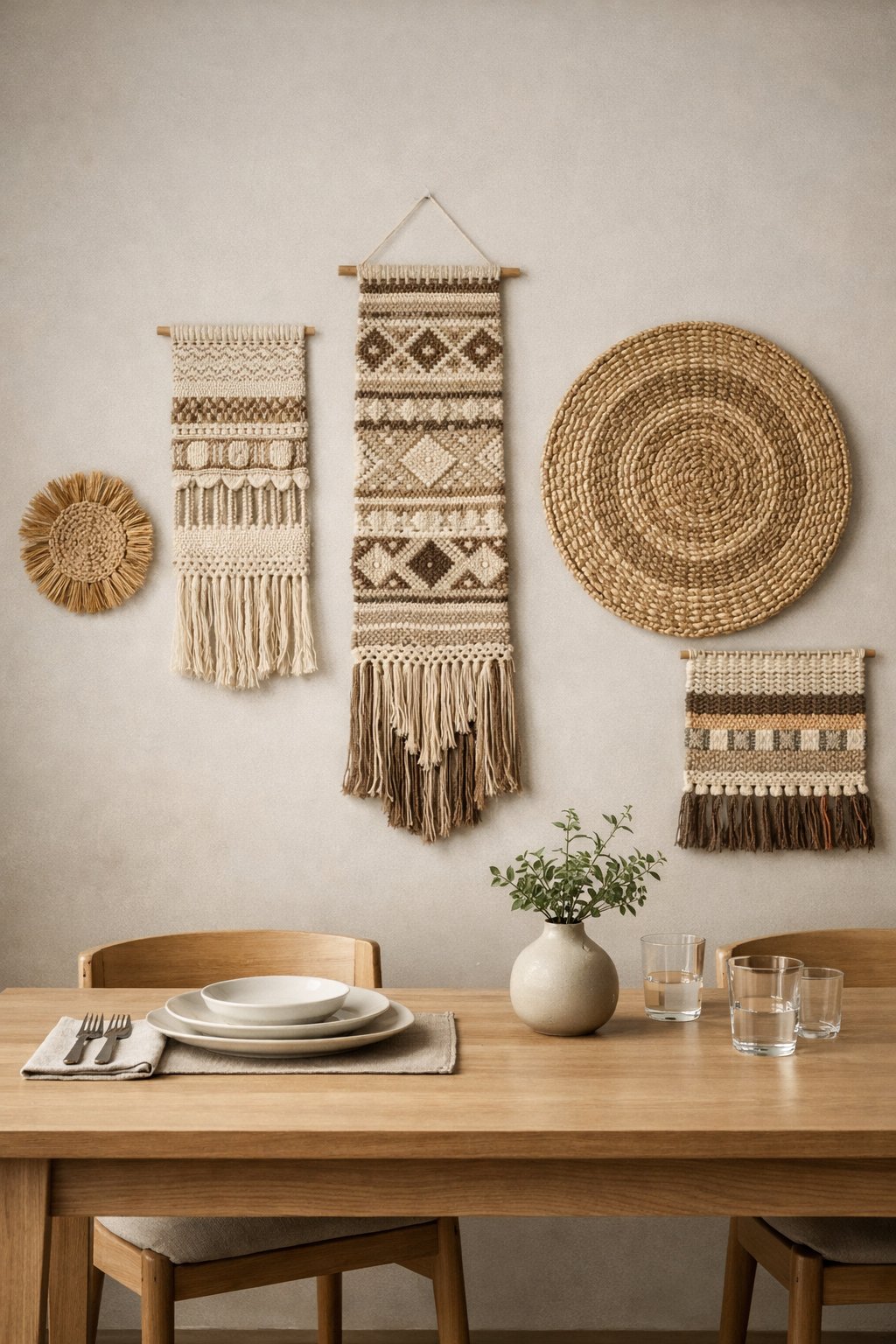
Woven hangings just bring soft texture and warmth to the dining room.
They work nicely above a buffet or between windows and don’t fight with bold furniture.
I pick pieces with natural fibers or subtle colors to keep things calm. The tactile look adds interest but doesn’t clutter the room.
Framed abstract art pieces
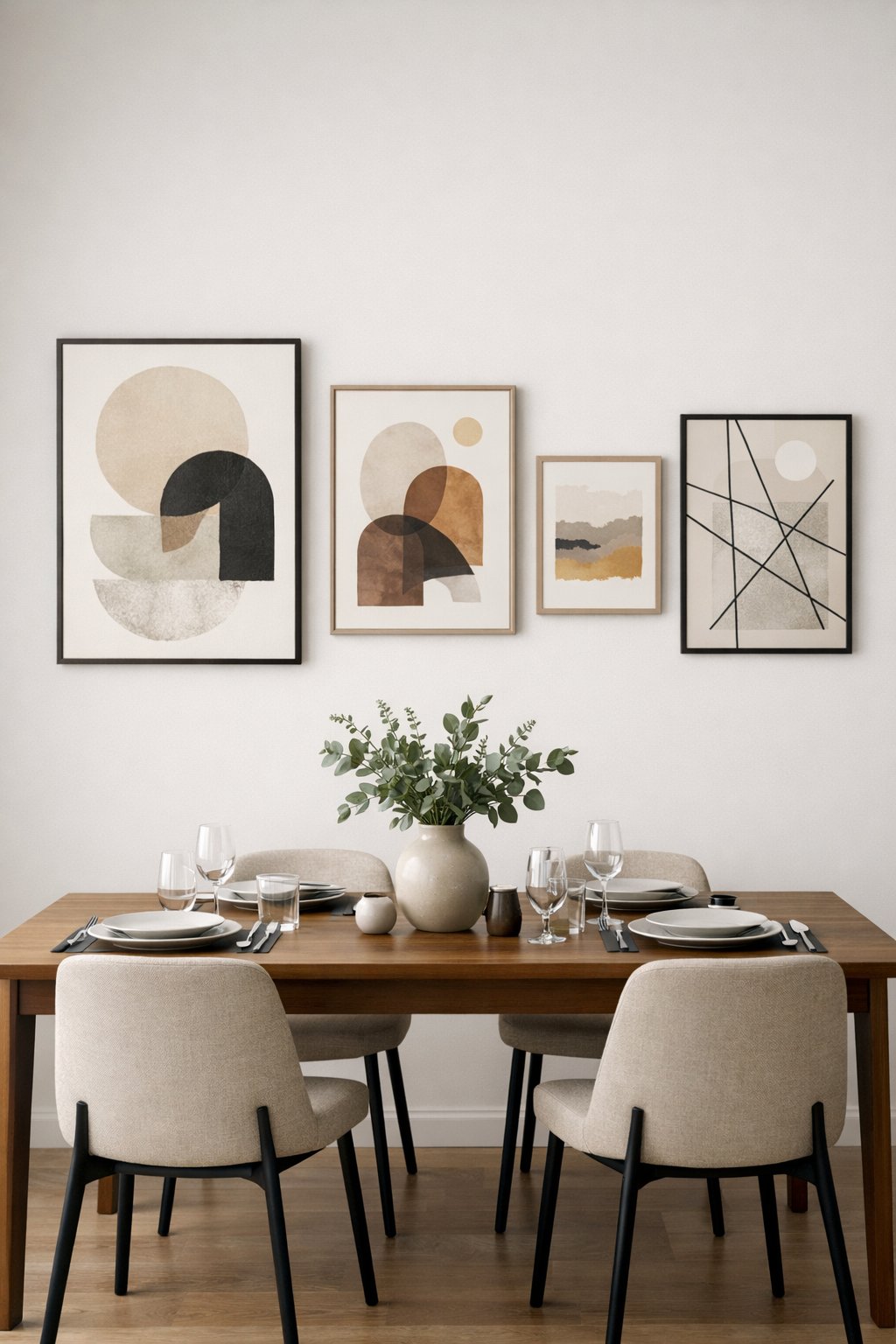
Framed abstract art just works for the dining room—it adds color without being too literal.
A single big piece or a set of small prints can totally shift the mood.
I try to pick frames that match my table or trim so things stay calm.
Abstract shapes spark conversation and guests notice something new every time.
How Wall Decor Complements Your Dining Room
Wall decor ties together furniture, lighting, and accessories in a way that just feels right.
I focus on picking pieces that match scale, color, and texture so the room feels planned and cozy.
Creating a Cohesive Style
I usually start by naming the style I’m after—modern, farmhouse, or mid-century—and pick one main detail to repeat.
For mid-century, I’ll use warm wood frames, tapered-leg furniture, and some brass accents.
That repeated detail helps the space feel like one design, not a bunch of clashing ideas.
I group art, mirrors, and shelves so their sizes and spacing relate.
My go-to rule: keep the center of wall art at eye level (around 57–60 inches from the floor) and leave 2–4 inches between frames in a gallery.
For a bold look, I’ll match frame finishes to light fixtures or chair legs.
Even small swaps—like changing a lamp or cushion—can tie into the wall pieces without a big overhaul.
Balancing Colors and Textures
I stick to two main colors and one accent color, which keeps the palette tight.
If my walls are a soft gray, I’ll add deep blue or ochre art for contrast.
The accent color shows up on plates, vases, or a single print so it pops but doesn’t take over.
Texture’s just as important as color. I mix smooth frames with woven baskets or a wooden shelf to add depth.
If my table’s glossy, I prefer matte art or linen mats to keep the shine in check.
Lighting changes how colors look, so I always check art under pendant lights and natural light before hanging it for good.
Tips for Choosing Art and Accessories
I focus on scale, placement, and how the pieces play together. A few strong items and small accents go a long way—no need to crowd the wall.
Finding the Right Size and Placement
I size art to relate to the furniture below it. For a standard dining table, I pick a piece that’s about 60–75% of the table width.
For a buffet or sideboard, I go for art that covers two-thirds to the full width of the top.
I hang the center of artwork at about 57–60 inches from the floor.
If it’s above a sofa or bench, I keep 6–9 inches between the furniture and the frame.
For gallery walls, 2–4 inches between frames keeps things tight and unified.
Testing placement with paper templates taped to the wall saves me from re-hanging.
I also check sightlines from the entry and main seating so the art looks good from every angle.
Mixing Different Decor Elements
I like to mix framed art, mirrors, and shelves to add some depth.
Usually, I’ll start with one anchor piece and then bring in smaller items that echo a color or theme.
This way, the whole grouping feels intentional but not too matchy-matchy.
I try to play with texture and scale so things don’t look flat or boring.
- One large painting (anchor)
- Two small framed prints (contrast)
- One round mirror (reflects light)
- A floating shelf with a plant (texture)
I’ll keep heavier or darker pieces closer to the bottom and put lighter, brighter things higher up.
If I use a color or material, I try to repeat it at least twice—otherwise, it just looks random.
Honestly, I step back a lot while arranging and just eyeball it until the balance and spacing feel right.
It’s not an exact science, but that’s kind of the fun part.