15 Victorian Dining Room Ideas to Create a Warm, Elegant Gathering Space

You love spaces that feel warm, grand, and full of stories. This article will show how Victorian dining style can give your room that kind of charm.
I’ll help you imagine rich woods, jewel-toned fabrics, and ornate details. You can pick ideas that match your taste and comfort.
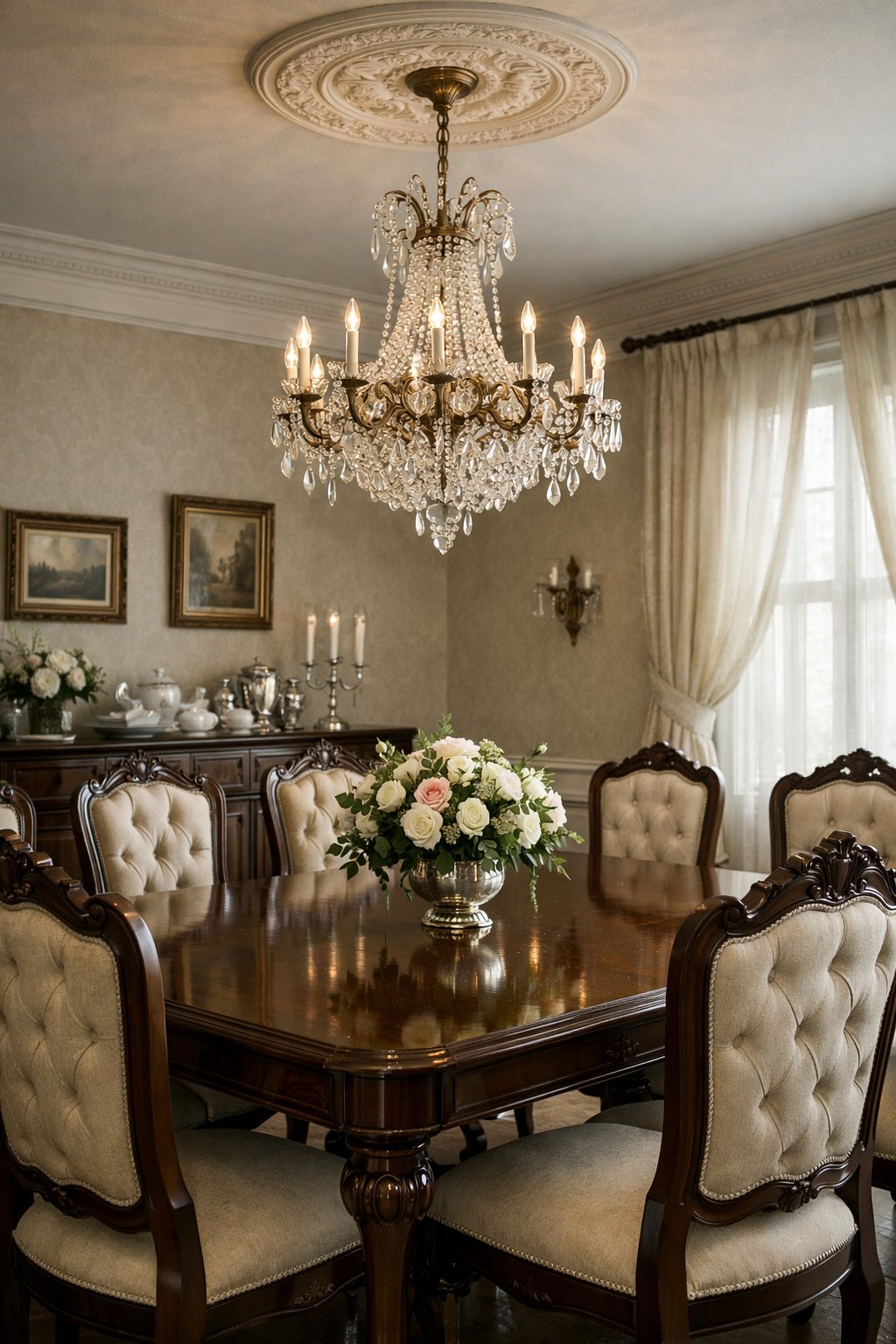
As you move through the ideas, I’ll point out furniture, lighting, fabrics, and accents that make a dining room feel both historic and livable.
Think of this as a guide to mix classic Victorian flair with modern comfort.
Your space can look beautiful and still work for everyday life.
Rich mahogany dining table with carved legs
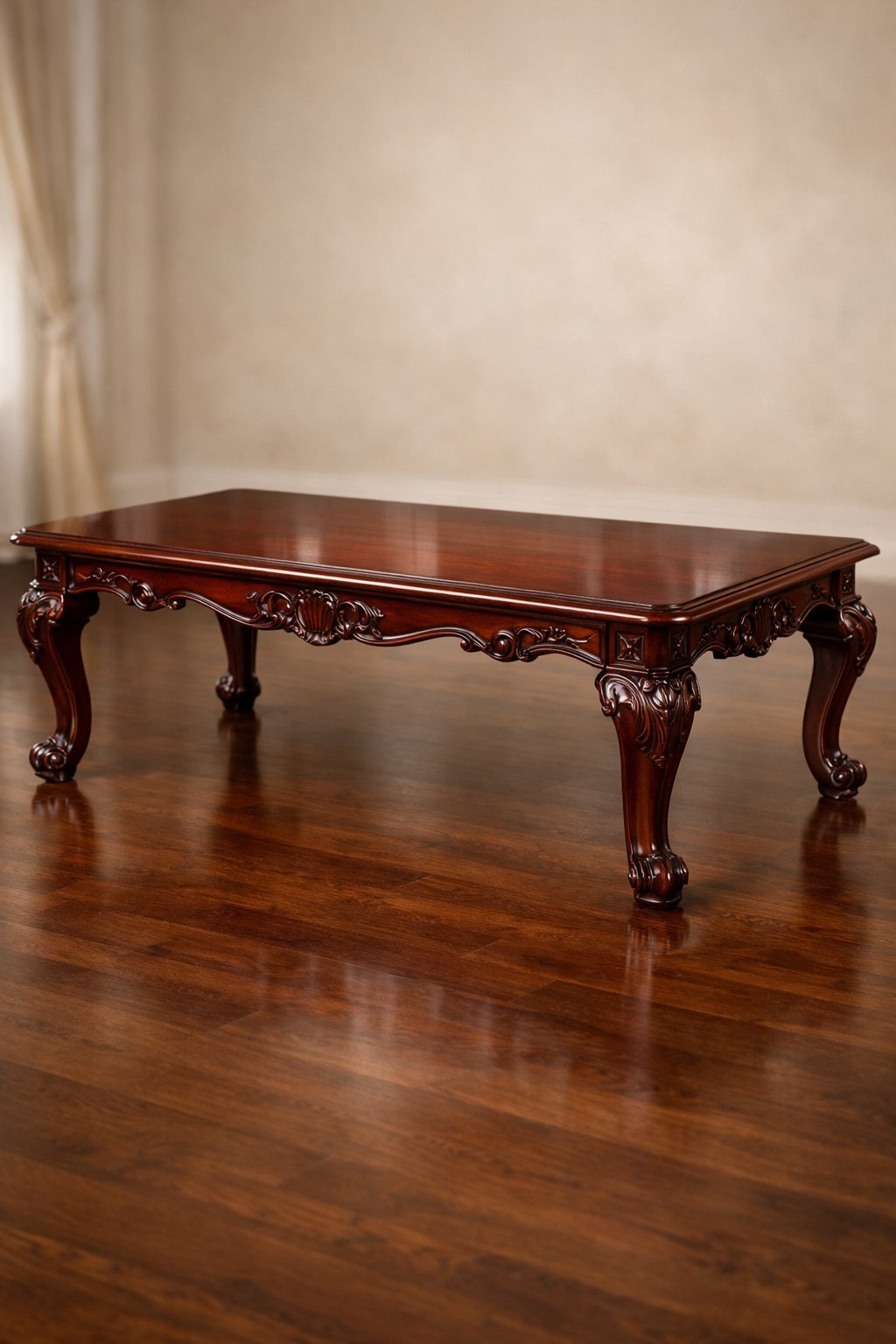
I love a rich mahogany table for a Victorian dining room because it feels solid and warm.
The carved legs add detail without shouting, and they link the table to the era’s craft.
I usually put a simple runner and vintage china on top to let the wood shine.
Chairs with high backs and soft upholstery finish the look and keep meals comfortable.
Velvet upholstered dining chairs in jewel tones
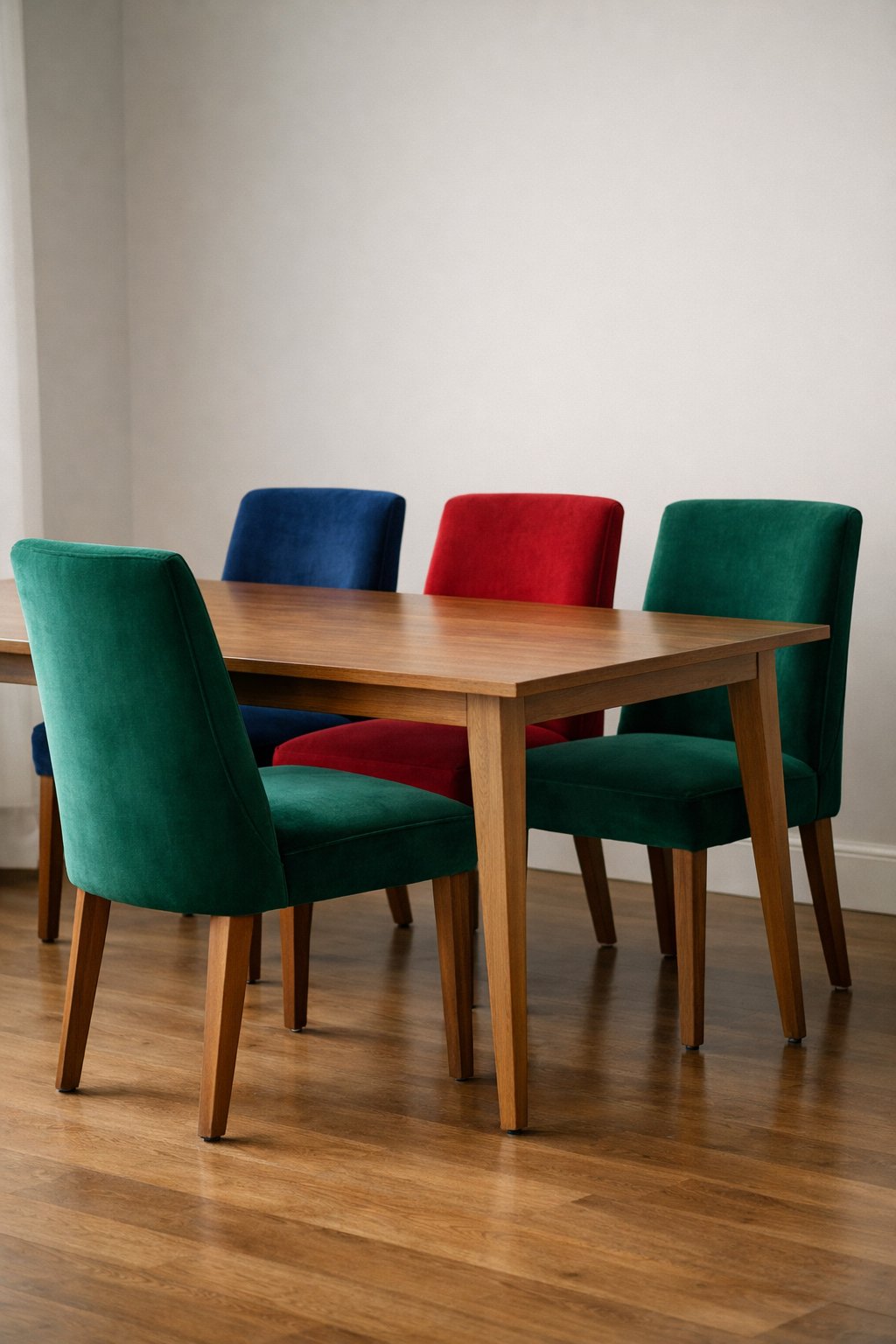
I love velvet chairs for adding rich color and soft texture to a Victorian dining room.
Deep greens, sapphire blues, and ruby reds feel elegant and work with dark wood and ornate trim.
The plush seats make long dinners more comfortable. I pair them with brass or carved wood legs to keep a period look but still stay cozy.
Crystal chandelier with intricate detailing
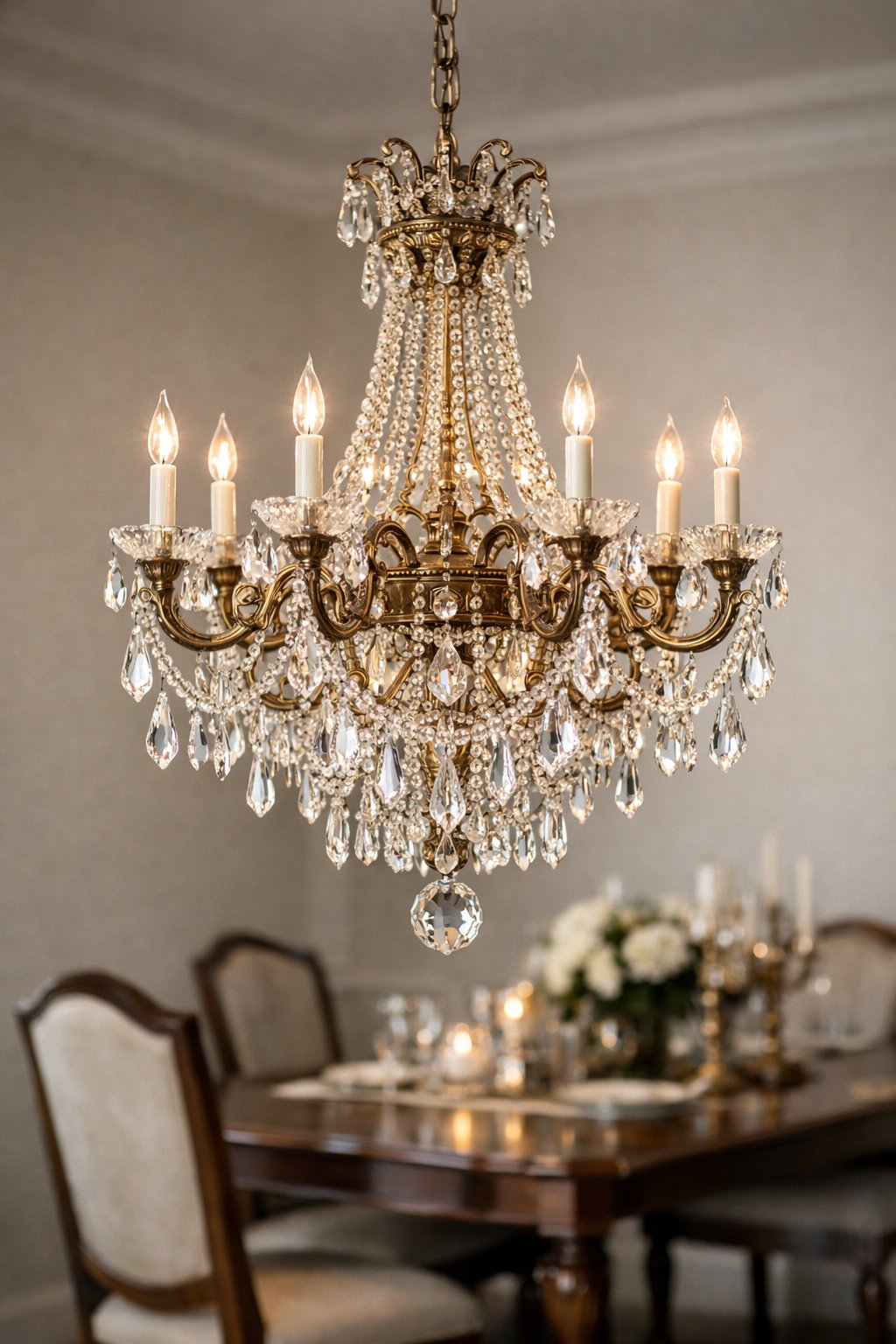
I love how a crystal chandelier anchors a Victorian dining room with delicate beads and carved metalwork.
The light scatters softly, making antique wood and rich fabrics glow.
I choose fixtures with layered crystals and filigree arms for depth and charm.
They add sparkle without feeling too bright or modern.
Heavy damask or floral patterned drapes
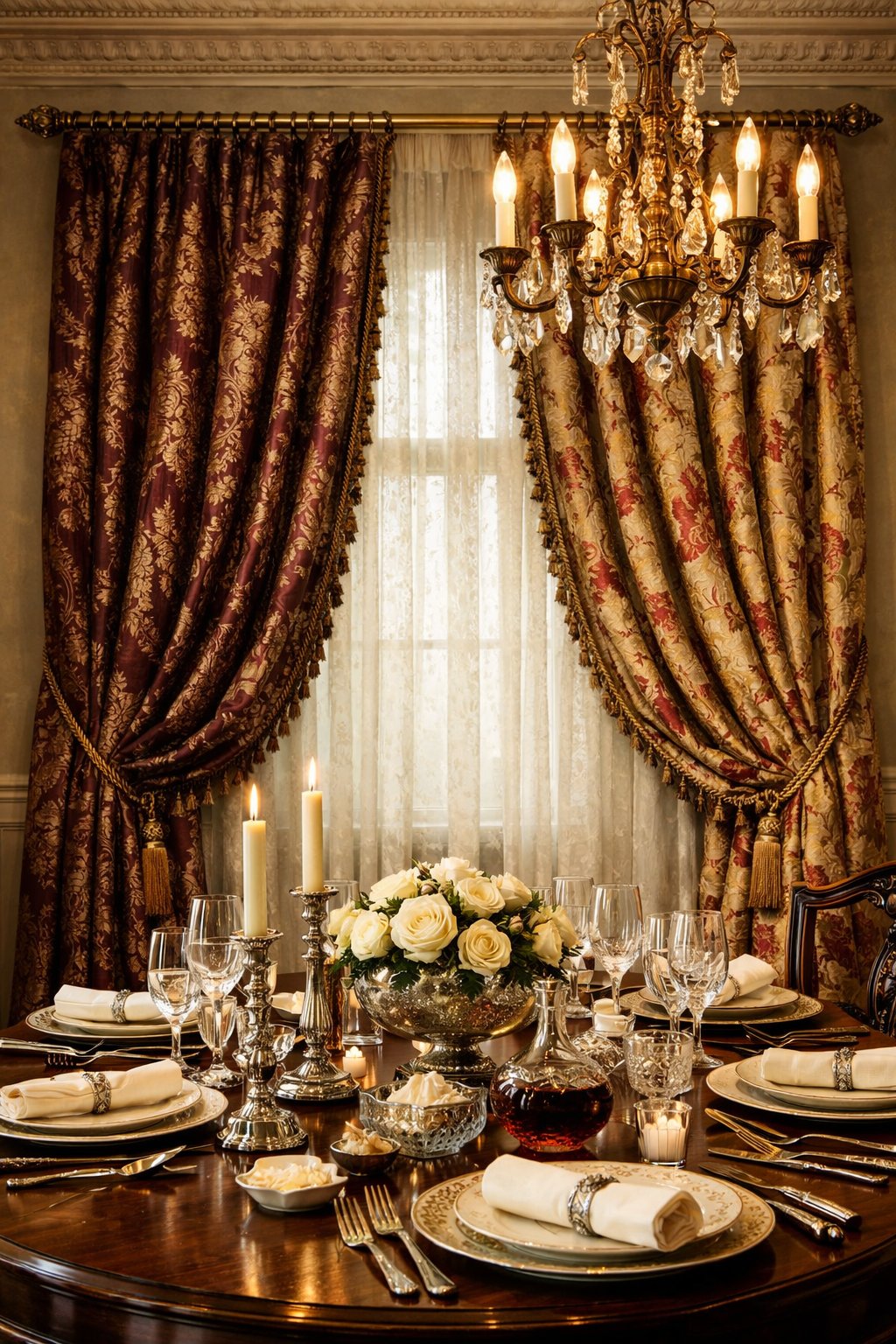
I love heavy damask or floral drapes in a Victorian dining room because they add rich color and texture.
They frame windows dramatically without needing extra decoration.
I choose velvet or brocade in deep reds or greens for a classic feel.
Layering sheers underneath keeps daylight soft while the outer panels stay elegant.
Ornate gilded mirrors on the walls
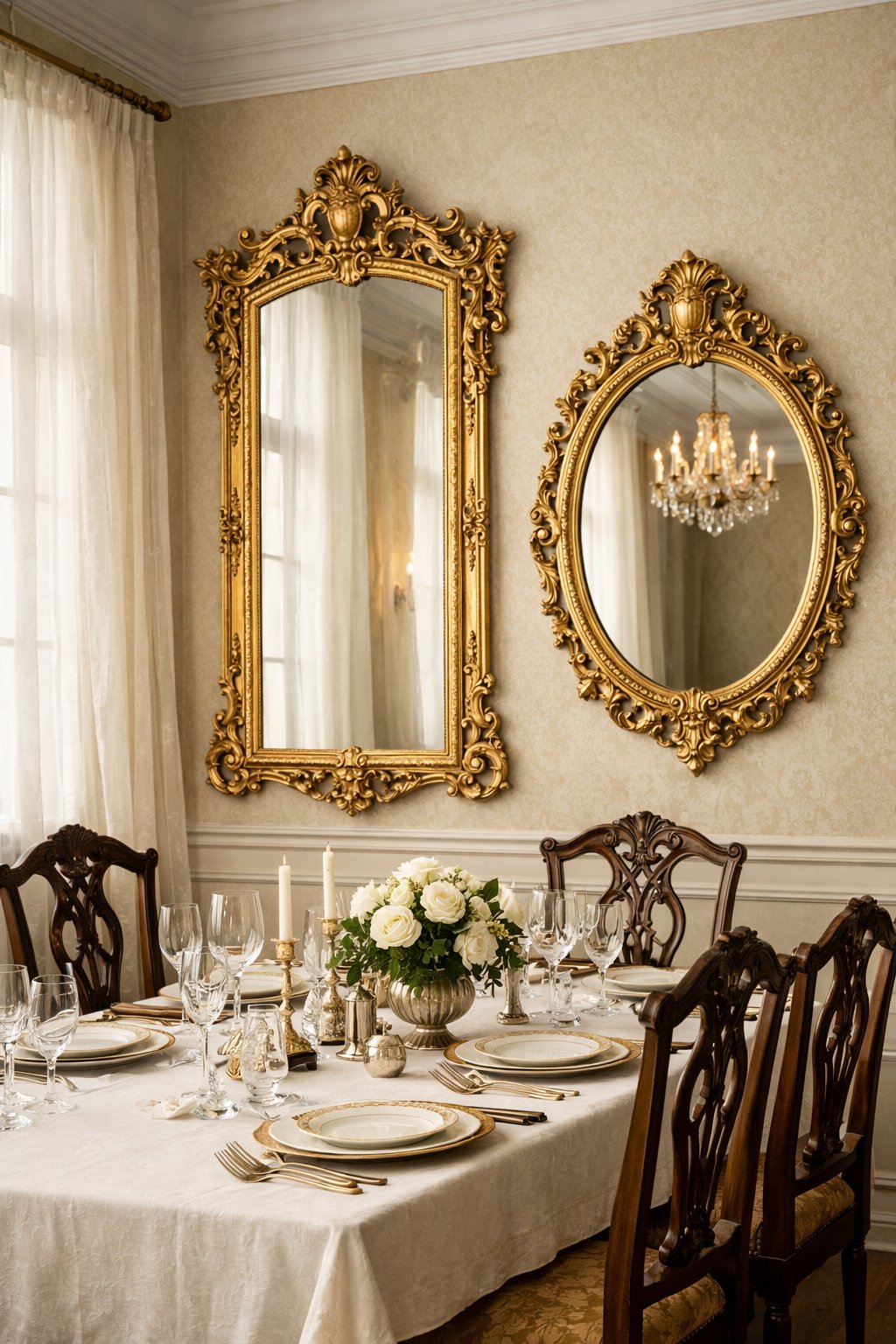
I love how a gilded mirror adds instant Victorian charm to a dining room.
Placed over a fireplace or sideboard, it reflects light and makes the space feel brighter.
The carved frame becomes a focal point without overwhelming the room.
I pair mirrors with rich wallpaper and dark wood for a balanced, classic look.
Wallpaper featuring classic Victorian patterns
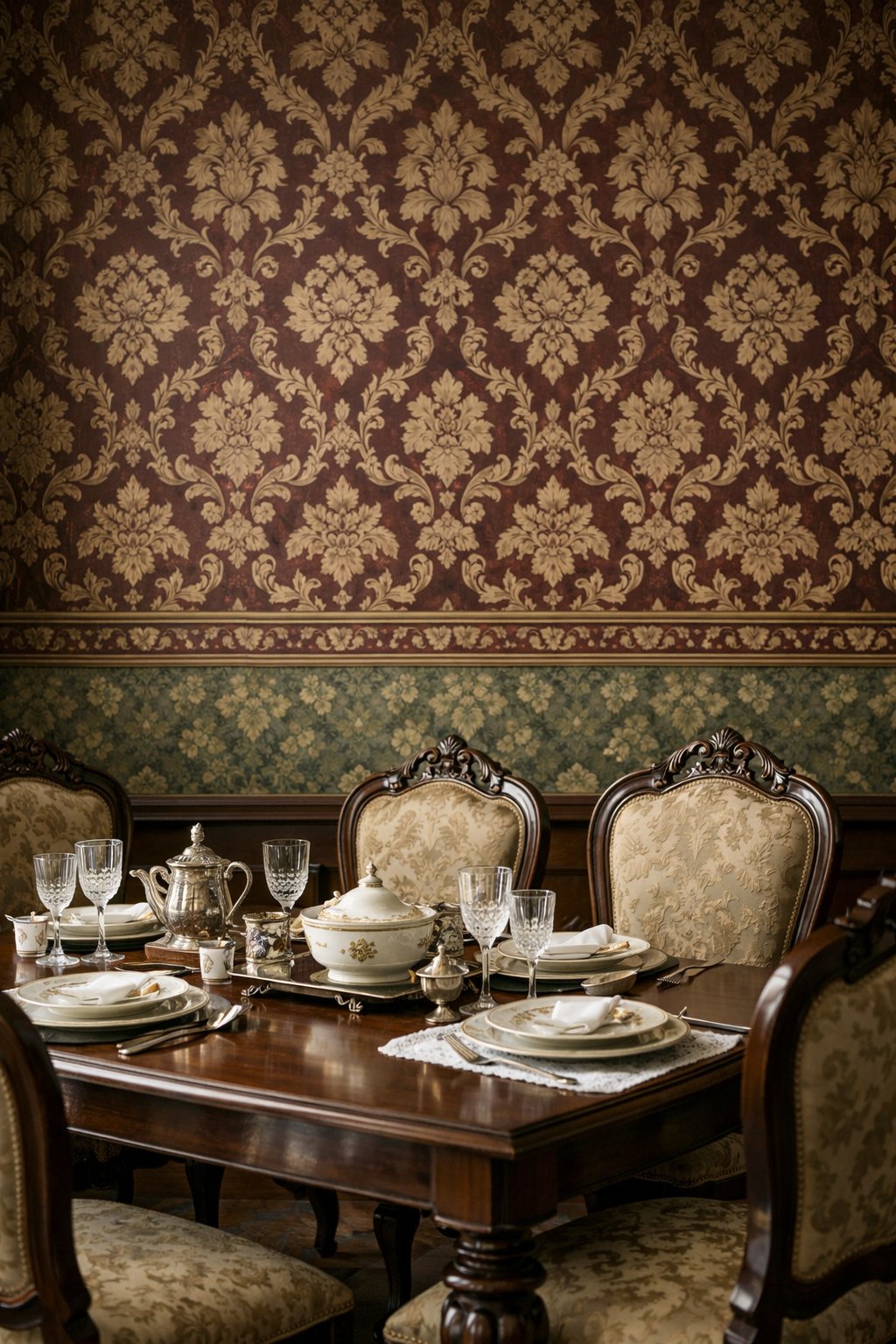
I love using wallpaper with damask, floral, or geometric Victorian patterns to set the room’s mood.
These prints add depth and a historic feel without heavy effort.
I often pair dark, rich colors with lighter trim to keep the space warm but not overwhelming.
A wallpapered ceiling can make the room feel finished and thoughtfully layered.
Antique sideboard with brass handles
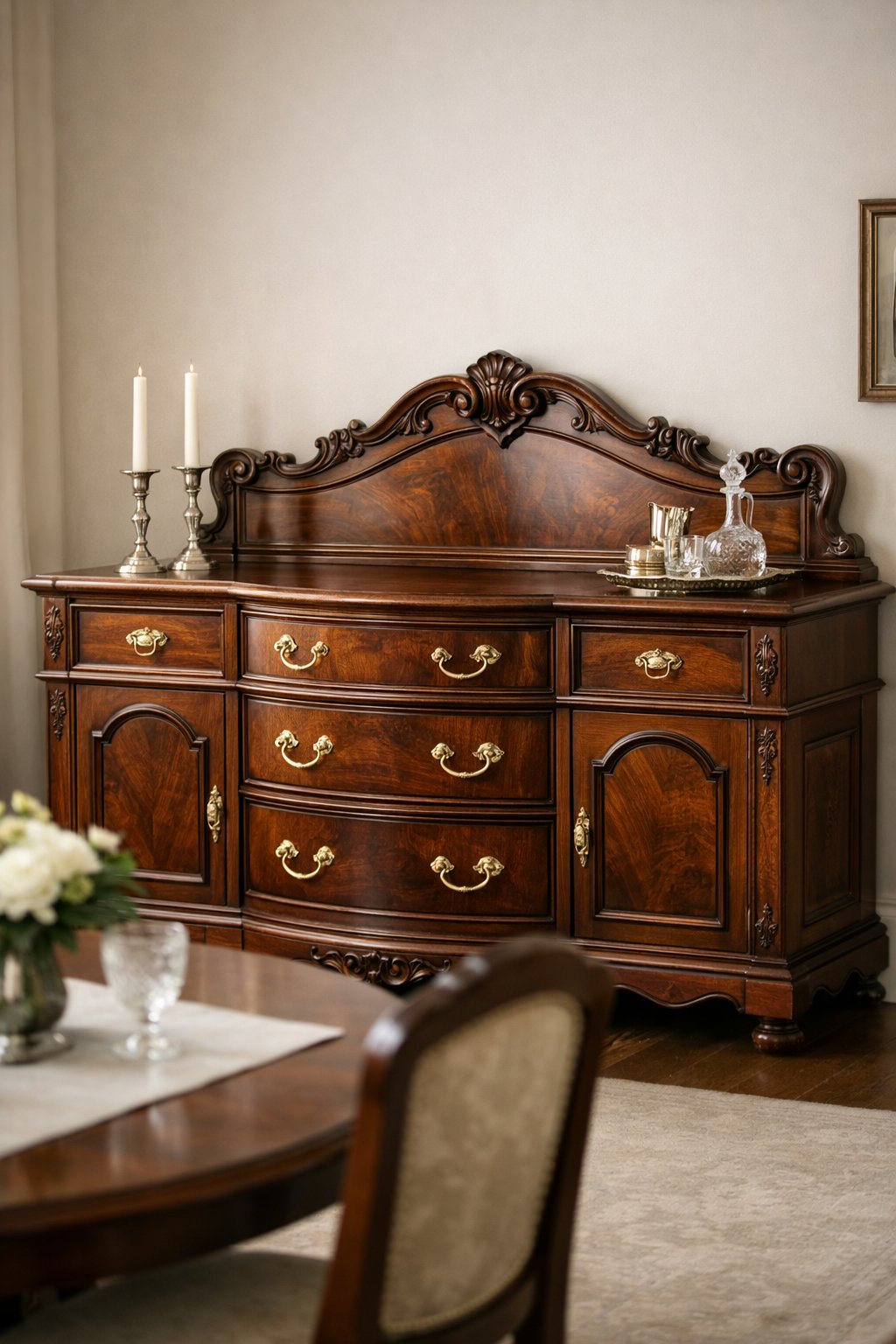
I love how a carved antique sideboard anchors a Victorian dining room.
Brass handles add warm shine and a touch of period detail without overwhelming the space.
I use mine for linens and silver, and the top holds candles or a vase.
It blends storage with style and keeps the room feeling lived-in and elegant.
Vintage porcelain dinnerware display cabinet
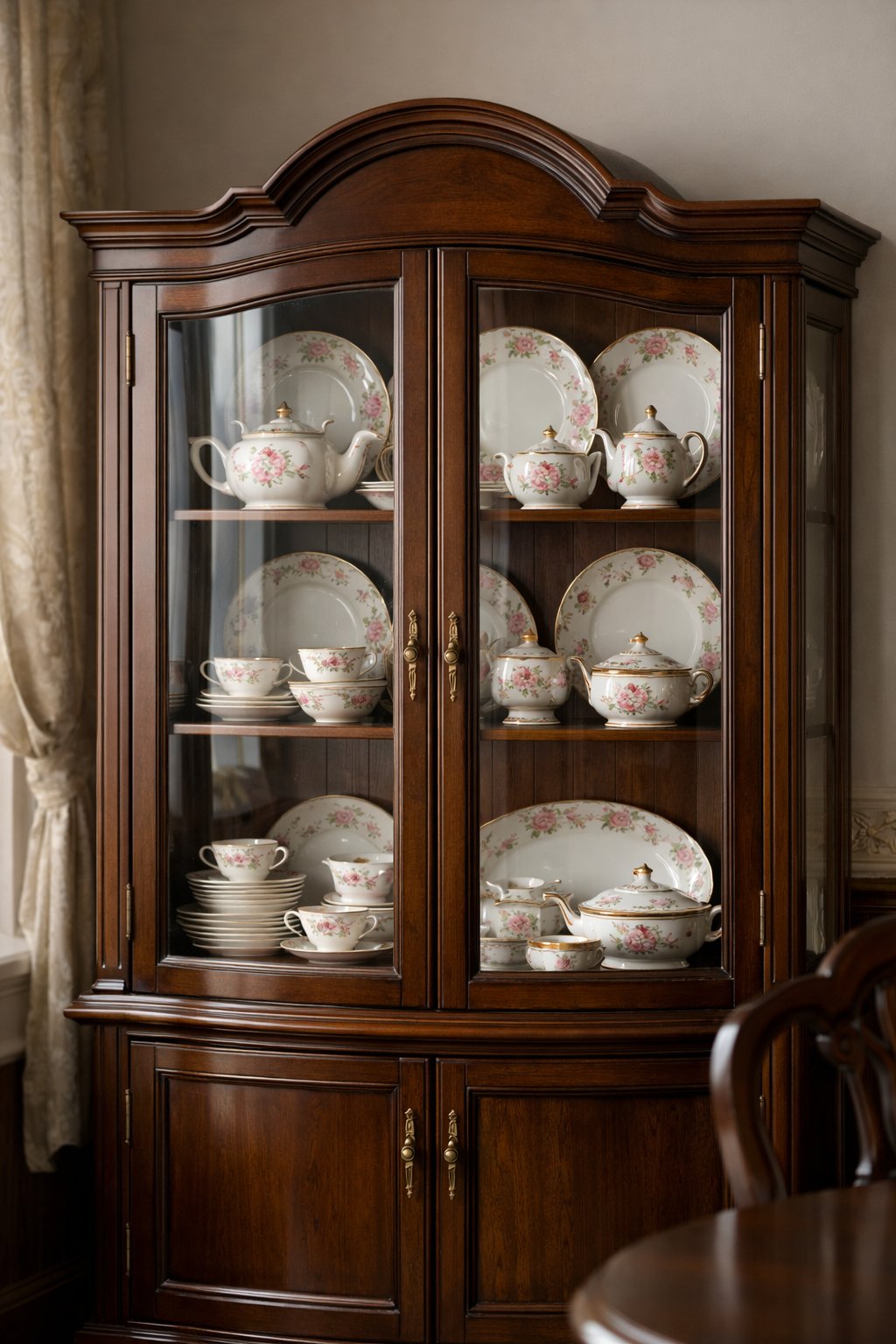
I love a glass-front cabinet to show porcelain pieces.
It keeps plates and teacups safe while letting light highlight delicate patterns.
I arrange items by color and size for a neat look. Small groupings and a few open spaces help each piece stand out.
Deep red or emerald green color accents
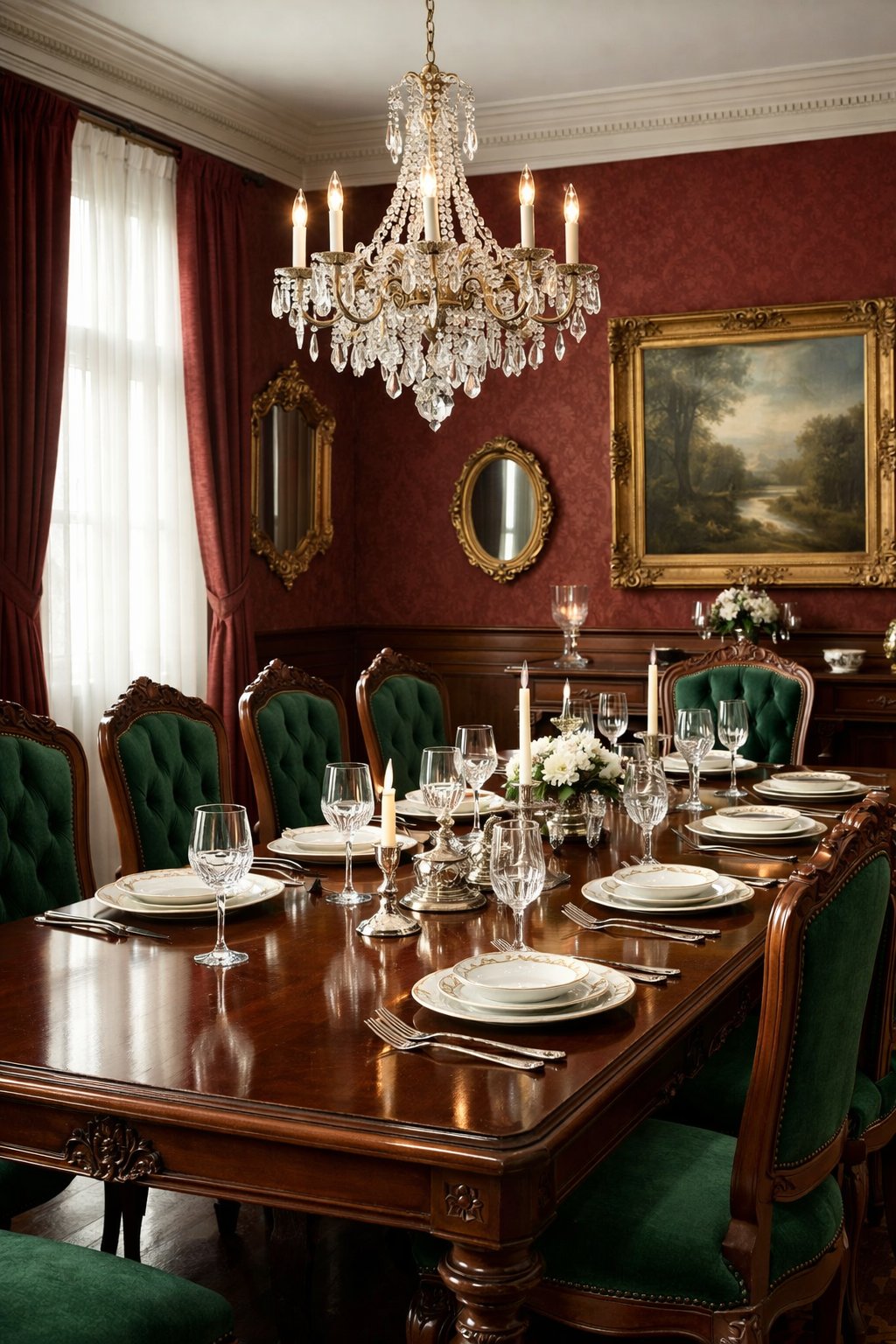
I love using deep red or emerald green to give a Victorian dining room warmth and richness.
A single accent wall or velvet drapes in these tones can make the space feel cozy without overpowering it.
I pair the colors with wood furniture and warm brass details for balance.
Small touches like cushions or a painted buffet let me try bold color without a big commitment.
Intricately carved wooden ceiling beams
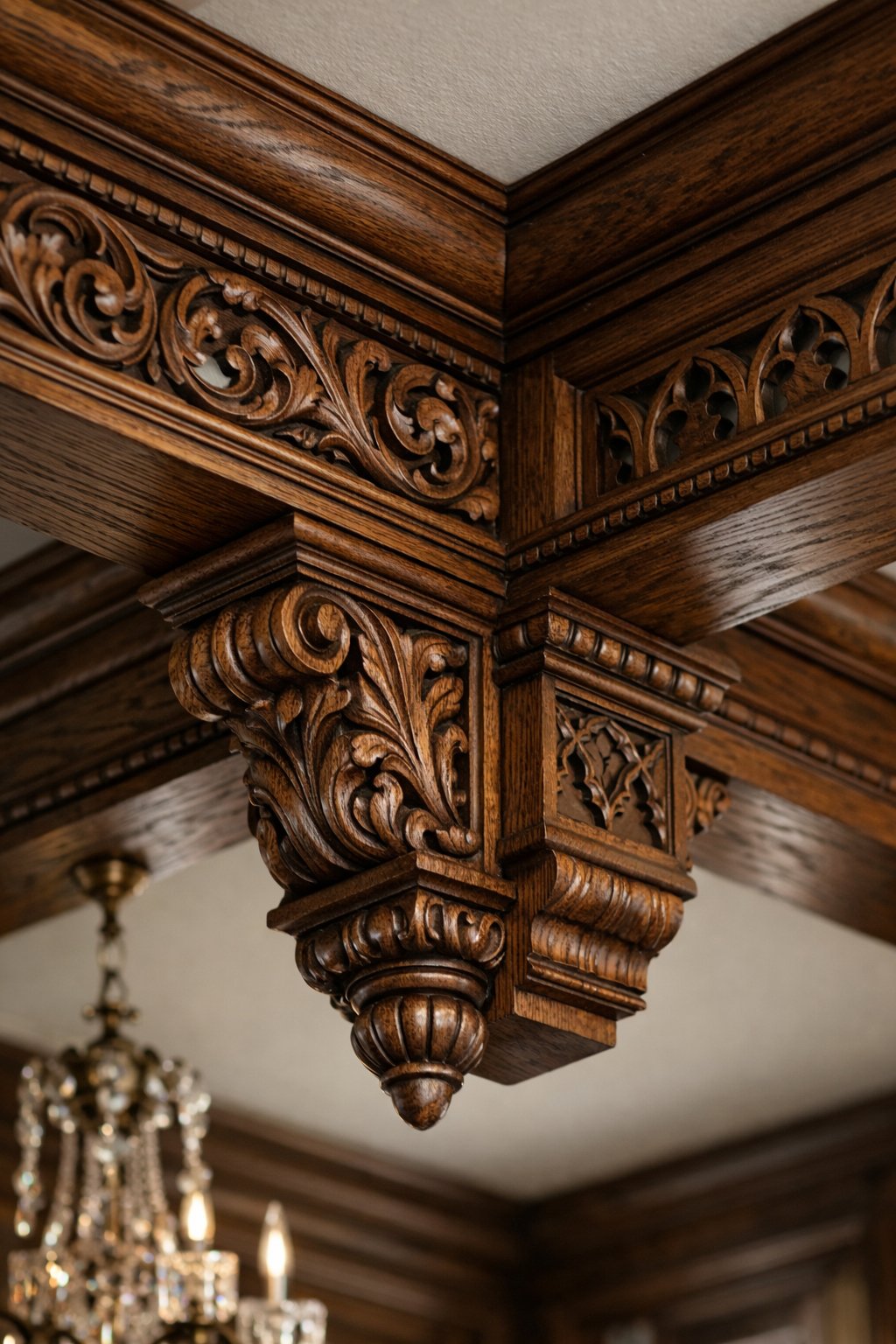
I love how carved wooden beams add warm, old-world charm to a Victorian dining room.
They draw the eye upward and give the space a crafted, cozy feel.
Rich wood tones and detailed carving pair well with a chandelier or painted ceiling.
I often place them over the table to frame the dining area and boost visual interest.
Persian or floral patterned area rug
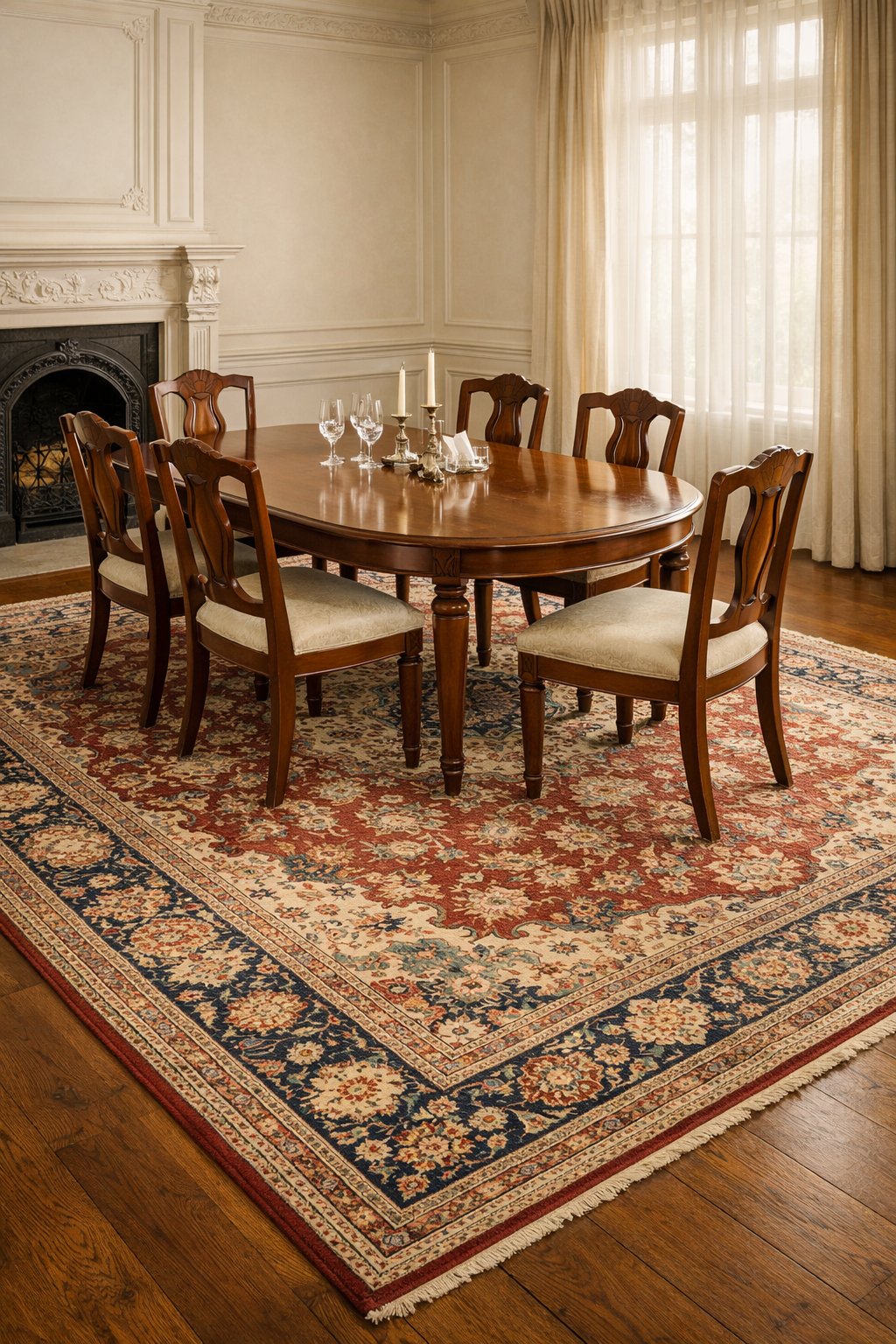
I like Persian or floral rugs for a Victorian dining room because they add color and pattern.
A richly patterned rug anchors the table and complements dark wood furniture.
I choose warm reds, deep blues, or soft florals to match china and curtains.
These rugs also hide spills and wear, so they stay practical for meals and guests.
Brass candle holders and candelabras
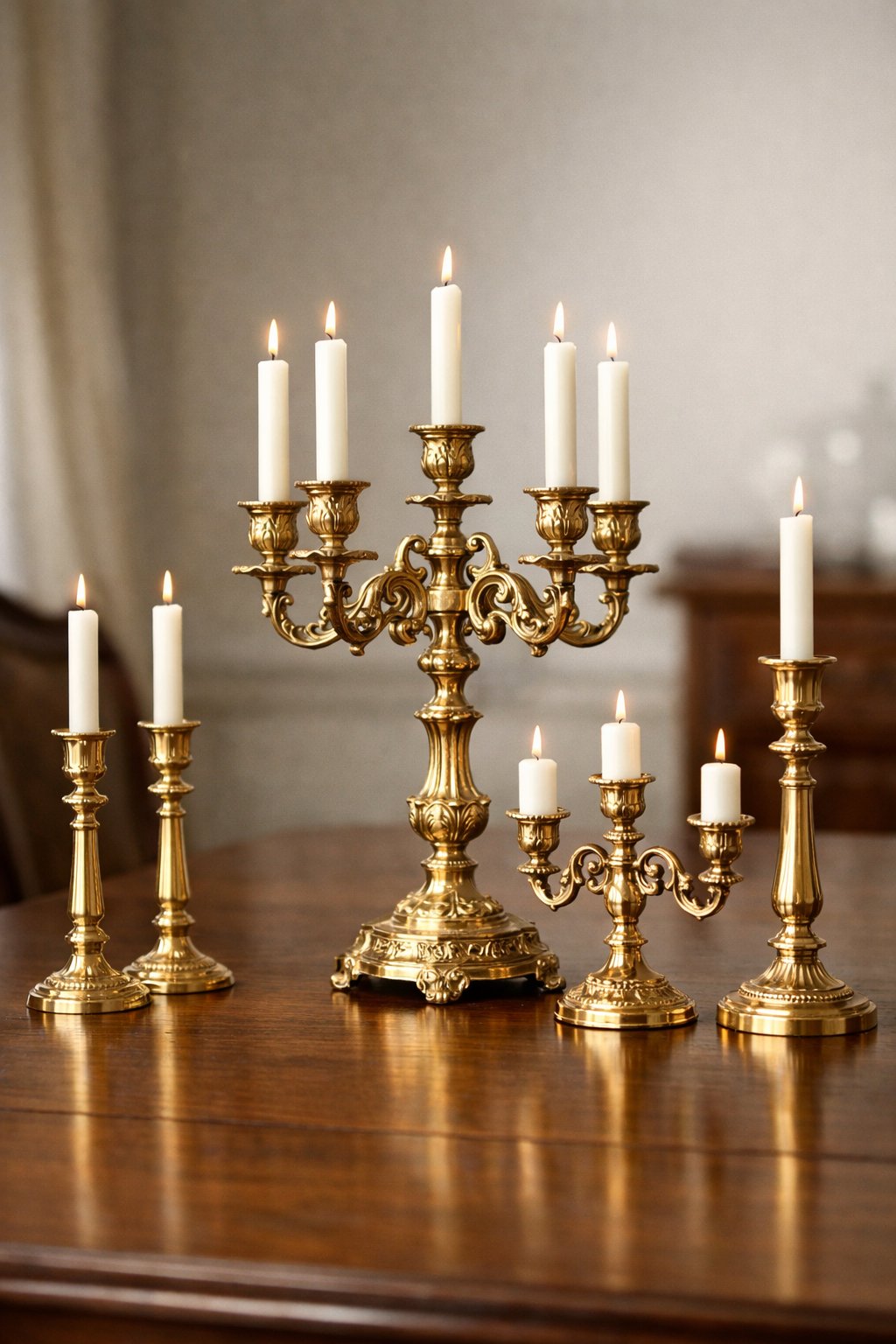
I love using brass candle holders to add warm light and old-world charm to my dining room.
A tall candelabra makes a strong centerpiece, while smaller holders add sparkle along the table.
I mix polished and aged finishes for depth. They pair well with lace, dark wood, and soft lighting to create a cozy Victorian feel.
Stained glass window inserts or lamps
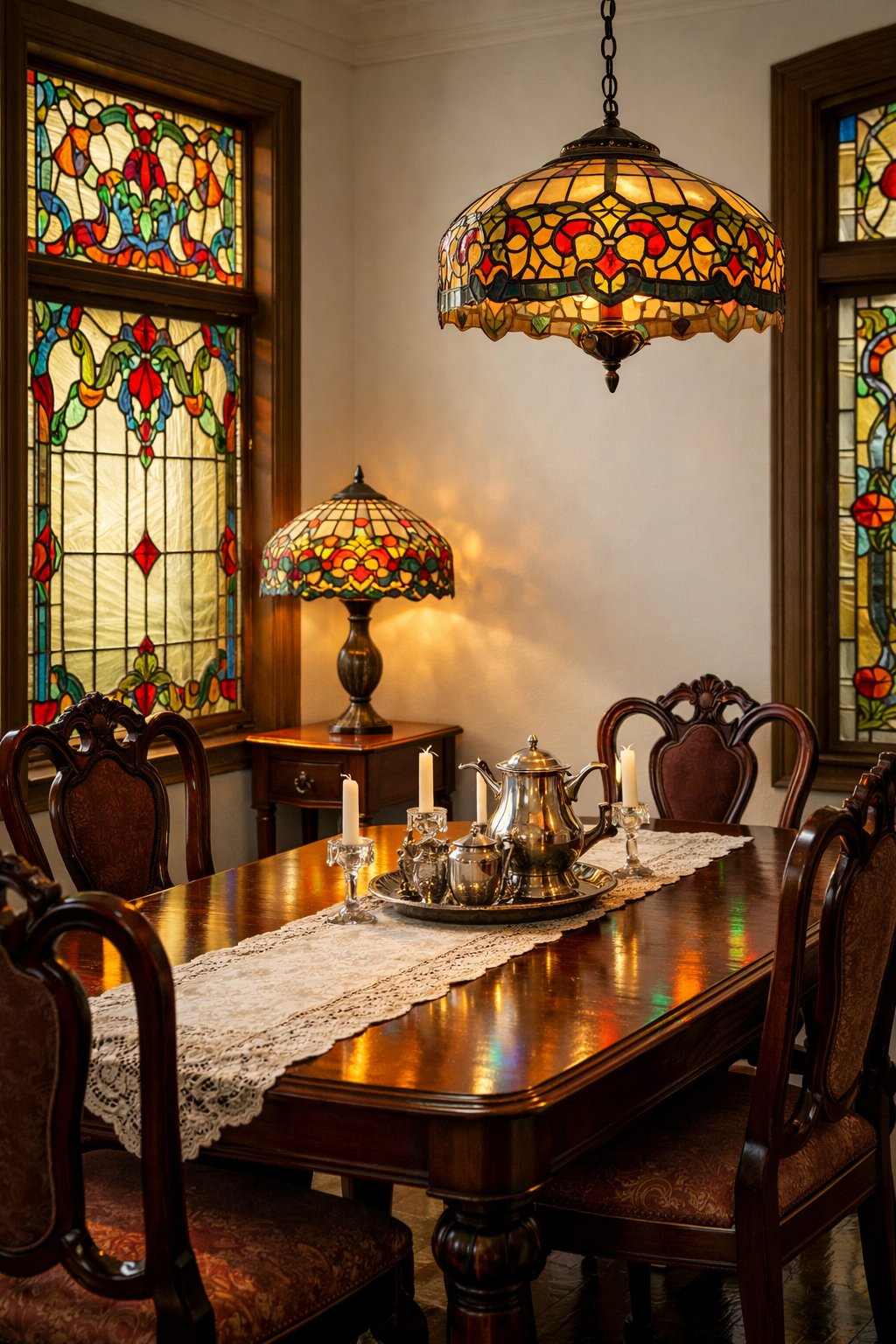
I added stained glass inserts to my dining room windows to bring color without losing light.
The soft, patterned glow changes with the day and makes meals feel cozier.
I also use a small stained glass lamp on the sideboard for focused warmth.
It ties the room together and adds a Victorian touch without a full renovation.
Tufted dining bench with button details
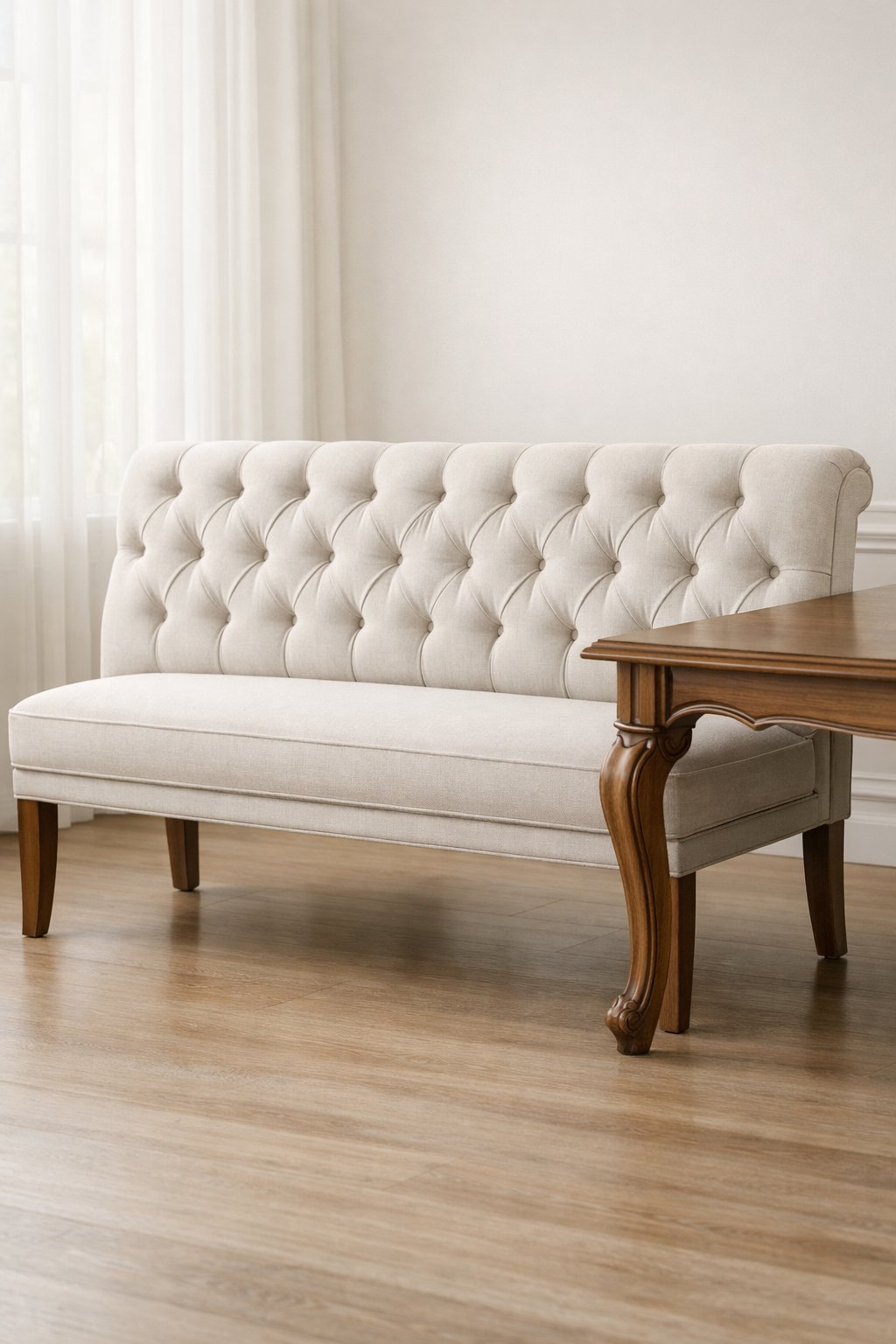
I love how a tufted bench with button details adds old-world charm to a dining room.
The buttons give texture and a gentle pattern that fits Victorian style without feeling heavy.
I often pair one with a dark wood table or ornate mirror. It gives extra seating and makes the space feel cozy and collected.
Large oil paintings in ornate frames
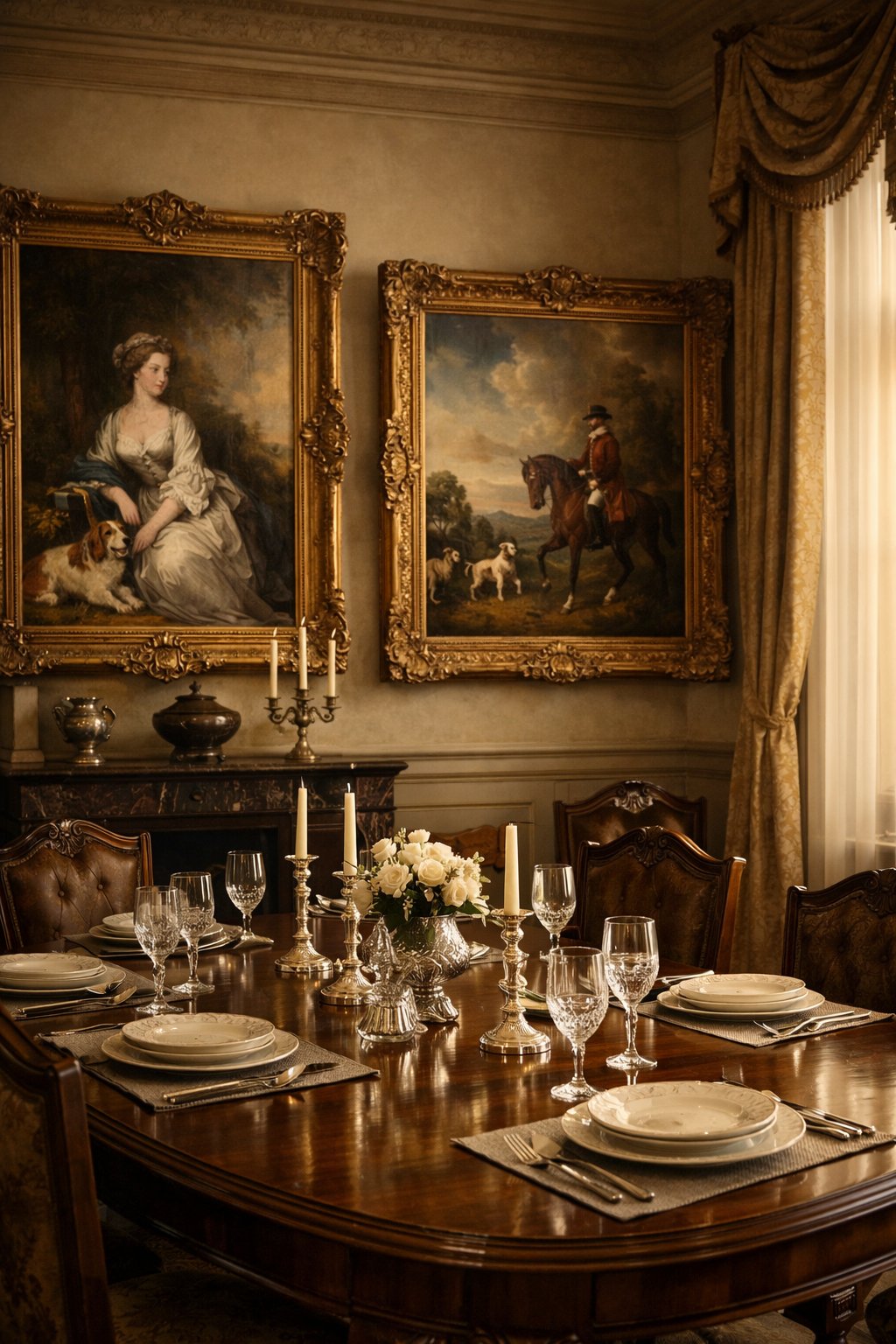
I hang a large oil painting above my dining sideboard.
That gilded, carved frame gives the room a Victorian vibe, but it doesn’t crowd the space.
Landscapes or portraits with deep, rich colors work best with dark wood furniture.
These pieces bring warmth and a classic touch that somehow manages to feel formal and still pretty inviting.
Tips for Blending Modern Comfort With Victorian Charm
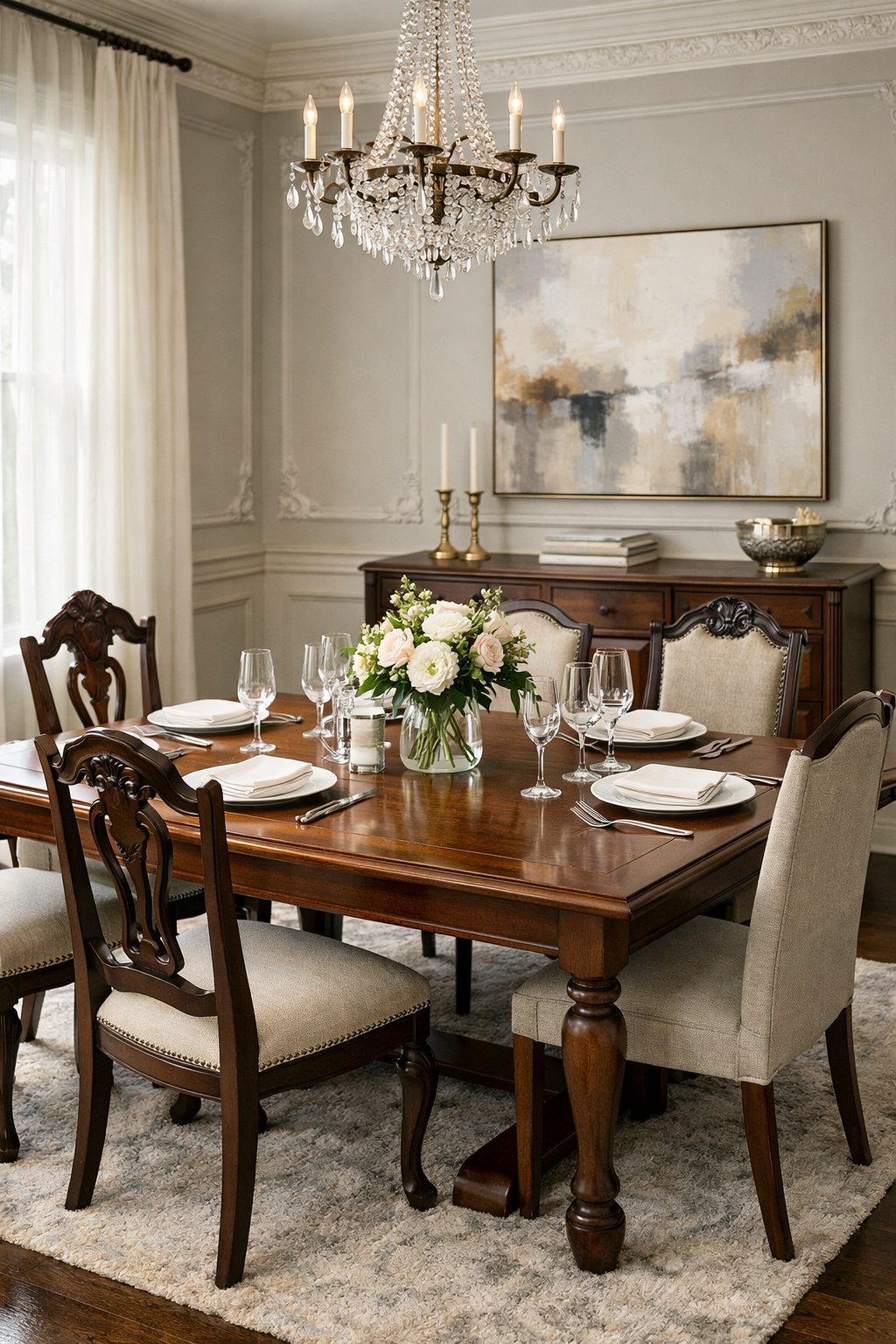
I try to keep the room cozy and usable while still honoring Victorian detail.
Tiny choices—seat height, fabric, even the light bulbs—end up making the biggest difference.
Choosing Complementary Furniture
Victorian-style pieces with modern proportions just feel right.
I’ll pick a carved mahogany sideboard, but then pair it with a dining table that’s got a slimmer apron and a comfy 30-inch seat height.
That way, it looks authentic but doesn’t feel cramped.
I use upholstered chairs in velvet or some tough performance fabric for daily life, and I keep the seat padding medium-firm so you can actually hang out for a while.
If I’m craving a statement piece, I’ll throw in one antique armchair at the head of the table. Simpler chairs on the sides keep things balanced.
Scale and traffic flow matter, too. I leave at least 36 inches from the table edge to the wall—otherwise, nobody’s happy.
Furniture legs that look a little lighter help balance out heavy pieces.
And honestly, I can’t resist adding storage that matches the wood tone but sneaks in soft-close hardware for a bit of modern sanity.
Balancing Lighting and Décor
I like to layer light, aiming for a space that’s dramatic but still comfortable to use.
There’s usually a chandelier with dimmable LED bulbs hanging over the table.
Wall sconces go on a separate circuit, giving off a softer side light. For serving, a sideboard lamp does the trick and just feels right.
Mirrors and metallic accents bounce light around, so those deep Victorian colors never feel too heavy.
I tend to pick warm LED bulbs (2700–3000K) because they keep that inviting glow on brass and gold finishes.
Curtains get lined to help with glare, but I stick to lighter fabrics so they actually move and breathe a little. Heavy drapery just feels stifling to me.
When it comes to décor, I’ll usually pick one or two bold pieces—maybe a framed oil print or a dramatic mirror. The rest stays simple, letting those focal points stand out.
I keep metal finishes consistent across fixtures. It ties the room together without making things feel busy or cluttered.