How to Pick Dining Room Furniture: The Ultimate Guide

The dining room is often referred to as the heart of the home’s social life. While the kitchen is where the action happens, the dining room is where we slow down, share stories, and connect over a meal.
Whether you are moving into a new home or looking to refresh your current space, selecting the right pieces can feel overwhelming.
From table shapes and seating materials to the flow of the room, there are numerous factors to consider.
If you are currently staring at an empty room or an outdated set, you are likely wondering how to pick dining room furniture that balances aesthetics, comfort, and functionality.
This guide will walk you through every step of the process, ensuring you create a space that is as practical as it is beautiful.
Start with the Foundation: Measure Your Space
Before you fall in love with a high-end mahogany table or a sleek mid-century modern set, you must know your numbers.
The biggest mistake homeowners make is choosing furniture that is either too large, making the room feel cramped, or too small, making the room feel sparse and unanchored.
The 36-Inch Rule
To ensure a comfortable flow of traffic, you should aim for at least 36 inches of space between the edge of the dining table and the walls or any other furniture (like a sideboard or china cabinet).
This allows guests to pull out their chairs and sit down without hitting the wall, and it provides enough room for someone to walk behind seated guests.
Consider the Height
Standard dining tables are usually 28 to 30 inches high. However, counter-height tables (34-36 inches) are becoming popular for casual spaces.
Ensure your chairs are compatible; you generally want about 12 inches between the seat of the chair and the underside of the table.
How to Pick Dining Room Furniture Based on Shape
The shape of your table dictates the “vibe” of the room and how people interact with one another.
When deciding how to pick dining room furniture, consider the footprint of your room.
Rectangular Tables
This is the most common shape and is best suited for formal dining rooms or long, narrow spaces.
Rectangular tables are ideal for large families or those who frequently host dinner parties, as they can easily accommodate six or more people.
Square Tables
Square tables are perfect for square-shaped rooms. They create a sense of symmetry and intimacy, as everyone is an equal distance from the center.
If you have a large square room, a massive square table can look incredibly luxurious, but for smaller spaces, a square table for four is a great way to maintain a sense of proportion.
Round Tables
Round tables are the champions of conversation. Because there are no “heads” of the table, the atmosphere feels more inclusive.
They are also excellent for small spaces because they have a smaller visual footprint and lack sharp corners, making navigation easier in tight quarters.
Oval Tables
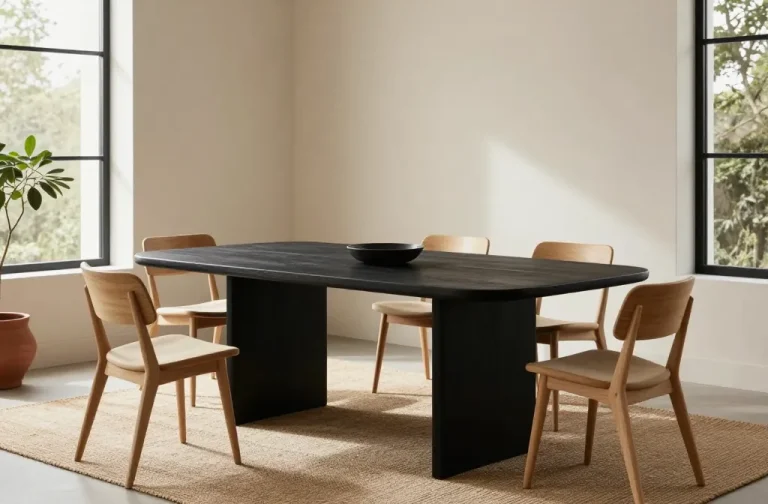
Oval tables offer the length of a rectangular table but take up less visual space due to their rounded corners.
They are a great middle-ground option for those who want the capacity of a rectangle but the softness of a circle.
Material Matters: Balancing Style and Durability
The material of your dining furniture determines how much maintenance you’ll have to perform and how long the pieces will last.
- Solid Wood: The gold standard for dining furniture. It is durable, timeless, and can be refinished if it gets scratched or stained. Oak, walnut, and maple are popular choices.
- Glass: Perfect for modern aesthetics and small rooms. Because glass is transparent, it doesn’t “block” the view, making the room feel larger. However, it does require frequent cleaning to remove fingerprints.
- Stone and Marble: These materials scream luxury. They are incredibly heavy and durable, but they are porous and can stain easily if not sealed properly.
- Metal: Often used for table bases or industrial-style chairs. It is nearly indestructible and easy to wipe down, making it great for high-traffic areas.
Selecting the Right Seating
While the table is the centerpiece, the chairs are where the comfort lies. When thinking about how to pick dining room furniture, don’t treat chairs as an afterthought.
To Match or Not to Match?
The days of buying a perfectly matched “dining set” are fading. Many modern designers prefer a more curated look.
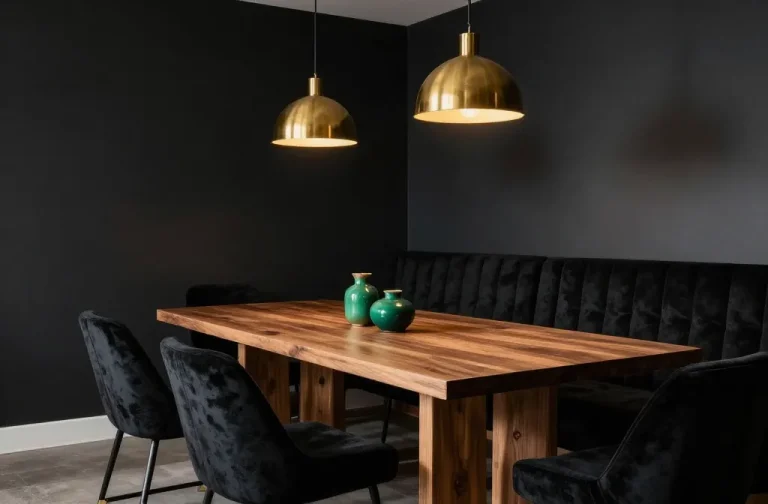
You might choose a rustic wooden table and pair it with sleek, colorful plastic chairs or upholstered velvet chairs.
The key is to find a common thread—perhaps the leg color or the overall scale—to keep the look cohesive.
Upholstery vs. Hard Surfaces
Upholstered chairs offer the most comfort for long dinner parties.
However, if you have young children or pets, you might prefer wood, metal, or plastic chairs that can be wiped clean in seconds.
If you want the best of both worlds, look for performance fabrics that are stain-resistant.
The Bench Option
Benches are a fantastic way to save space and add a casual, communal feel to the room.
They can often be tucked completely under the table when not in use, which is a great tip for those living in smaller homes.
Storage and Accent Pieces
A dining room is rarely just a table and chairs. To make the room truly functional, you need to consider storage.
Sideboards and Buffets
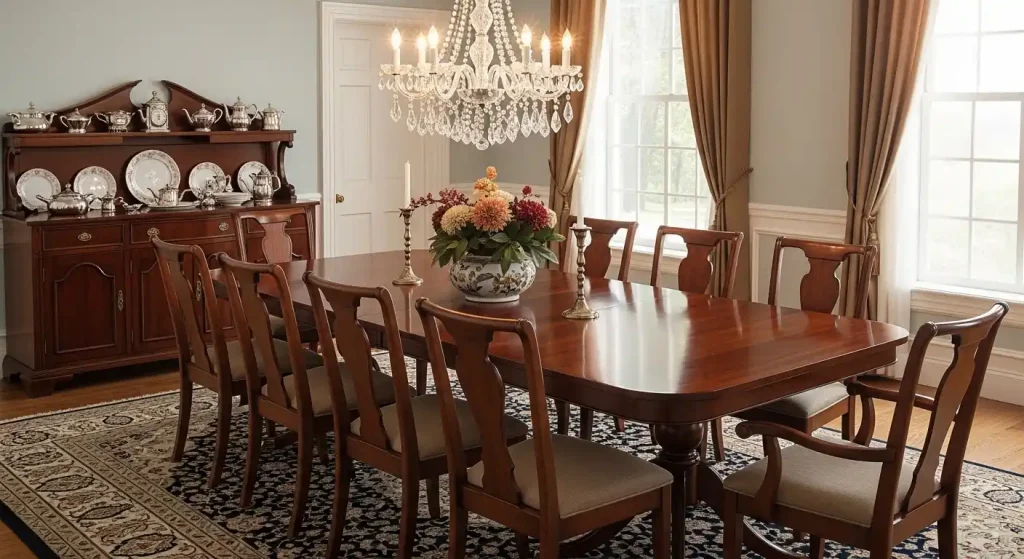
A sideboard (or buffet) is a long, low piece of furniture that provides a surface for serving food and storage for linens, fine china, and silver.
When picking a sideboard, ensure it matches the scale of your table. It shouldn’t be significantly taller than the table, or it will dominate the room visually.
Bar Carts
If you don’t have room for a full sideboard, a bar cart is a stylish alternative. It provides a dedicated spot for drinks and glassware and can be moved around as needed.
Lighting: The Finishing Touch
You cannot discuss how to pick dining room furniture without mentioning lighting. The light fixture acts as the “jewelry” of the room.
- Scale: The chandelier or pendant should be about one-half to two-thirds the width of the table.
- Height: Hang the light fixture approximately 30 to 34 inches above the tabletop. This ensures it illuminates the food and faces without blocking the view across the table.
Lifestyle Considerations: Who is Using the Room?
Your lifestyle should be the ultimate filter for your choices.
- The Entertainer: If you host big holiday meals, look for an extendable table with “leaves” that can be added or removed.
- The Busy Family: If your dining table doubles as a homework station and a craft center, prioritize indestructible materials like distressed wood or laminate that hide scratches well.
- The Minimalist: If you rarely use the dining room for eating, consider a smaller, high-design table that can function as a library table or a workspace.
Rugs and Textures
A rug under the dining table can “zone” the space, especially in open-concept homes. When picking a rug, make sure it is large enough.
A common rule of thumb is that the rug should extend at least 24 inches beyond the table on all sides so that the chair legs stay on the rug even when someone is sitting in them.
Low-pile or flat-weave rugs are best for dining rooms, as they make it easier to slide chairs and are simpler to clean.
Conclusion
Learning how to pick dining room furniture is an exercise in balancing form and function.
By measuring your space accurately, choosing a shape that complements your room’s dimensions, and selecting materials that fit your daily life, you can create a dining area that serves your needs for years to come.
Don’t be afraid to mix styles and experiment with different textures. At the end of the day, the best dining room is one where you feel comfortable sitting for hours, enjoying the company of friends and family.
Take your time, do your research, and invest in quality pieces that reflect your personal style.