15 Coastal Dining Room Ideas to Bring Beachy Charm Home

I want to help you bring a calm, beachy feel into your dining space.
You’ll find simple, practical ideas that make the room feel light, relaxed, and welcoming—no need for a full remodel.
You’ll learn easy ways to use colors, textures, and small decor choices to create a coastal dining room that looks pulled together and feels comfortable.

I’ll walk you through choices like soft neutrals, natural materials, relaxed fabrics, and coastal accents.
You can mix and match what fits your style. Expect tips and visuals that inspire changes you can actually try, whether you want a subtle seaside vibe or a more obvious beach-house look.
Soft neutral color palettes with whites and beiges

I like to start with warm whites and sandy beiges to keep the dining room calm and bright. These colors make small spaces feel larger and let natural light shine.
I add texture with linen, light wood, and woven rugs so the palette doesn’t get boring. A few soft blue accents add some interest, but I stick to neutrals for the main pieces.
Driftwood dining table centerpiece

I love using a driftwood centerpiece to bring the beach into my dining room. It adds natural texture and a calm, coastal feel without much fuss.
I tuck in shells, candles, or small succulents for a little extra interest. The look works on rustic or modern tables and fits casual meals or simple dinners.
Wicker or rattan dining chairs

Wicker and rattan chairs just feel right for a coastal dining room. They add texture and warmth, and they keep things casual but tidy.
I usually pick cushioned seats for comfort. These chairs match wood tables and pale colors, keeping the room light and breezy without being fussy.
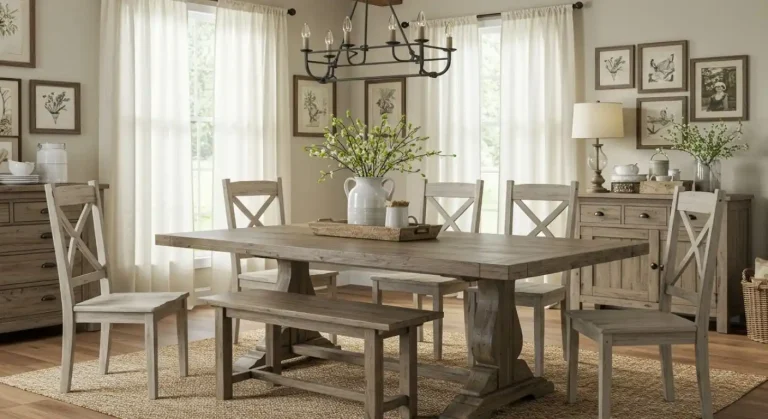
Light linen or cotton curtains

I like light linen or cotton curtains for a coastal dining room because they feel fresh and airy. They let soft daylight in while keeping the room comfortable for meals.
Neutral tones or pale blues echo the sea. The fabrics drape naturally and add a relaxed, beachy touch without any fuss.
Nautical striped table linens

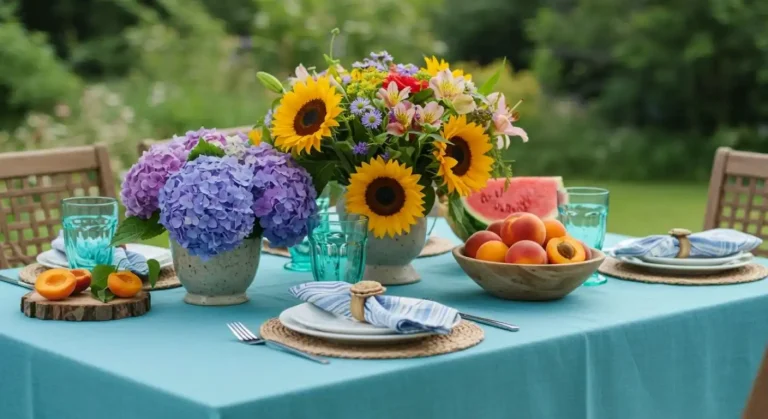
I love using striped table linens to set a coastal tone. Navy and white stripes feel crisp, while softer blues make the room calm and light.
I often layer a striped runner over a plain tablecloth for a bit of pattern without clutter. Stripes on napkins or cushions tie the dining space together.
Seashell and coral decor accents

I use shells and coral to add small touches of the sea without making things busy. A bowl of mixed shells on the table looks fresh and adds texture.
I’ll place a single coral piece on a sideboard as a simple focal point. These accents pair well with neutral linens and light wood for a calm, coastal feel.
Large seaside-inspired artwork

I love a big seascape or driftwood piece over the dining table. It sets the mood and ties the room to the shore without extra clutter.
I pick colors that match my linens and rugs so the space feels calm. A single large piece also gives guests a clear focal point during meals.
Natural wood flooring or rugs

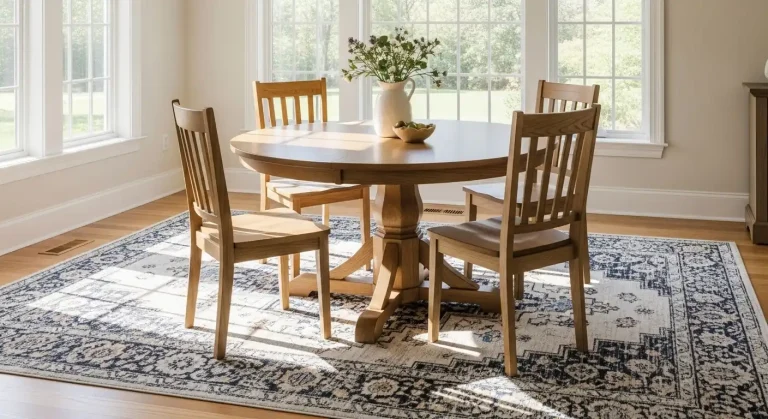
I like natural wood floors for coastal dining rooms because they feel warm and simple. Light oak or weathered planks pair well with soft blues and white trim.
If the whole room needs a softer touch, I add a natural fiber rug under the table. Jute or sisal rugs add texture and protect the floor without hiding the beachy vibe.
Glass pendant lighting with a sea-glass look

I love sea-glass style pendants for their soft, ocean-like glow. They diffuse light gently and add a calm, coastal touch to my dining space.
These fixtures pair well with natural textures like rattan or driftwood. I usually hang a cluster over the table for a relaxed, beachy vibe.
Open shelving with beach-themed pottery

I use open shelves to show off beachy pottery. Small bowls, pitchers, and vases with sandy tones or soft blues add a calm, seaside feel.
I mix functional pieces with a few decorative finds. I group items in odd numbers and leave breathing space so the display feels casual, not crowded.
Jute or sisal area rugs

I like jute and sisal rugs for coastal dining rooms because they bring a natural, sandy feel. Their woven texture adds warmth and holds up well under chairs and foot traffic.
I pair them with light wood furniture and soft blue accents to keep the room breezy. They work best on hard floors and need gentle vacuuming to stay clean.
Marine blue and aqua throw pillows

I love adding marine blue and aqua throw pillows to my dining chairs for an instant coastal feel. They bring cool color and pair well with natural textures like rattan or driftwood.
I mix solid shades with subtle patterns—stripes or shells—so the look stays fresh but simple.
Weathered and distressed furniture finishes

I love using weathered and distressed pieces to give a dining room a relaxed, beachy feel. A driftwood table or chipped white sideboard adds history without looking messy.
I pick pieces that show wear in a soft, intentional way. They pair well with light walls, woven rugs, and simple ceramics for a calm, coastal look.
Fresh greenery in ceramic pots

I love placing small potted plants on the table to add life without clutter. Ceramic pots feel natural and match coastal colors like white, sand, and soft blue.
I usually pick low-maintenance greens like ferns or pothos. They bring texture and a calm, seaside vibe to the room.
Coastal-inspired ceramic dinnerware

I love using ceramic dinnerware with soft blues, sandy beiges, and seafoam greens to bring the shore to my table. Handmade textures and simple wave or shell motifs add a calm, beachy feel without being loud.
Mixing plain pieces with a few patterned plates keeps the look relaxed and easy to use. I choose durable ceramics so the set feels casual enough for everyday meals and pretty enough for guests.
Materials and Textures for Coastal Dining Rooms

I lean toward materials that feel warm and relaxed. Natural wood and woven fibers give the space structure, while soft linens and cotton keep everything light and touchable.
Natural Woods and Wicker
I usually pick woods with visible grain and lighter tones—oak, ash, or reclaimed pine. These woods have a lived-in feel and do a decent job hiding little scratches from daily life.
Wicker and rattan just scream “beachy.” I like them for chairs, light shades, or baskets. They look best with a tough finish that stands up to humidity, like a clear matte varnish.
For tables, I almost always go for solid wood or wood veneer instead of laminate. A low-sheen sealer protects from spills but still lets you feel the texture.
Mixing wood tones can work, but I stick to one main wood for bigger pieces and use a second wood for accents. It’s a bit of a balancing act, honestly.
Linen, Cotton, and Light Fabrics
I go for linen and cotton when it comes to seat covers, curtains, and table linens. They breathe well and dry quickly, which just makes life easier.
Natural dyes in soft blues, sandy neutrals, and crisp white keep the palette coastal. It feels relaxed, not too fussy—just right for a breezy vibe.
For upholstery, I usually reach for sturdy cotton-linen blends or performance linen with a tight weave. They stand up to wear, resist pilling, and you can spot-clean them without much hassle.
Removable slipcovers? Always a smart move for dining chairs, honestly.
Texture’s a big deal for me. I’ll layer a loosely woven linen table runner over a smooth wood table, or toss on some cushion covers with subtle slubs.
Those little touches add depth but still keep things easy to wash and manage.