15 Blue Kitchen Flooring Ideas to Elevate Your Space with Style and Durability

Blue has always been a color that brings calmness and character to any space, and when used on kitchen floors, it can completely transform the room.
Whether it’s soft sky tones or rich navy shades, blue flooring adds a fresh, sophisticated touch that feels both timeless and modern.
Not only does it pair beautifully with a wide range of cabinet and countertop colors, but it also brings a sense of depth and serenity that makes your kitchen feel more inviting.
Plus, with today’s wide variety of materials—from tiles to vinyl to painted hardwood—you can easily combine style and durability in one stunning package.
In this article, we’ve rounded up 15 inspiring blue kitchen flooring ideas to help you find the perfect shade and style for your next kitchen upgrade.
Blue Floors, Bold Personality: Why This Color Works Wonders in Kitchens
Blue isn’t just a color—it’s a mood. From calming coastal tones to deep navy elegance, blue floors can completely transform the energy of your kitchen.
They balance personality and peace, blending freshness with timeless appeal. Whether you prefer sleek ceramic tiles, rustic painted wood, or modern vinyl designs, blue flooring creates that “wow” moment every time you walk in.
It’s not about trends; it’s about choosing a base that reflects your vibe while standing up to daily life. So, before diving into those dreamy blue floor ideas, let’s lay some groundwork for what really makes them shine.
Before You Pick a Shade of Blue: Groundwork for Great Design
The perfect blue floor isn’t chosen in isolation—it’s built around the rest of your kitchen. Here’s what to consider before picking your tile or finish:
- Lighting: Natural light makes blue appear softer, while artificial light can add richness or even shift undertones. Always test samples at different times of day.
- Cabinet Color: Blue floors pair beautifully with white, beige, or even dark espresso cabinets. Avoid clashing tones by keeping either your floor or cabinetry the statement piece—not both.
- Durability First: Kitchens are high-traffic zones. Choose finishes that resist spills, scratches, and fading. Vinyl, porcelain, or sealed stone are smart, long-term choices.
- Undertone Check: Warm blues (with hints of green) add coziness; cool blues (with gray undertones) feel sleek and modern. Your choice can change the whole atmosphere.
1) White oak flooring with dark blue cabinets

I love white oak flooring paired with dark blue cabinets. The light wood pops against the deep blue, giving the kitchen a clean, sophisticated vibe.
The white oak keeps things bright and open but doesn’t take away from the boldness of the cabinets. It works whether you’re into classic or modern looks—honestly, it just fits.
2) Ceramic tile floors paired with blue shaker cabinets
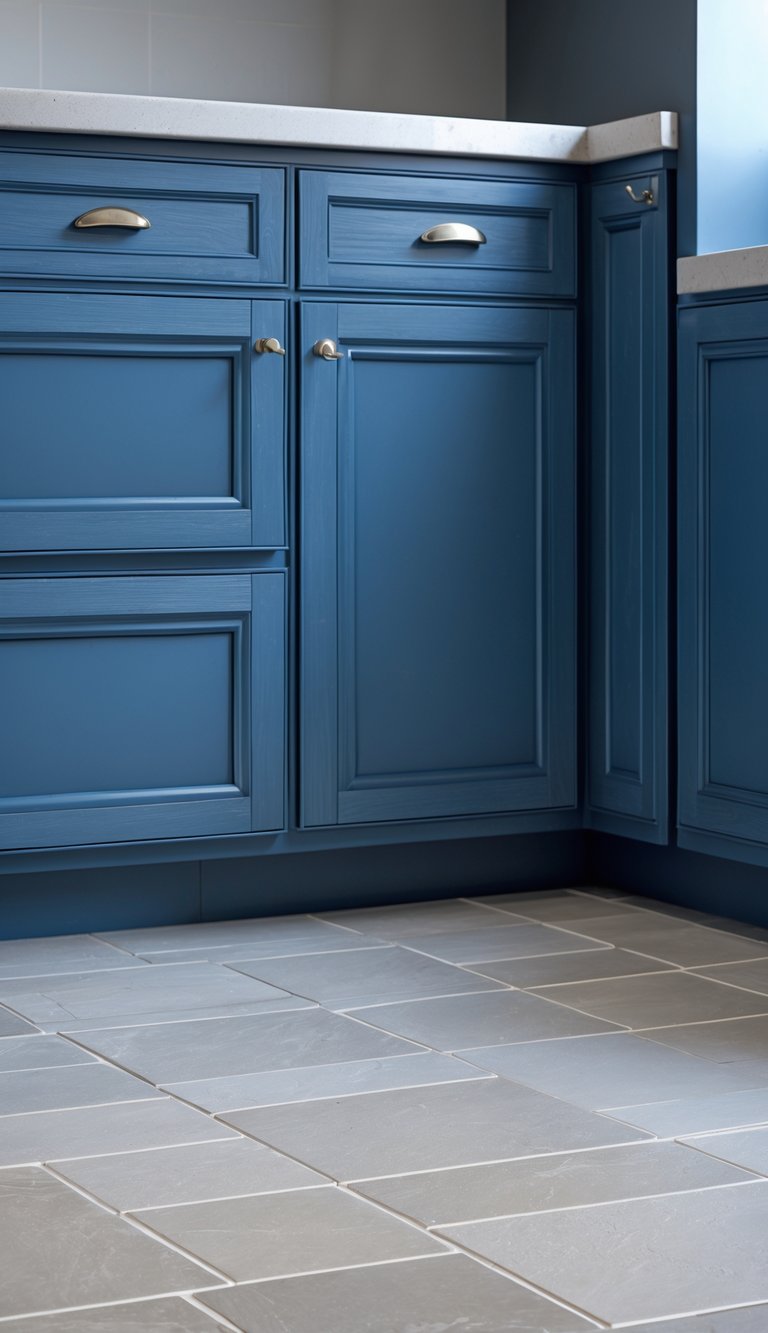
I’m a fan of ceramic tile floors with blue shaker cabinets. The clean lines of the cabinets match up well with the smooth, easy-to-clean tiles.
Neutral tile colors like gray or white let the blue cabinets stay center stage. Ceramic tiles also handle kitchen chaos like a champ.
3) Light grey porcelain tiles complementing blue kitchen floors
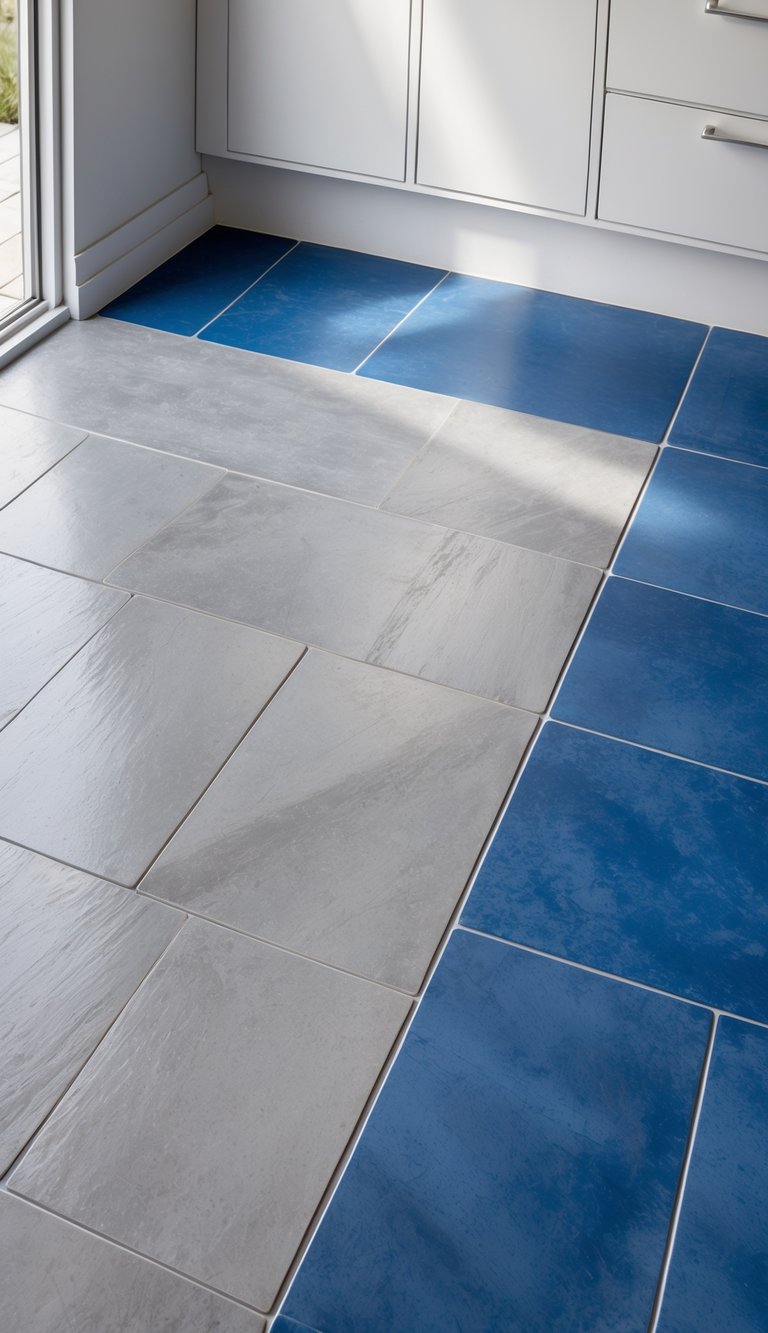
Light grey porcelain tiles with blue kitchen floors bring a soft, neutral balance. The grey keeps things bright and modern.
Porcelain tiles are tough and simple to clean. They let the blue floors stand out without feeling too much.
4) Wood-look vinyl flooring under blue kitchen islands

Wood-look vinyl flooring under blue kitchen islands adds warmth but doesn’t overpower the space. The vinyl is easy to clean, which is a lifesaver in a busy kitchen.
This flooring looks like real wood but shrugs off water and spills. It gives a nice contrast and really lets the island shine.
5) Patterned cement tiles in blue and white hues

Patterned cement tiles in blue and white? Yes, please. They bring in color and texture while keeping things classic.
Handmade tiles with vintage patterns make the floor pop, but they don’t shout for attention. Cement tiles are sturdy and pretty easy to live with.
6) Matte blue ceramic tiles for a seamless look

I like matte blue ceramic tiles for their smooth, modern vibe. They hide dirt and smudges better than glossy options—trust me, that’s a plus.
The soft blue tones add color but aren’t in your face. They play well with all kinds of cabinets.
7) Herringbone oak floor with navy blue cabinets
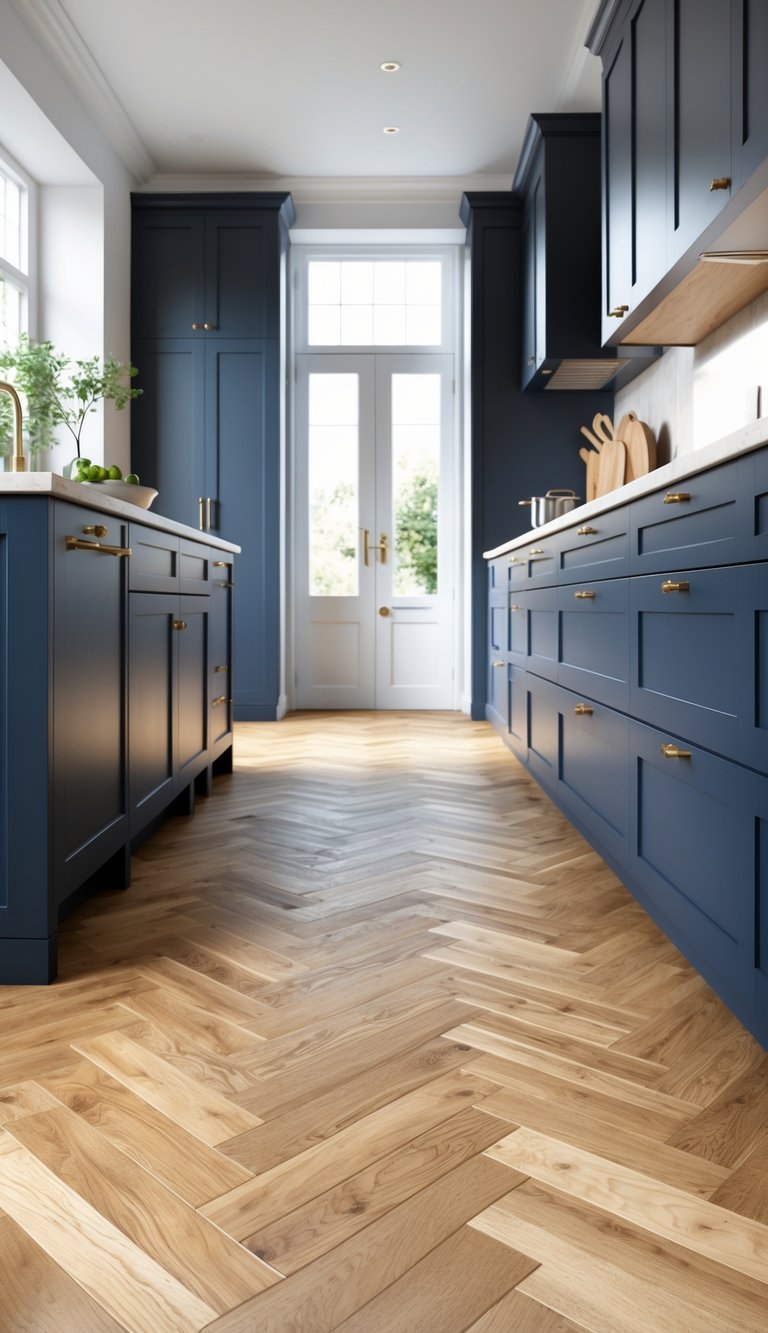
A herringbone oak floor with navy blue cabinets just feels right. The classic wood pattern brings warmth and texture, balancing out the bold navy.
The natural tones of the wood soften the deep blue, so the kitchen feels inviting—not too intense, not too bland.
8) Polished concrete floors contrasting with bright blue cabinetry

Polished concrete floors bring a sleek, modern edge. The smooth gray makes bright blue cabinets really pop.
This combo feels bold but not chaotic. Plus, concrete floors can take a beating, so they’re great for busy kitchens.
9) Blue and white encaustic tile flooring
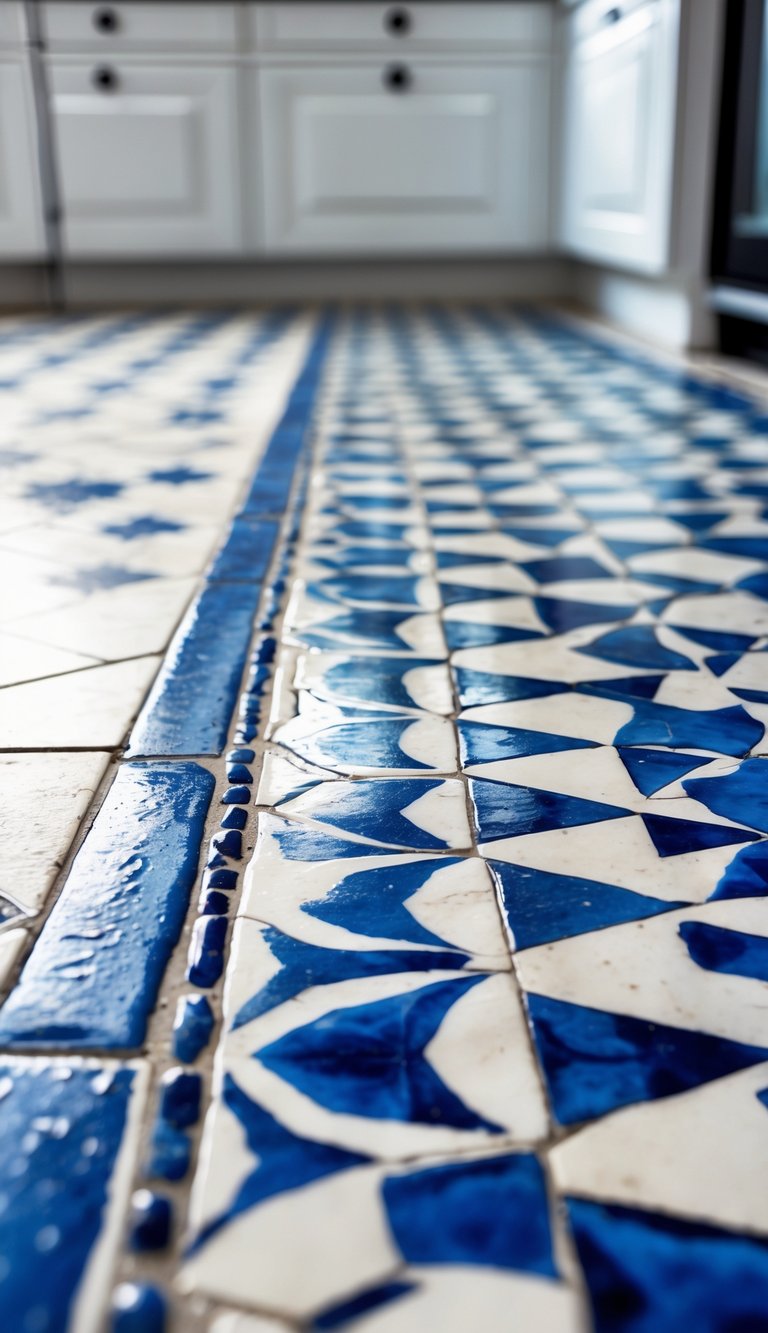
Blue and white encaustic tile gives off a classic feel. The patterns add just enough interest—never too busy.
These tiles work with both white and dark cabinets. They’re durable and easy to keep clean, so it’s a smart pick for kitchen floors.
10) Warm maple hardwood with soft blue kitchen elements
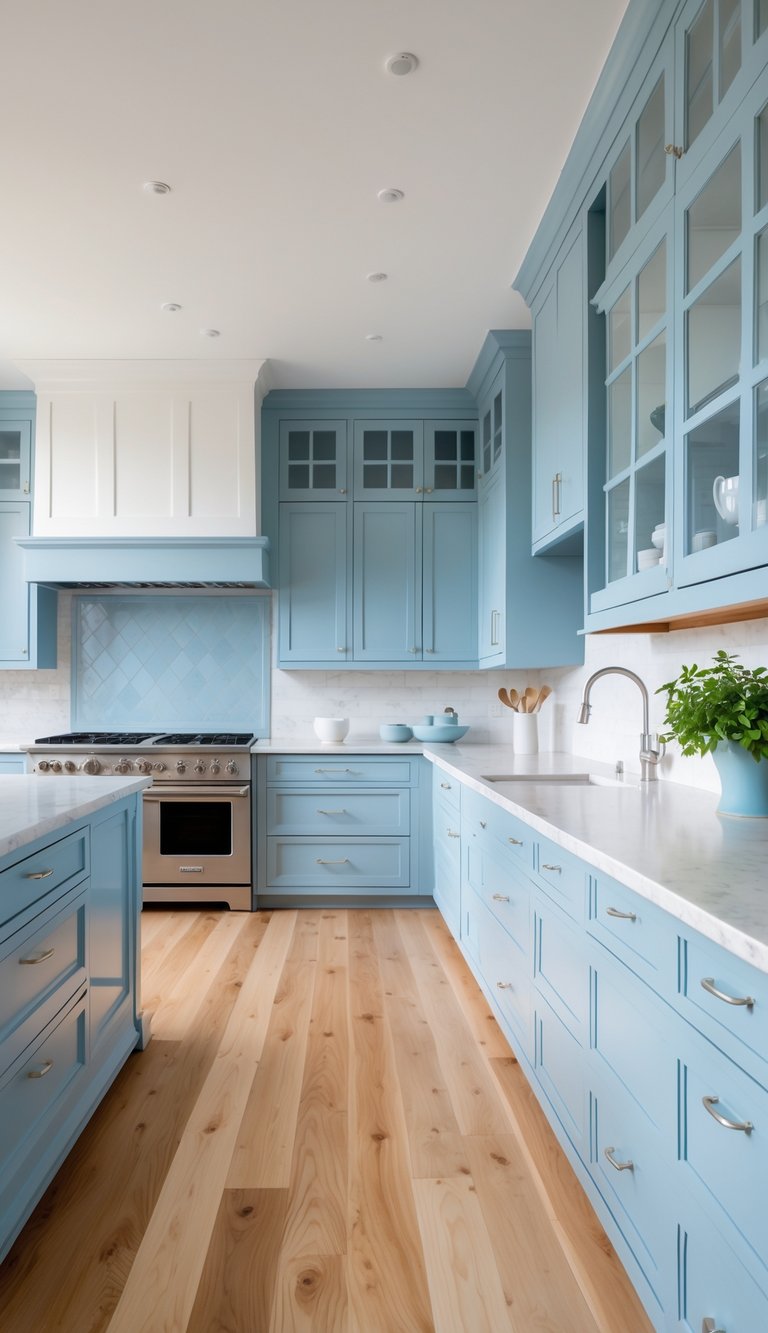
Warm maple hardwood floors make the kitchen feel cozy and natural. Pair them with soft blue cabinets or walls for a calm, fresh touch.
Maple’s light tones go with pretty much any blue. This mix keeps the kitchen open and comfortable—great for classic or modern tastes.
11) Natural stone floors with deep blue kitchen accents
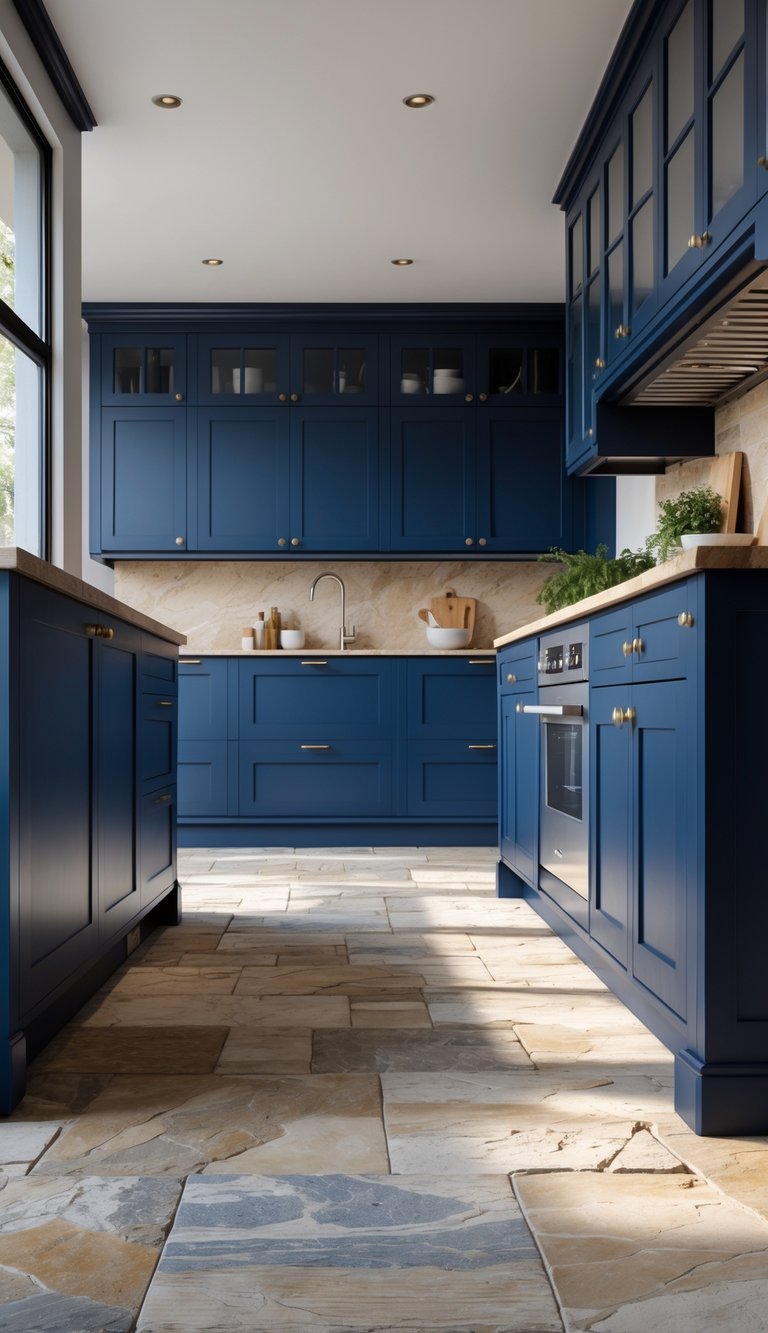
Natural stone floors have a timeless strength. Pairing them with deep blue cabinets or accents brings in texture and a grounded, natural vibe.
The cool stone tones balance the richness of blue. I think it works for both modern and traditional kitchens.
12) Glossy white tile floors to highlight blue cabinets
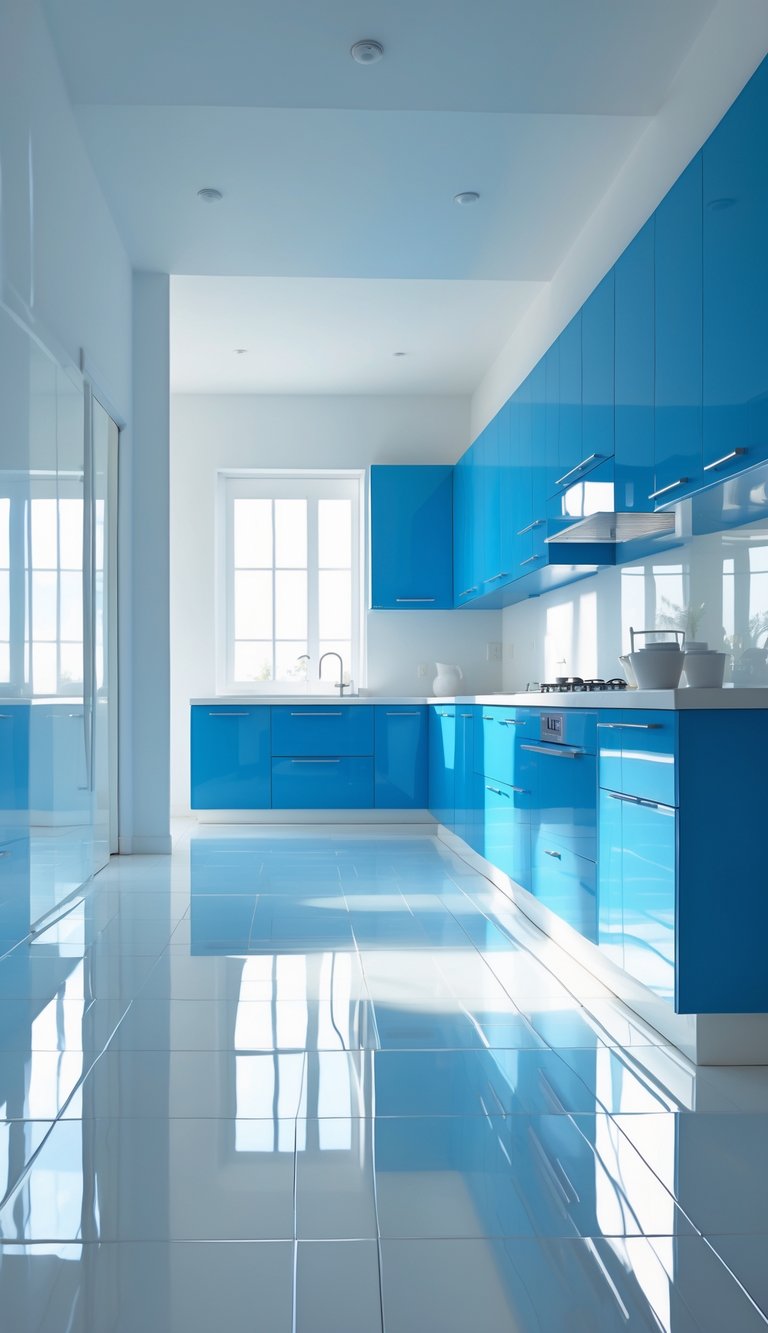
Glossy white tile floors make a kitchen feel clean and bright—perfect for showing off blue cabinets. The shiny surface bounces light around, so the space feels bigger.
White tiles give a sharp contrast that lets blue cabinets stand out. It’s simple, but it works.
13) Soft blue floor tiles to create a calming ambiance

Soft blue floor tiles instantly calm down a kitchen. This gentle color isn’t too bright, but it’s definitely not boring.
They look great with white or light cabinets. If you want a peaceful kitchen, this option is hard to beat.
14) Classic black and white checkered tiles with blue touches

Classic black and white checkered floors never go out of style. Add some blue on the walls or cabinets, and the space feels fresh and lively.
Blue details soften the bold pattern, so it’s stylish without feeling over the top. This combo fits all sorts of kitchen styles.
15) Distressed wood flooring paired with pastel blue cabinets
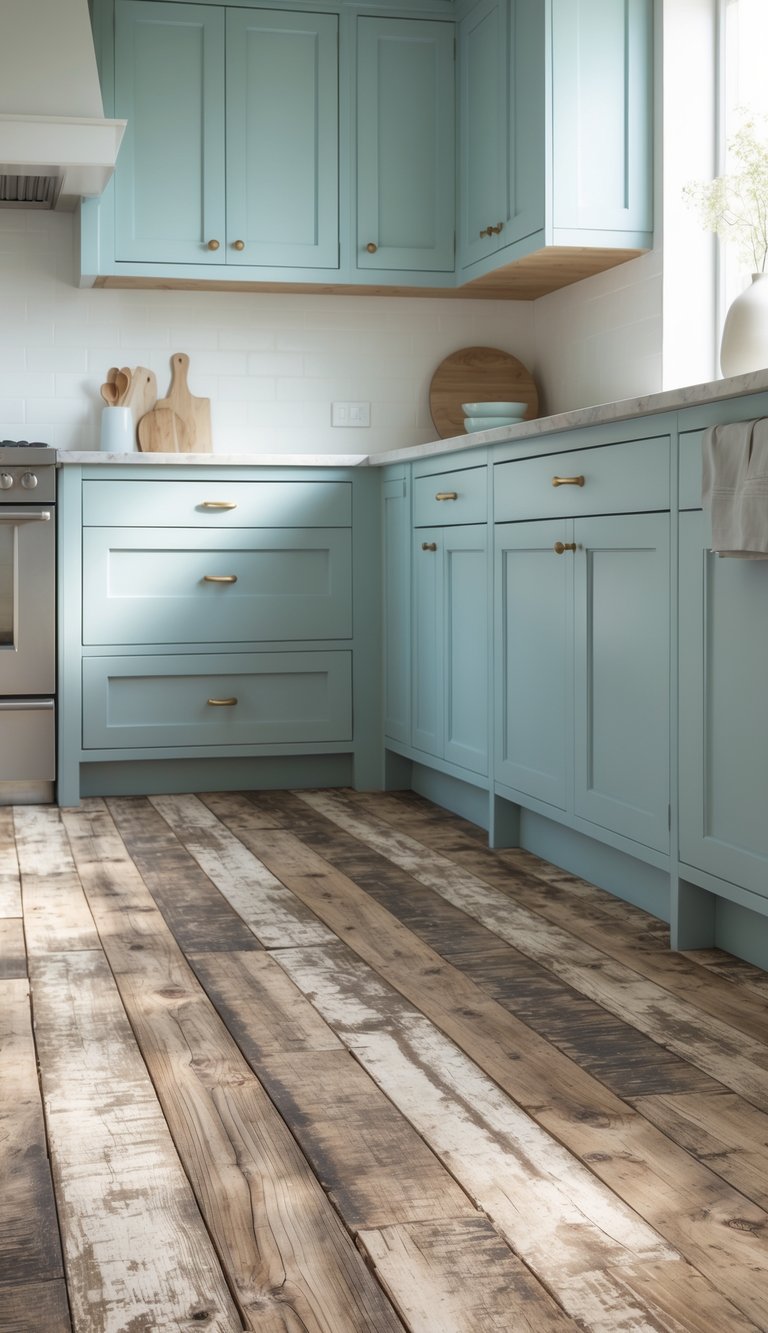
I love how distressed wood flooring brings character and warmth to a kitchen. It just feels right with pastel blue cabinets—there’s something calm and welcoming about that mix.
The worn texture on the floor balances the soft cabinet color. This combo feels timeless without looking too busy.
Honestly, if you want a cozy, rustic vibe, this pairing nails it.
Smart Styling Tips for Blue Kitchen Floors
You’ve chosen your floor—now what? Make it pop without overpowering your space with these pro-level touches:
- Balance with Neutrals: Offset blue floors with creamy walls, natural wood accents, or brushed brass hardware for warmth.
- Add Texture: Think woven rugs, matte finishes, or lightly distressed planks to prevent your space from looking flat.
- Play with Patterns: Chevron, herringbone, or checkerboard layouts can make blue floors feel like custom art.
- Keep Grout in Mind: Light grout enhances a seamless look; dark grout adds drama and hides dirt.
- Bring in Plants: Greenery softens the boldness of blue and introduces a refreshing organic contrast.
Do’s and Don’ts for Choosing Blue Kitchen Flooring
Do:
- Test multiple shades under your kitchen’s actual lighting.
- Invest in high-quality sealant if you’re painting wood or using porous tiles.
- Mix materials like stone and ceramic for subtle depth.
- Consider easy-clean finishes—because splatters happen.
Don’t:
- Overload the space with too many blue accents (walls + floors = visual chaos).
- Forget about slip resistance—especially near sinks or stoves.
- Pick ultra-glossy finishes unless you’re ready to constantly wipe footprints.
- Ignore how your floor feels underfoot—comfort matters in long cooking sessions.
How to Maintain the Magic: Keeping Blue Floors Beautiful
A little upkeep goes a long way. Here’s how to keep your blue kitchen floors looking new for years:
- Regular Cleaning Routine: Sweep or vacuum daily to avoid grit scratching the surface.
- Mild Cleaners Only: Harsh chemicals can dull the finish or discolor lighter blues.
- Re-seal Annually: Especially for natural stone or painted finishes—this keeps colors vibrant.
- Protect from Sunlight: Use rugs or window films if your kitchen gets direct sun, preventing fading over time.
Final Thoughts: Let Blue Tell Your Kitchen’s Story
Blue flooring is more than a style statement—it’s a reflection of calm, creativity, and confidence.
It ties together aesthetics and practicality, giving your kitchen both personality and endurance.
When in doubt, start small. Test a sample, trust your instincts, and remember that great design isn’t about following rules—it’s about curating what feels like you.
FAQs About Blue Kitchen Flooring
1. Are blue kitchen floors hard to maintain?
Not really! Most modern materials—like vinyl, porcelain, and sealed tiles—resist stains and scratches. Just avoid abrasive cleaners that can dull the finish.
2. Which shade of blue looks best in a small kitchen?
Soft, light blues (like powder or sky tones) can visually open up tight spaces. Pair them with white cabinetry for a breezy, airy look.
3. Can blue flooring work with warm-toned kitchens?
Absolutely. Choose navy or muted teal shades with warm undertones to harmonize with beige or oak elements.
4. What’s the most durable blue flooring option?
Porcelain tiles and luxury vinyl planks rank highest in durability and water resistance—perfect for busy kitchens.
5. Will blue floors go out of style?
Unlikely! Blue is timeless and versatile—it adapts to trends rather than fading with them.