Colorful Dining Room Ideas to Brighten Your Space With Cheerful Style

I love how a splash of color can shift the mood of a room and make meals feel more joyful.
Here are simple, practical ideas to help you bring bold hues, rich textures, and playful patterns into your dining space—so it feels lively and welcoming.
Try mixing big statements—like an emerald accent wall or a bright blue home bar—with smaller touches like colorful cushions, ceramic dinnerware, or gold pendant lamps.
I’ll show you options so you can experiment with color confidently and still keep the space balanced.
Paint an accent wall in bold emerald green
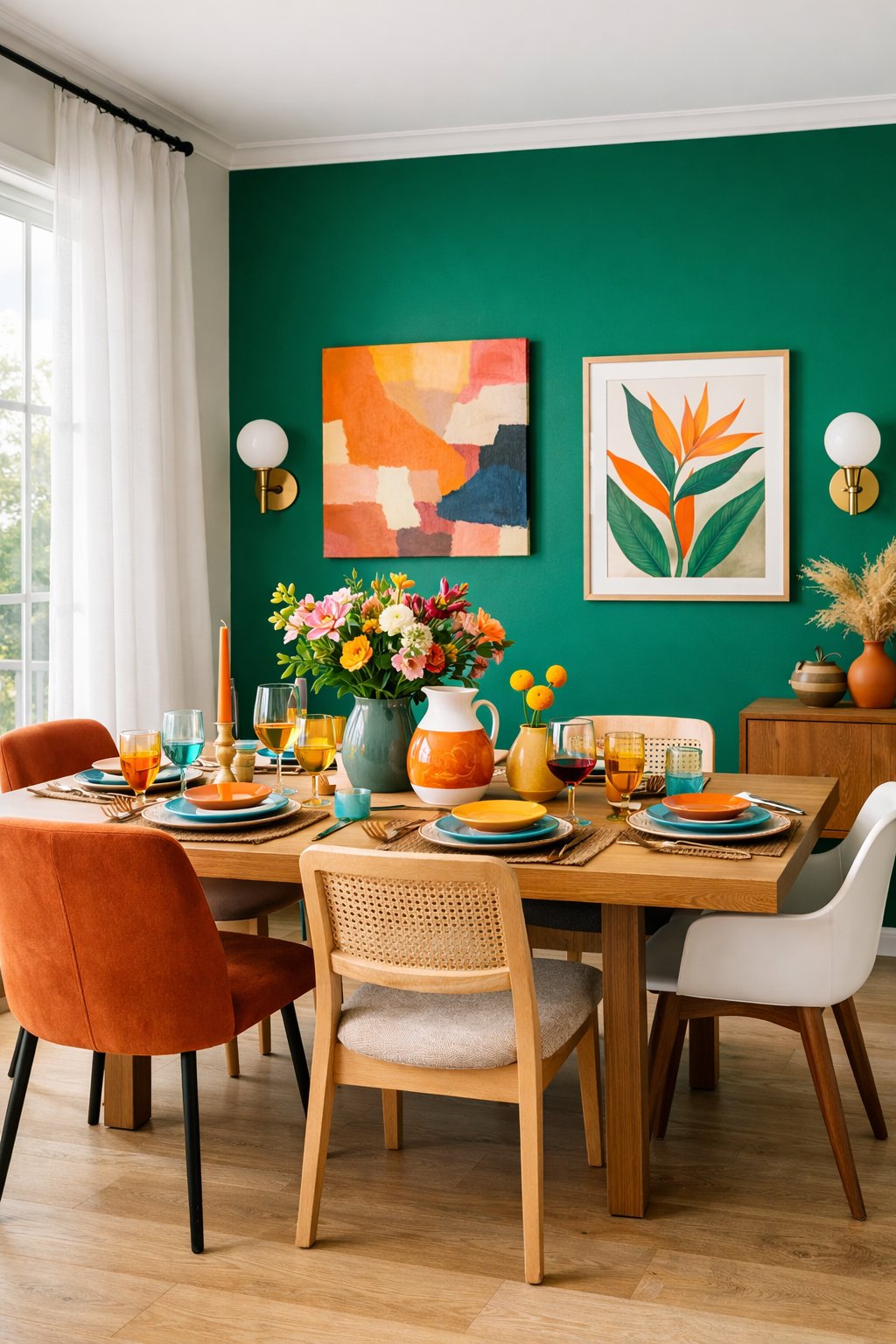
I love using emerald green as an accent wall. It gives my dining room depth and warmth.
The color makes furniture and art pop, but it doesn’t feel loud.
I usually paint the wall behind the table to make a clear focal point.
Pair it with warm wood or brass details for a cozy, balanced vibe.
Use pink velvet dining chairs for a pop of color
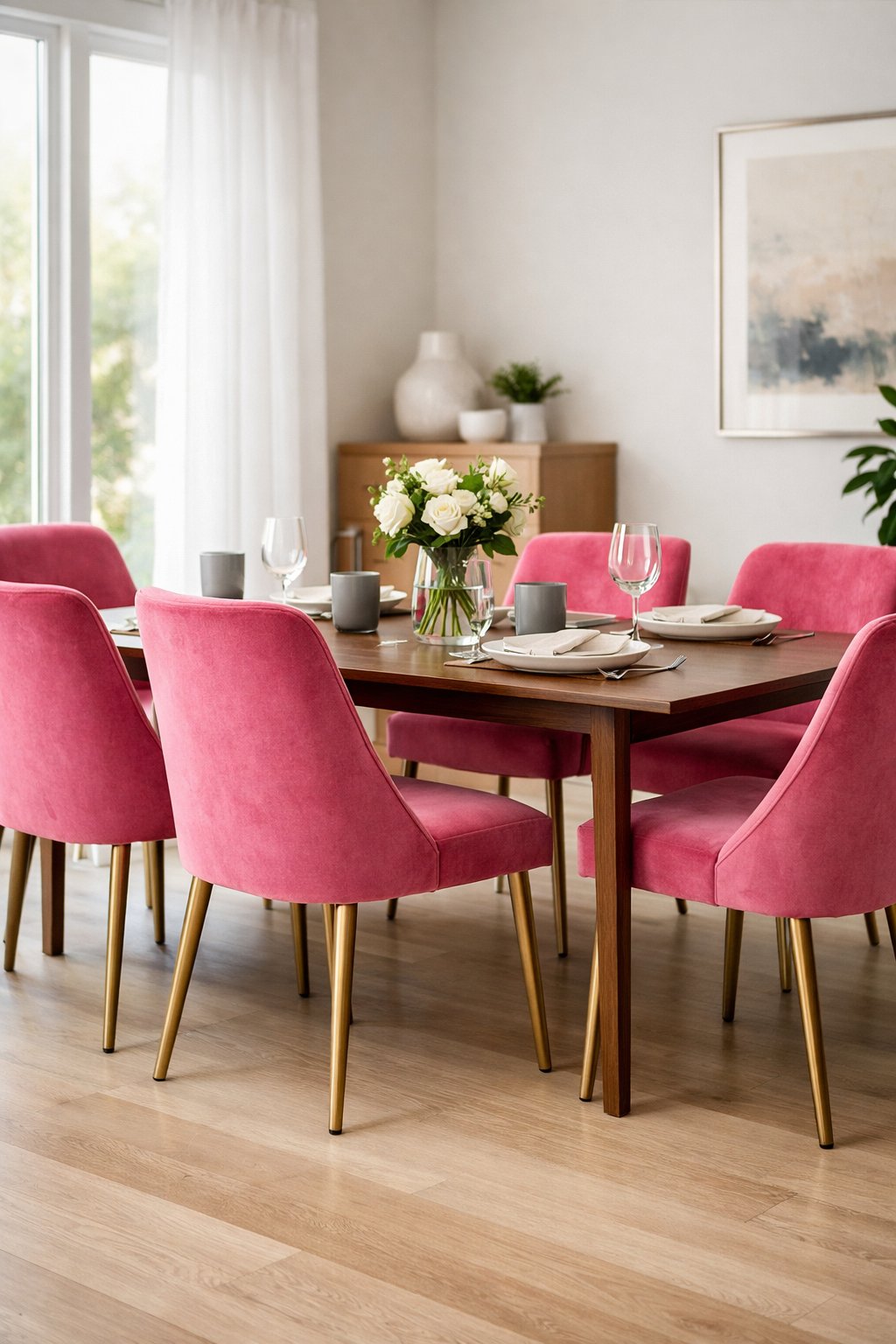
Pink velvet chairs lift a room without much effort. The soft texture feels cozy and adds a gentle glow.
I pair them with neutral walls and a wooden table. The chairs stay the star of the show, but the whole room feels pulled together.
Add a bright blue home bar with glass shelves
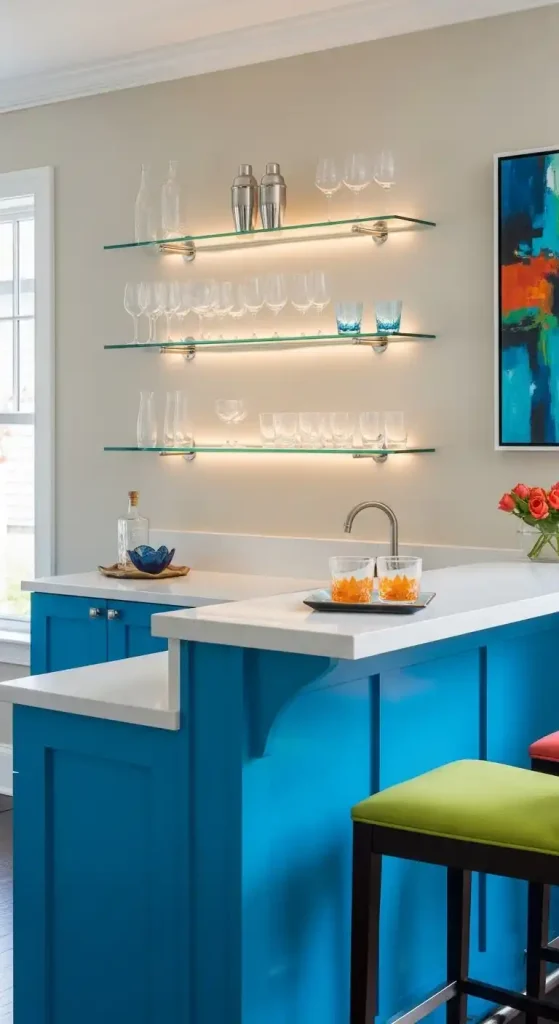
A bright blue bar brings energy to a dining room. The color pops against neutral walls and ties in colorful chairs or art.
I use glass shelves to display my favorite glassware and bottles. They let light pass through, so the space feels open and polished.
Install chic gold pendant lamps above the table
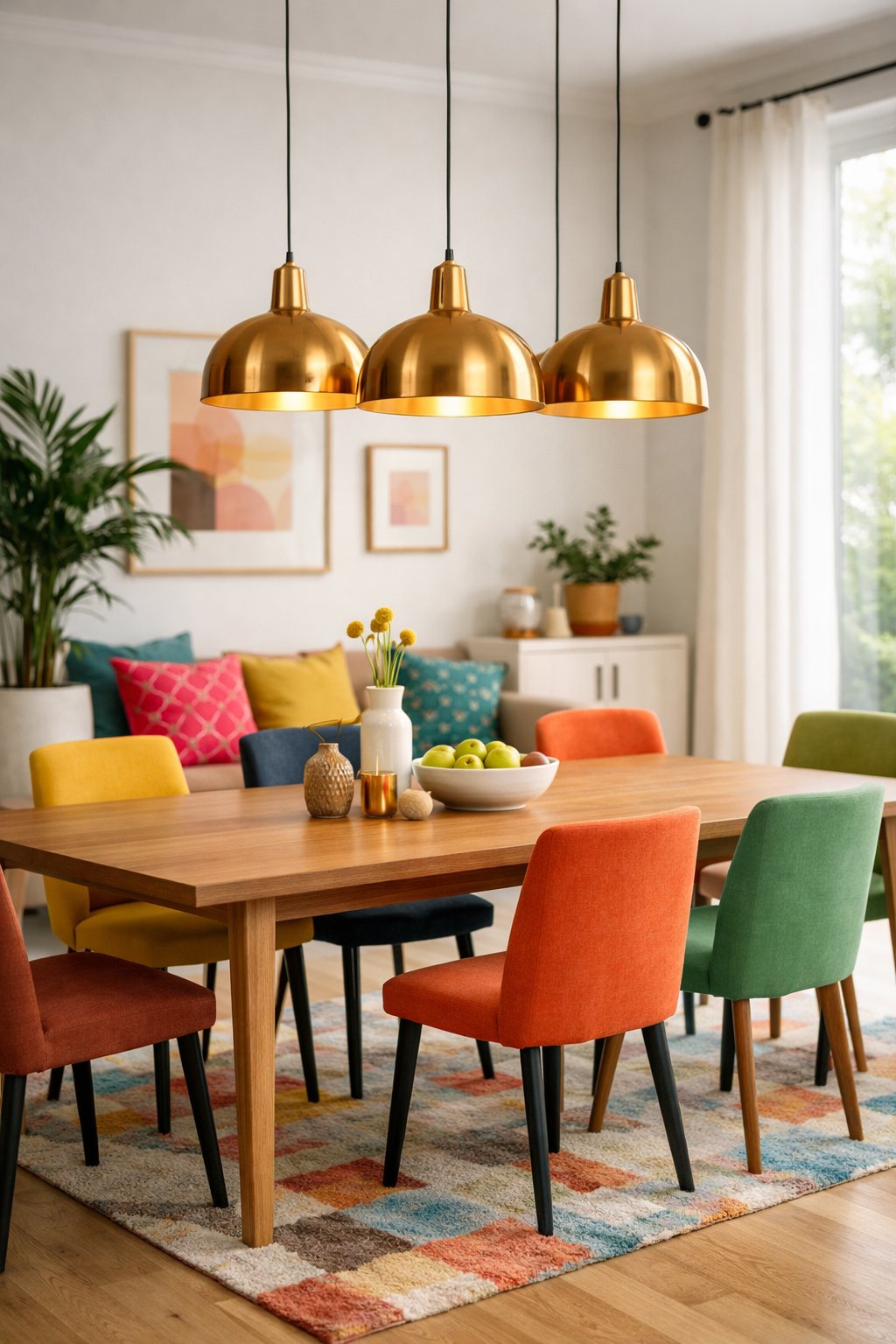
Gold pendant lamps warm up a dining room and add a stylish focal point.
I hang them about 30–36 inches above the table so they light faces without blocking sightlines.
Sometimes I pick simple shapes for a modern look. Other times, I go for textured finishes when I want more character.
Warm white bulbs keep the glow cozy and flattering.
Incorporate colorful patterned rugs under the dining table
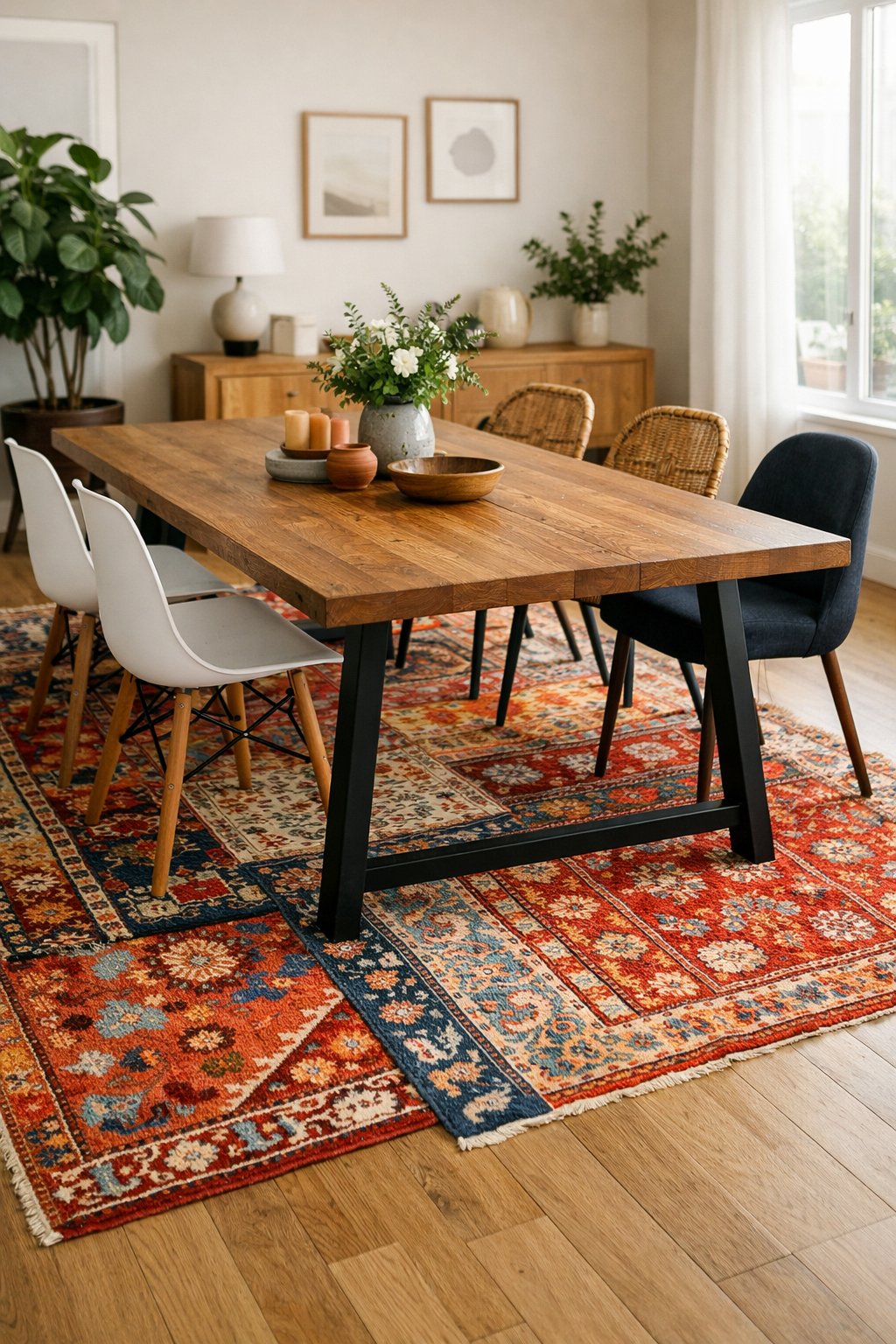
I like using a patterned rug to anchor my dining area. It adds color without needing to paint walls.
A rug with bold shapes or lots of color can hide spills and tie together the chairs, table, and decor.
I pick a rug big enough so chairs stay on it when pulled out. Sometimes I layer a small patterned rug over a neutral base for depth.
Mix and match vibrant dining chairs in various hues
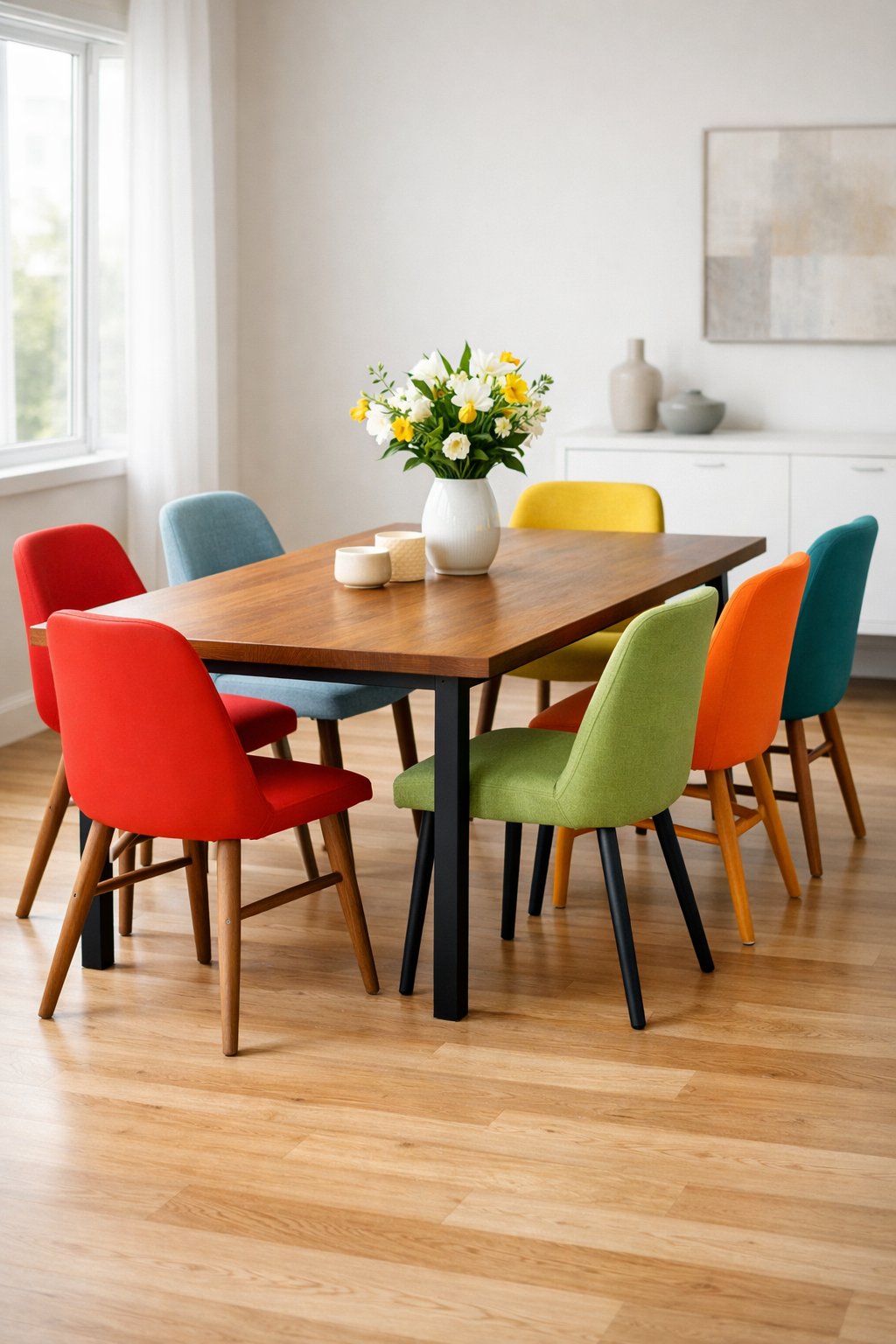
Mixing chair colors makes meals feel lively and fun.
I pick two or three main hues and toss in a contrasting shade for pop.
Mixing materials—wood, metal, fabric—keeps things interesting. I avoid matching everything so the room feels personal and relaxed.
Display colorful abstract art on the walls
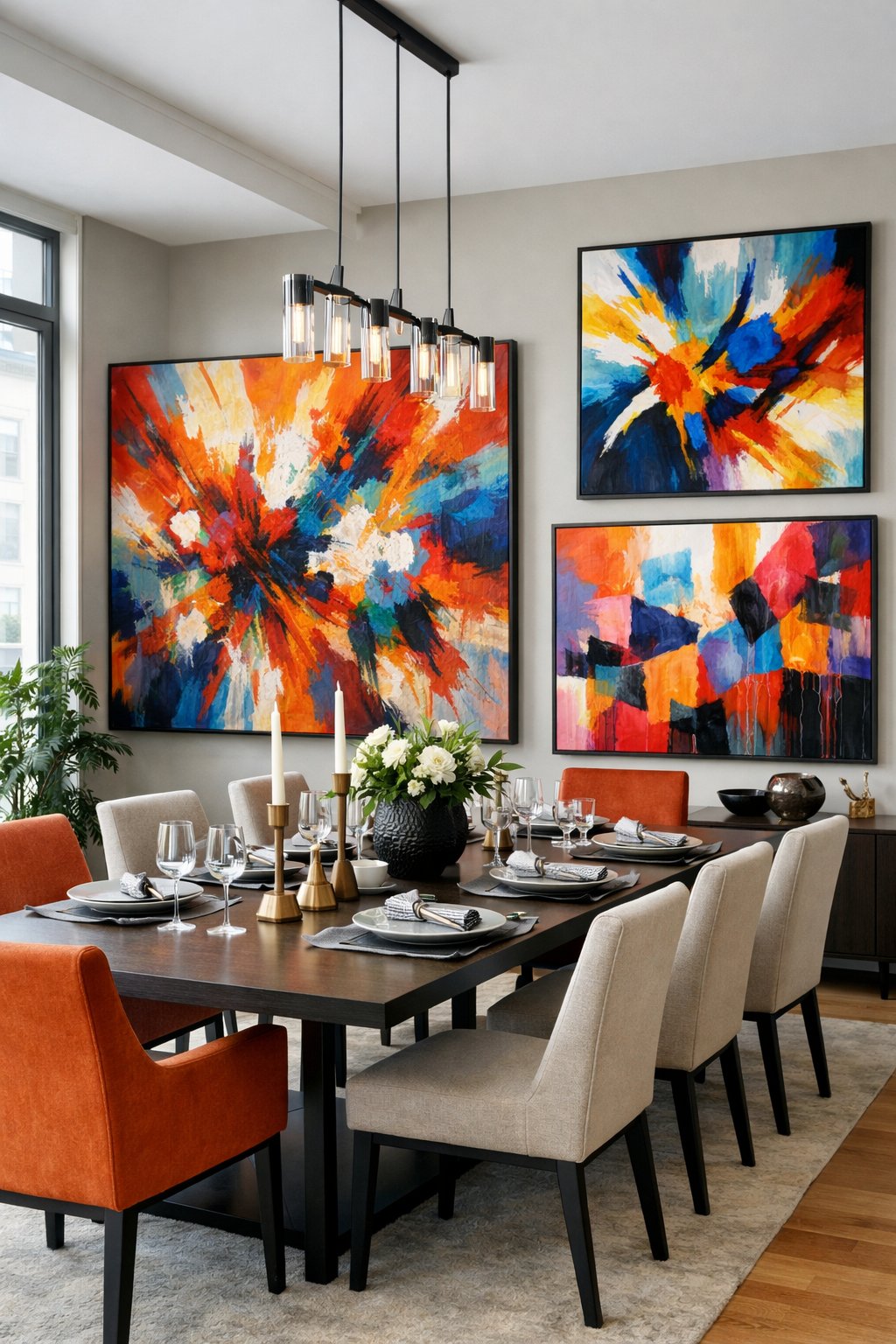
I hang a bold abstract painting to give the dining room instant color.
The shapes and textures make the space feel lively without much extra decor.
I pick art that echoes tones from my chairs or rug. A large canvas above the table becomes a focal point and sparks conversation.
Use colorful ceramic dinnerware as decor accents
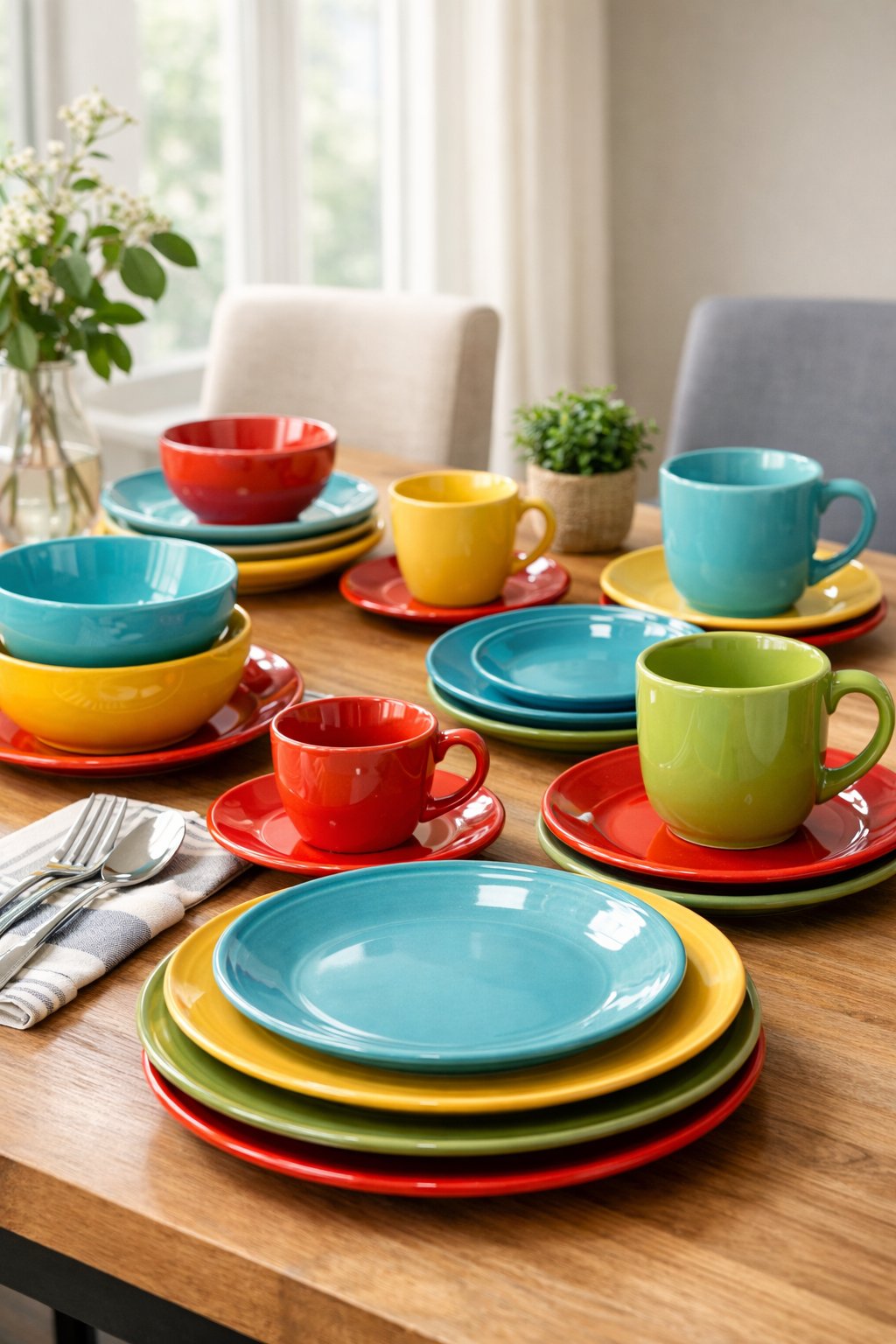
I love using bright ceramic plates and bowls to lift a dining room.
I mix patterns and solids on open shelves so the dishes double as art. Sometimes I set a few colorful pieces on the table between meals for a little warmth.
Choose a vibrant red or orange tablecloth
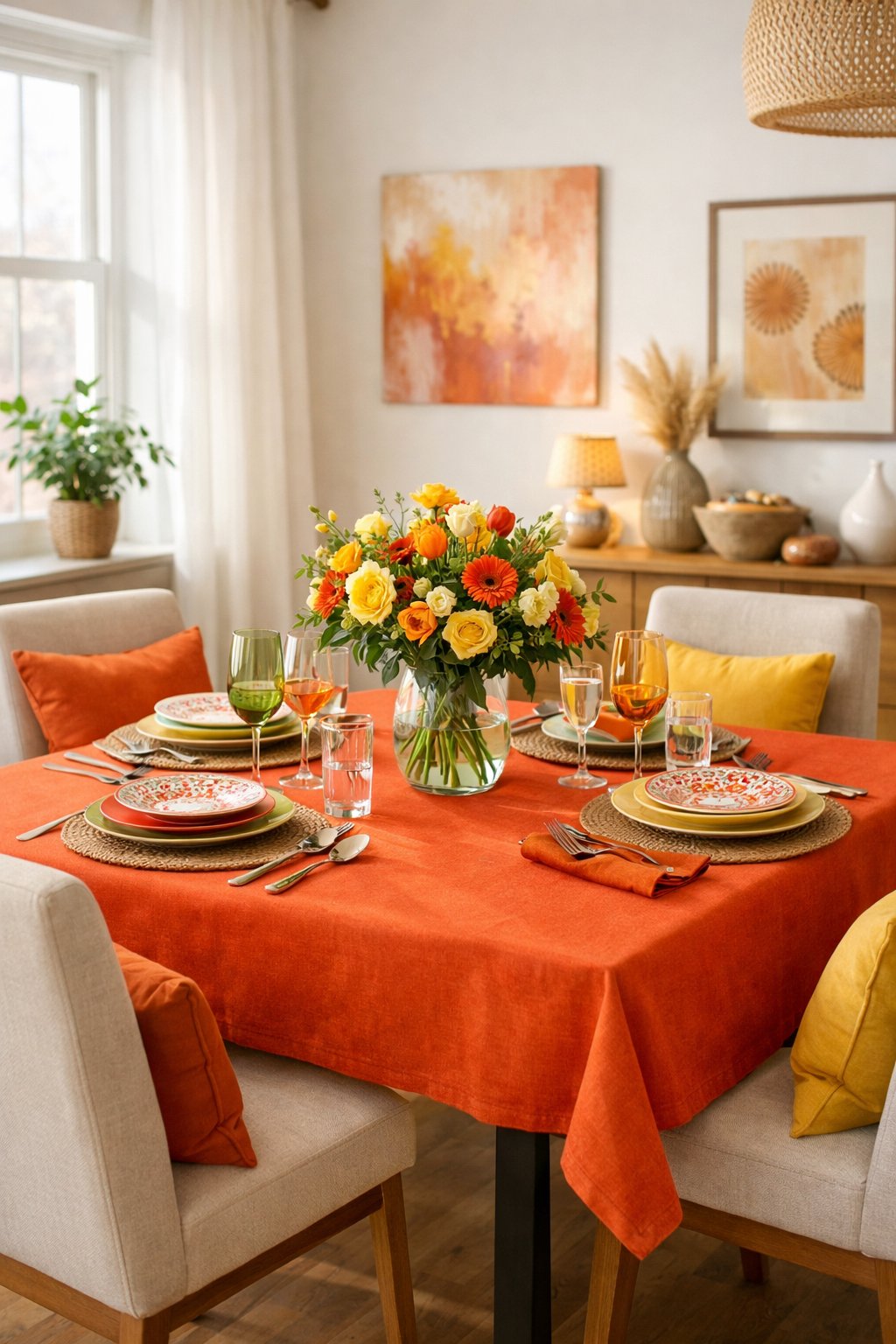
A red or orange tablecloth lifts the whole room in seconds. It adds warmth and draws the eye without changing furniture.
I use solid colors when I want a bold look. Patterned cloths work when I’m after a little more texture.
Both go well with simple place settings and neutral walls.
Add potted plants for a fresh green touch
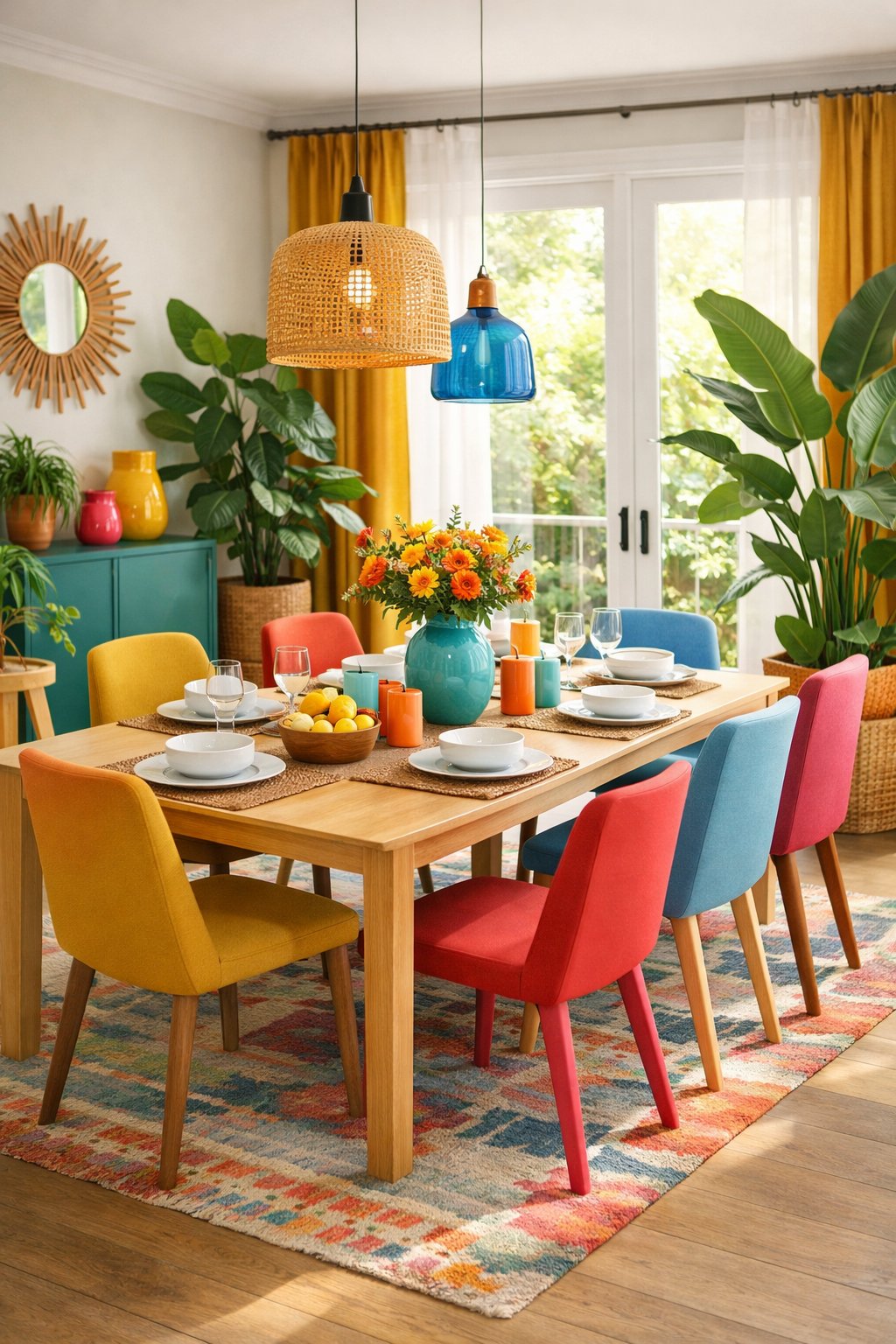
I like adding potted plants to bring life and color to my dining room.
Small succulents on the table and a taller fiddle-leaf fig in the corner create balance without crowding the space.
I pick easy-care varieties so I can enjoy greenery with little fuss. Simple pots keep things calm and let the plants take center stage.
Combine warm neutrals with bold shades like navy or marigold
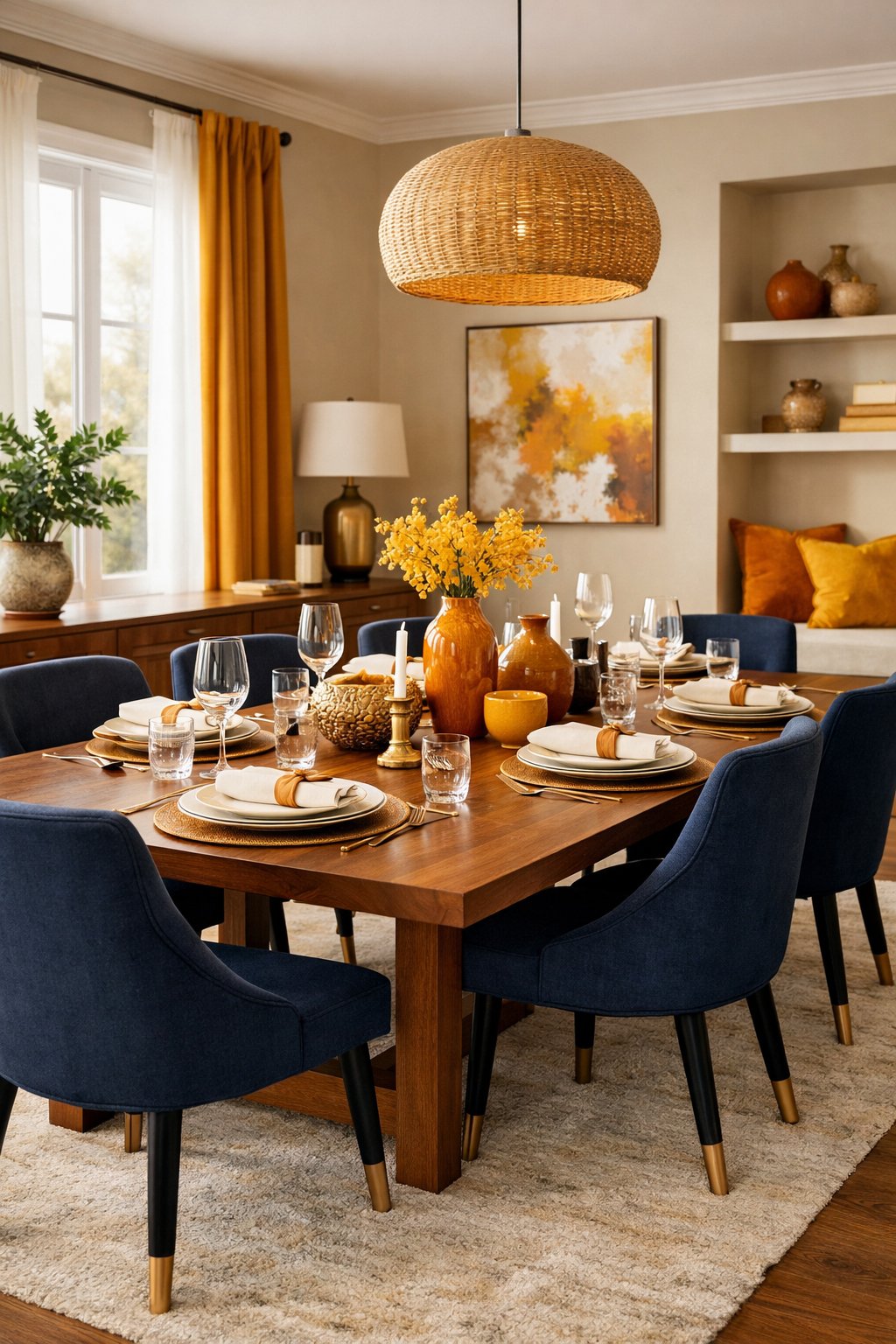
I start with warm neutrals—beige, greige, or soft sand—as a calm backdrop. They ground the room and make bold colors easier to add.
Then I bring in navy or marigold on a wall, chair, or rug. Navy adds depth, marigold brings energy.
I stick to the 80/20 rule: mostly neutrals, just a few bold pieces to keep things lively.
Use a kaleidoscopic mix of bright cushions
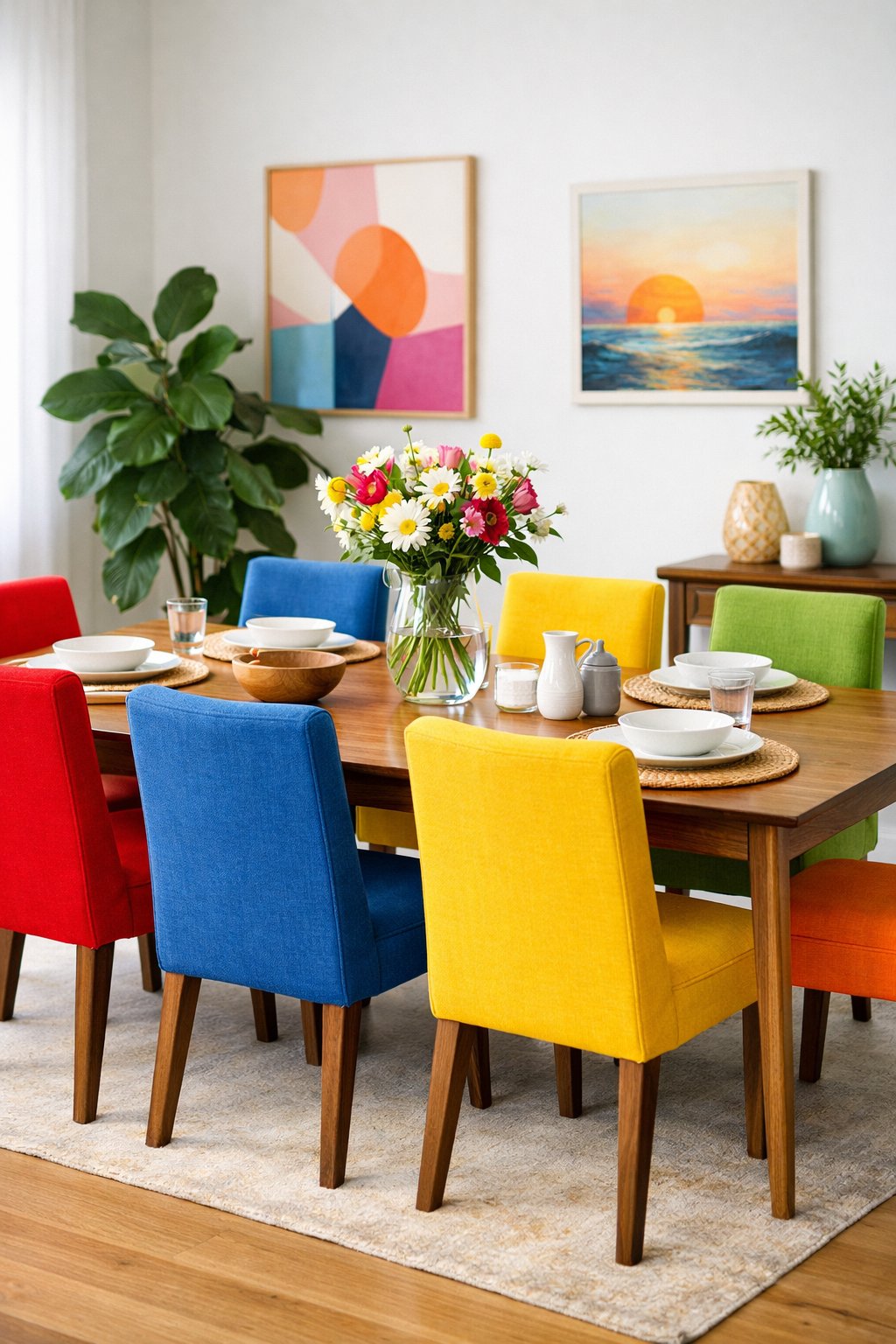
I love swapping cushions to change a room fast. Bright, mismatched cushions on plain chairs add color without a big job.
I pick patterns, solids, and textures that share a couple colors. That keeps it lively but still tied together.
I rotate cushions by season or mood to keep things fresh.
Hang colorful pendant lights in varying shapes
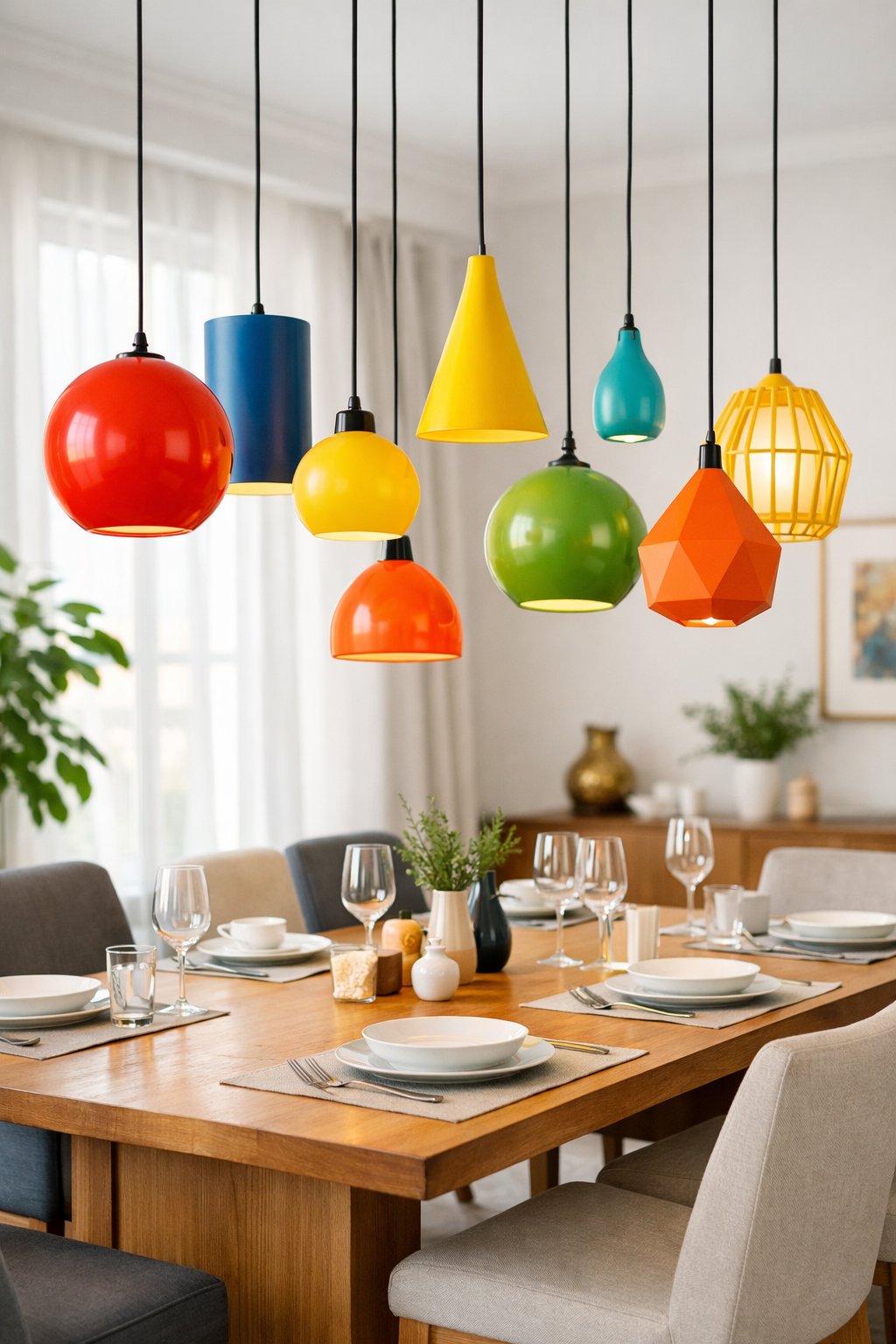
I love using colorful pendant lights to brighten my dining room. I mix shapes—globes, cones, geometric—for a playful look that still feels balanced.
Hanging them at different heights adds depth and catches the eye. The colors tie everything together and give a simple space more personality.
Enhancing Dining Room Atmosphere With Accessories
I focus on small, high-impact items that set the mood and add color. Thoughtful choices in art, tabletop pieces, and light fixtures make the room feel intentional and joyful.
Artwork and Decorative Accents
I pick one main artwork to anchor the room—usually a bright canvas or framed print that pulls together the palette. Placing it above a buffet or on the largest wall helps it read as a focal point.
Two or three smaller accents—maybe a sculptural vase, woven wall piece, or a cluster of small frames—keep things interesting but not cluttered.
Textiles add warmth and pattern. I use a bold runner, colorful seat cushions, or a patterned rug under the table to tie colors together.
For tabletop decor, I swap in a strong centerpiece—like a ceramic bowl or a low floral arrangement. I keep place settings simple but colorful with napkins or plates.
- Pick one dominant color in art, two accent colors in textiles.
- Mix matte and glossy finishes for depth.
- Keep tabletop items low so conversation flows easily.
Lighting Strategies for Vibrant Spaces
I like to layer different types of light to control the mood. Usually, I’ll use a central pendant for tasks, dimmable overheads for ambiance, and a couple of accent lamps for highlights.
A bright, low-hung pendant over the table creates a focal point and really shows off your tableware. I always put the pendant on a dimmer—makes it easy to switch from bright dinners to softer, relaxed evenings.
Color temperature actually makes a difference. Warm white bulbs (2700K–3000K) help keep colors rich and skin tones flattering.
For accents, I’ll sneak in LED strips behind buffet pieces or use picture lights above art to boost color without causing glare. Sometimes I’ll go for statement fixtures with colorful shades or painted interiors—just to echo the room’s palette and add a playful vibe.