Oak Kitchen Flooring Ideas: 13 Expert Designs to Elevate Your Space

Picking flooring for a kitchen with oak cabinets isn’t always easy. There are so many choices that can either work with or fight against the warm oak tones.
I’ll help you figure out which flooring ideas actually work and make your kitchen look balanced and inviting.

You want flooring that shows off the oak’s beauty, not something that steals the show. Let’s look at a bunch of styles and materials so you can make choices you’ll feel good about.
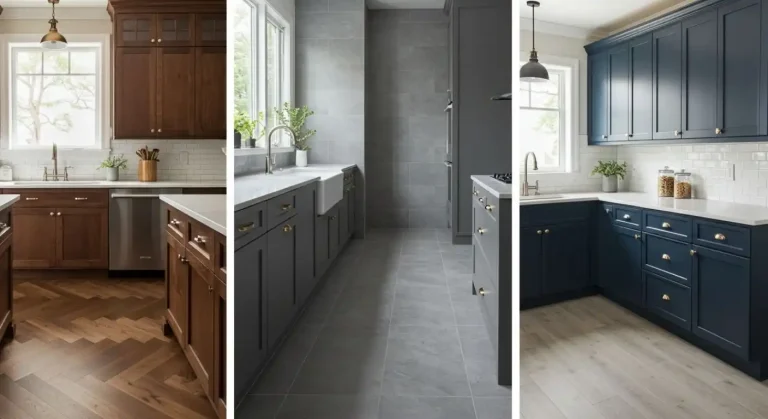
1) Light Gray Porcelain Tile

I think light gray porcelain tile looks great with oak kitchen cabinets. The color feels fresh and doesn’t drown out the wood’s natural warmth.
Porcelain tile stands up to busy kitchens and cleans up easily. It adds a gentle shine that helps brighten the room.
This tile works with lots of countertop and backsplash styles. It keeps things modern but still cozy.
2) Charcoal Slate Flooring
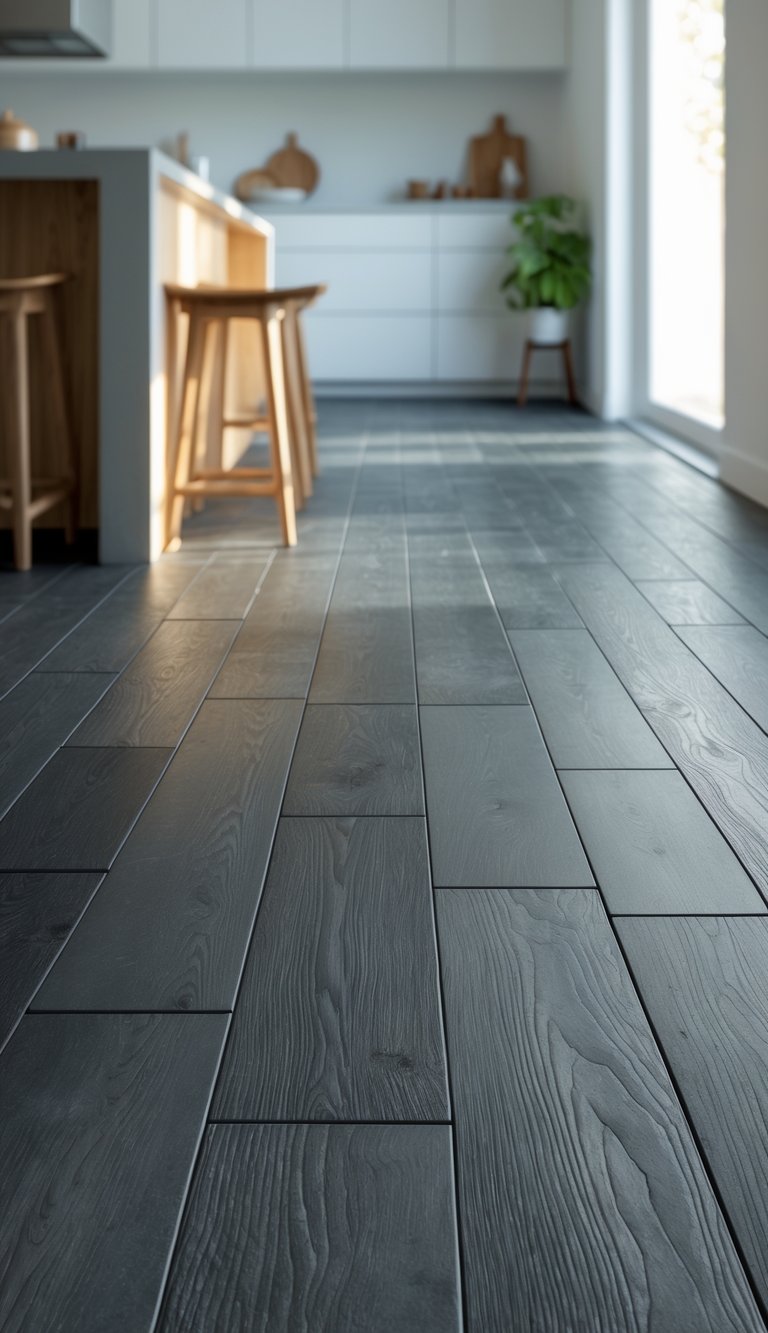
I’m a fan of charcoal slate floors for their bold, modern vibe. The dark color brings out the stone’s texture and looks sharp against oak cabinets.
Charcoal slate gives kitchens an urban edge. It’s tough, slip-resistant, and doesn’t need much fuss to stay looking good.
3) Warm Beige Ceramic Tile

I like warm beige ceramic tile with oak floors. The beige fits right in with the wood’s color, making the kitchen feel cozy and balanced.
These tiles usually have subtle textures or matte finishes for extra depth. They’re easy to clean and suit both modern and classic kitchens.
4) Natural Hickory Hardwood
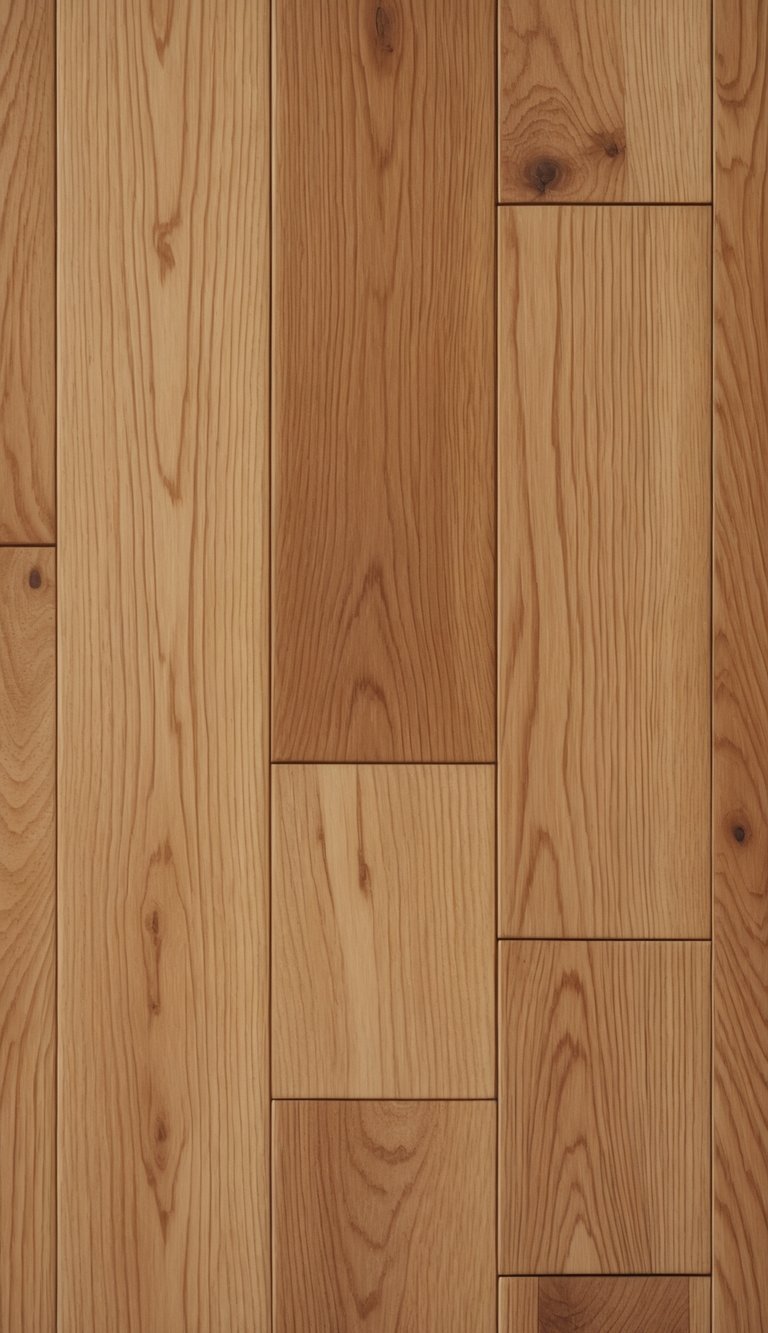
I like natural hickory hardwood for oak kitchens. It’s strong and has a lively grain that adds texture without fighting the oak cabinets.
Hickory’s warmth fits right in. It stands up to kitchen chaos and still looks inviting.
5) Matte Finish Bamboo Flooring

I like matte finish bamboo flooring for oak kitchens. The low shine keeps the floor mellow so it doesn’t clash with oak cabinets.
Bamboo’s tough and handles foot traffic well. This finish keeps things modern but lets the kitchen feel relaxed and natural.
6) Distressed Walnut Hardwood
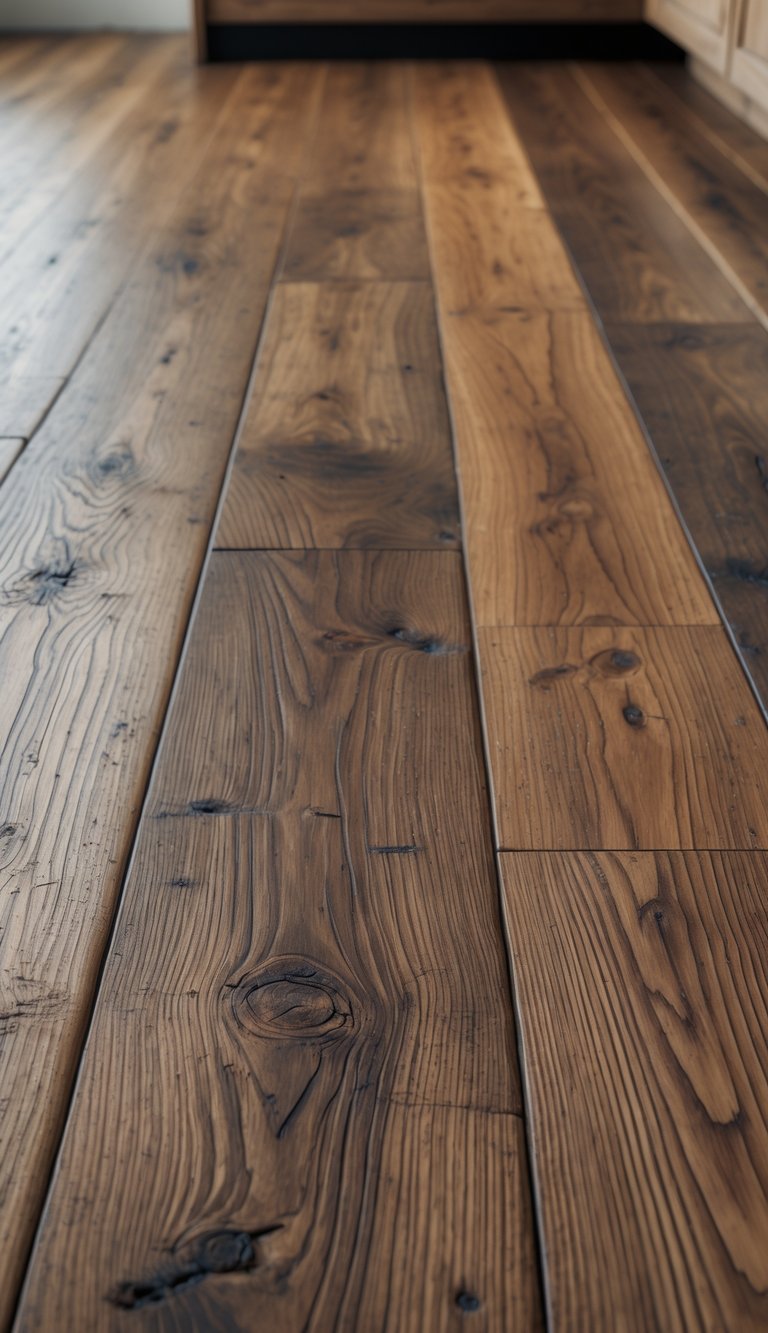
I love distressed walnut hardwood for its lived-in charm. The rough texture brings character and warmth, balancing smooth oak cabinets.
The dark tones give a bold contrast. This floor feels perfect for kitchens that want a cozy, broken-in vibe, and it’s built to last.
7) Classic Red Oak Plank Flooring
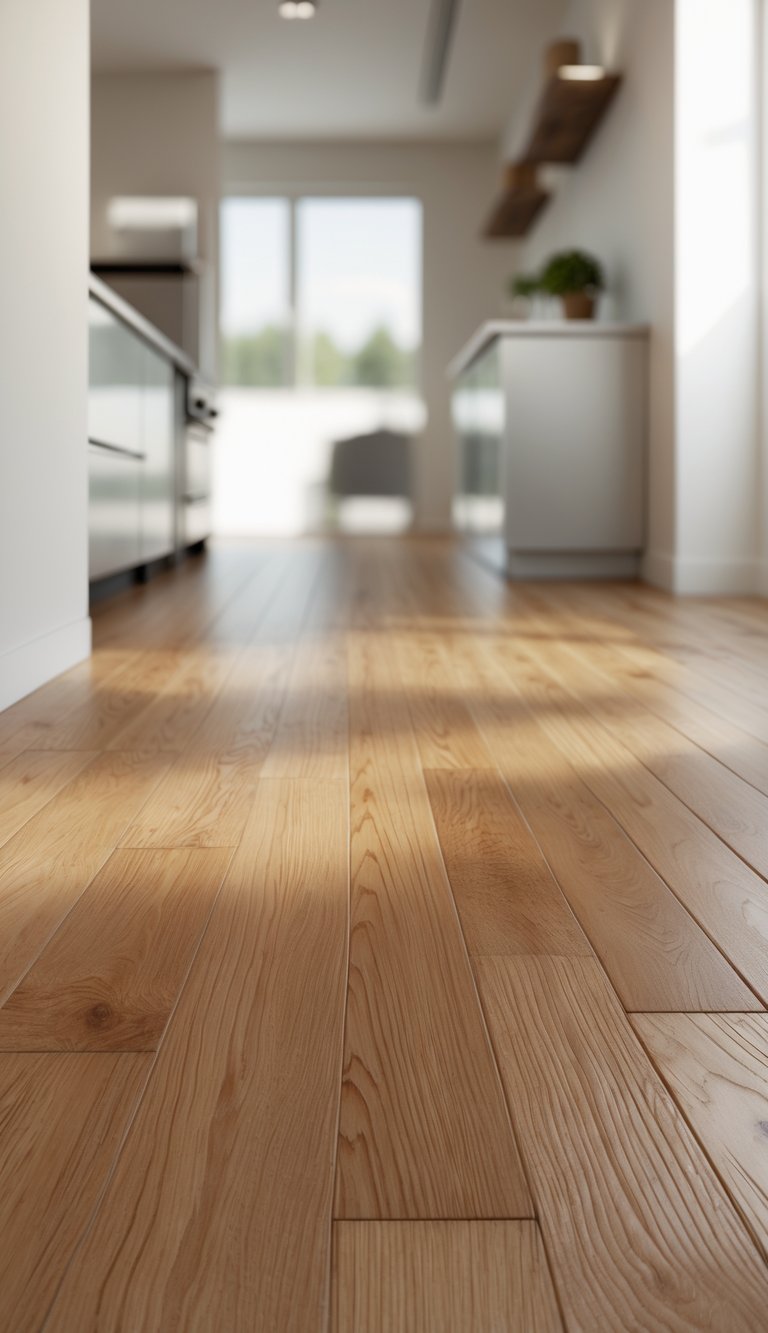
Classic red oak plank flooring brings real warmth and personality. The rich color and grain make any kitchen feel welcoming and timeless.
Red oak fits both traditional and modern looks. It’s flexible enough to work with all kinds of kitchen styles.
8) Rustic Pine Floorboards

I’m drawn to rustic pine floorboards for their old-school charm. The wide planks and natural knots add character but don’t make things feel cluttered.
Pine’s warm tones give off a cozy vibe, ideal for farmhouse kitchens. It’s also easier on the wallet than some hardwoods, and the dents and scratches just add to the look.
9) Creamy Travertine Tile
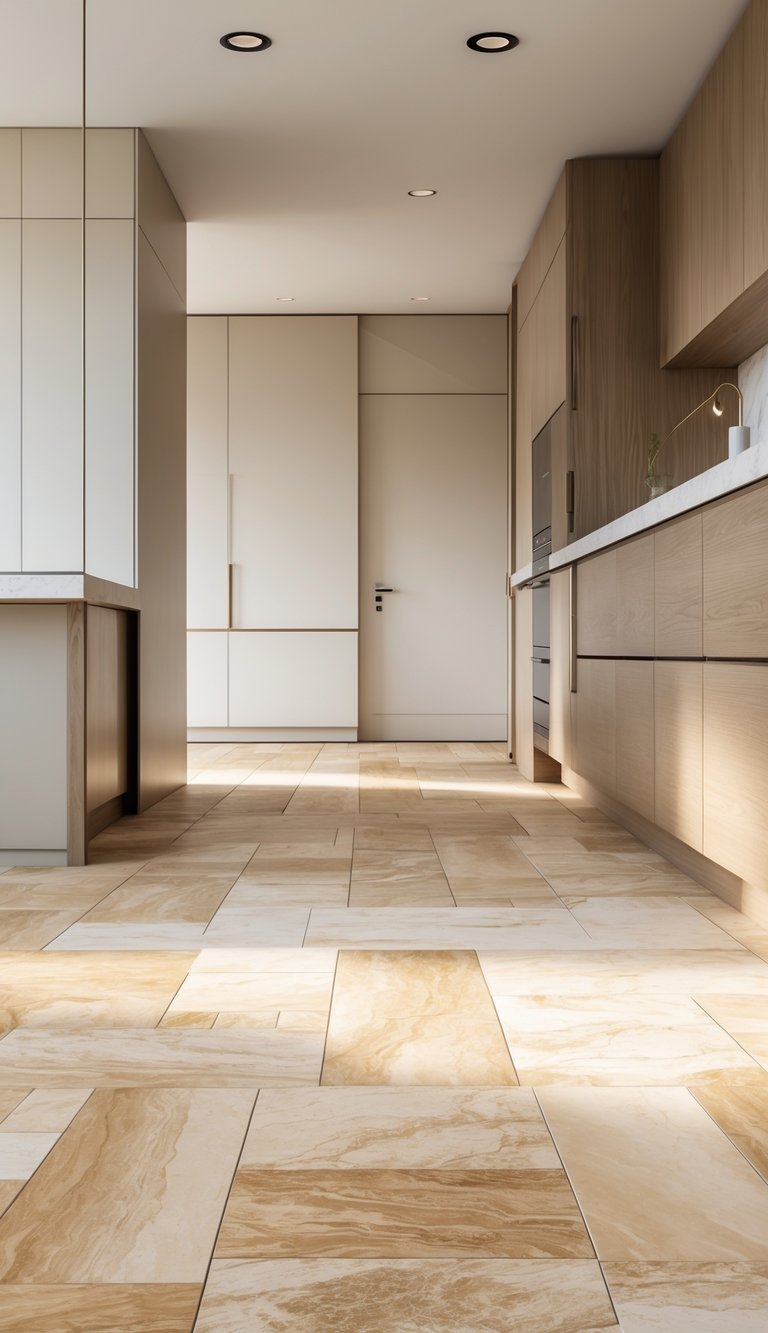
Creamy travertine tile brings soft, warm tones that play nicely with oak. It gives a natural, elegant touch without being fussy.
The texture adds a bit of depth but doesn’t distract from the wood grain. Travertine works especially well in open kitchens, letting the space flow.
10) Dark Espresso Laminate
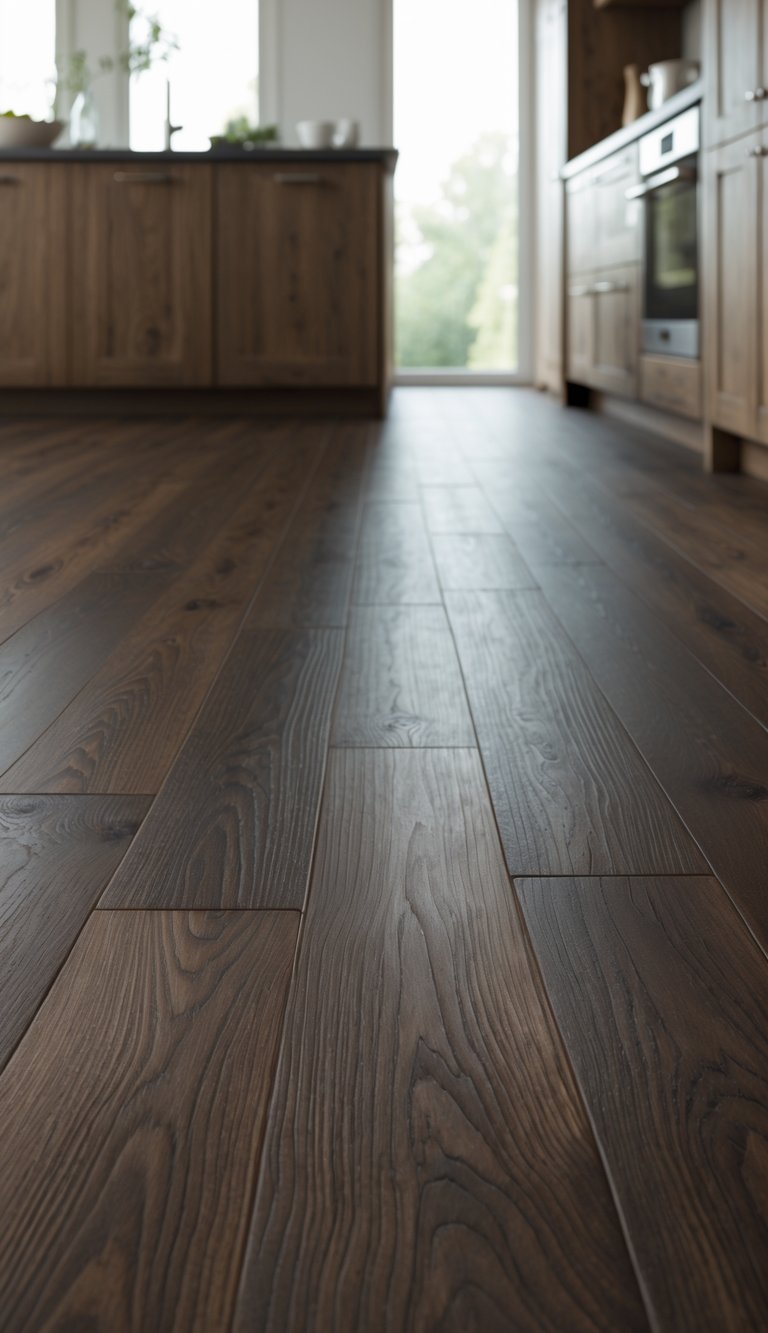
I like dark espresso laminate for the way it adds deep, rich contrast to oak. The dark color makes the cabinets pop and gives the floor a modern edge.
Laminate stands up to heavy use, which is always a plus. The satin finish helps the kitchen stay bright, even with the darker floor.
11) Whitewashed Oak Flooring
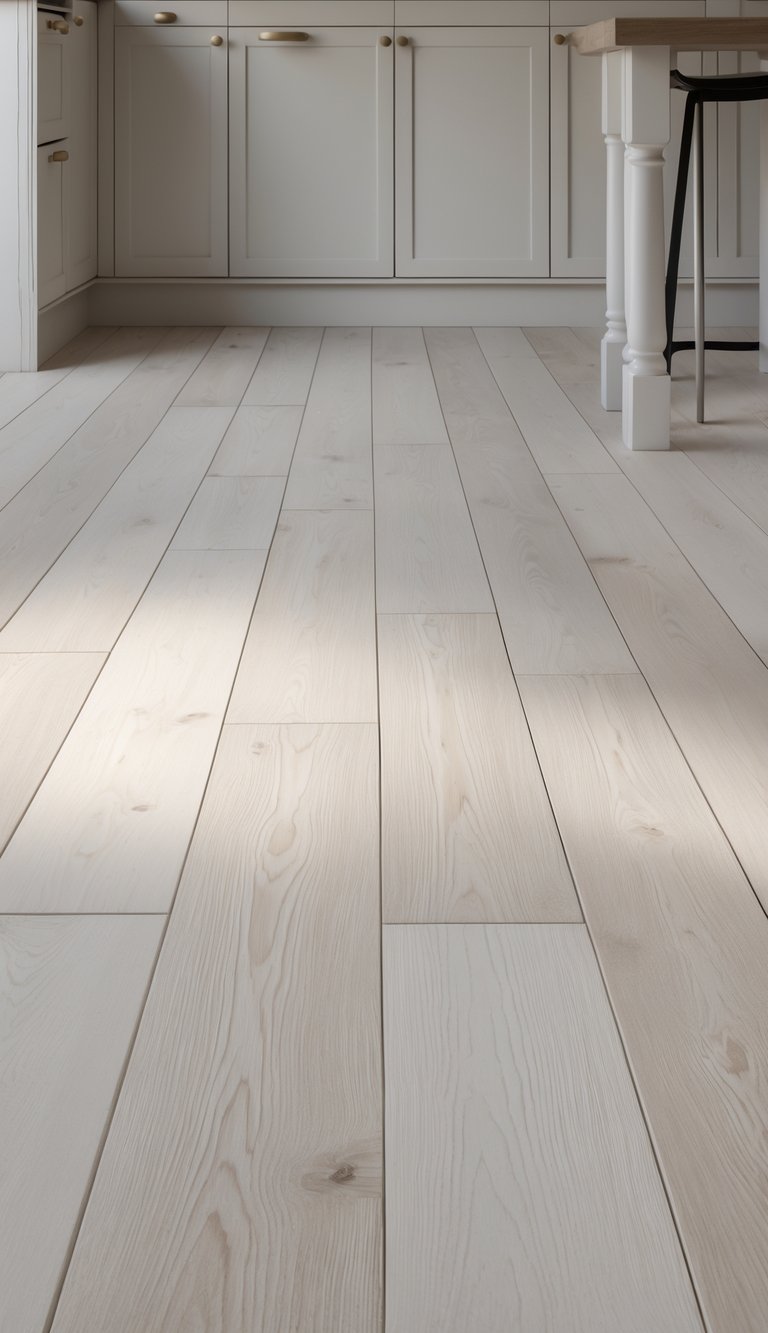
Whitewashed oak flooring has a light, breezy feel. It softens the wood grain but keeps the texture visible.
This look fits kitchens that want a modern yet comfy feel. Whitewashing also helps brighten up dark corners without losing the wood’s warmth.
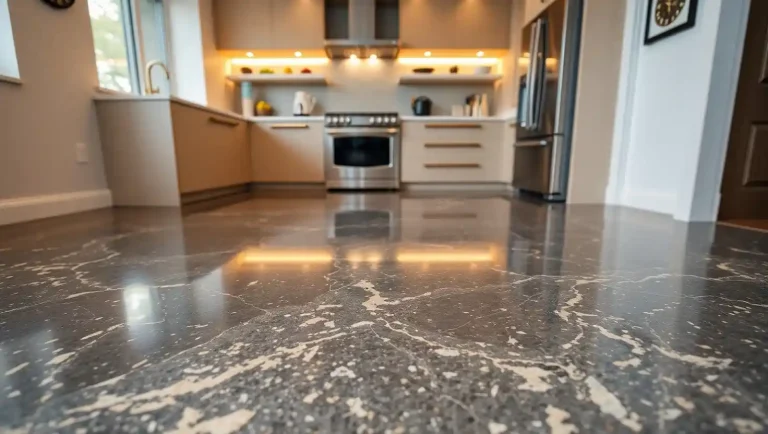
12) Polished Concrete
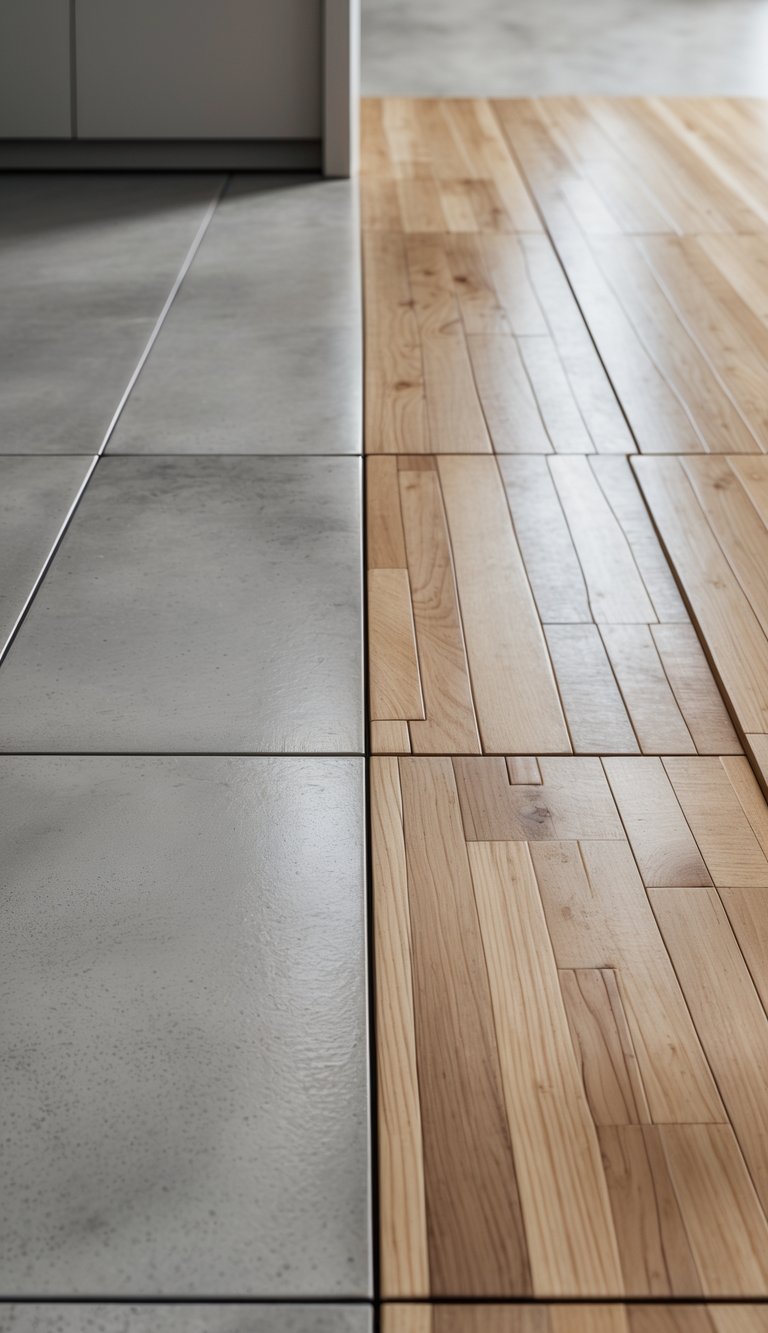
I’m into polished concrete floors for their clean, modern style. The smooth shine adds a sleek touch but doesn’t feel cold or harsh.
This floor is tough and a breeze to clean. It strikes a nice balance between industrial and natural warmth.
13) Neutral Limestone Tiles
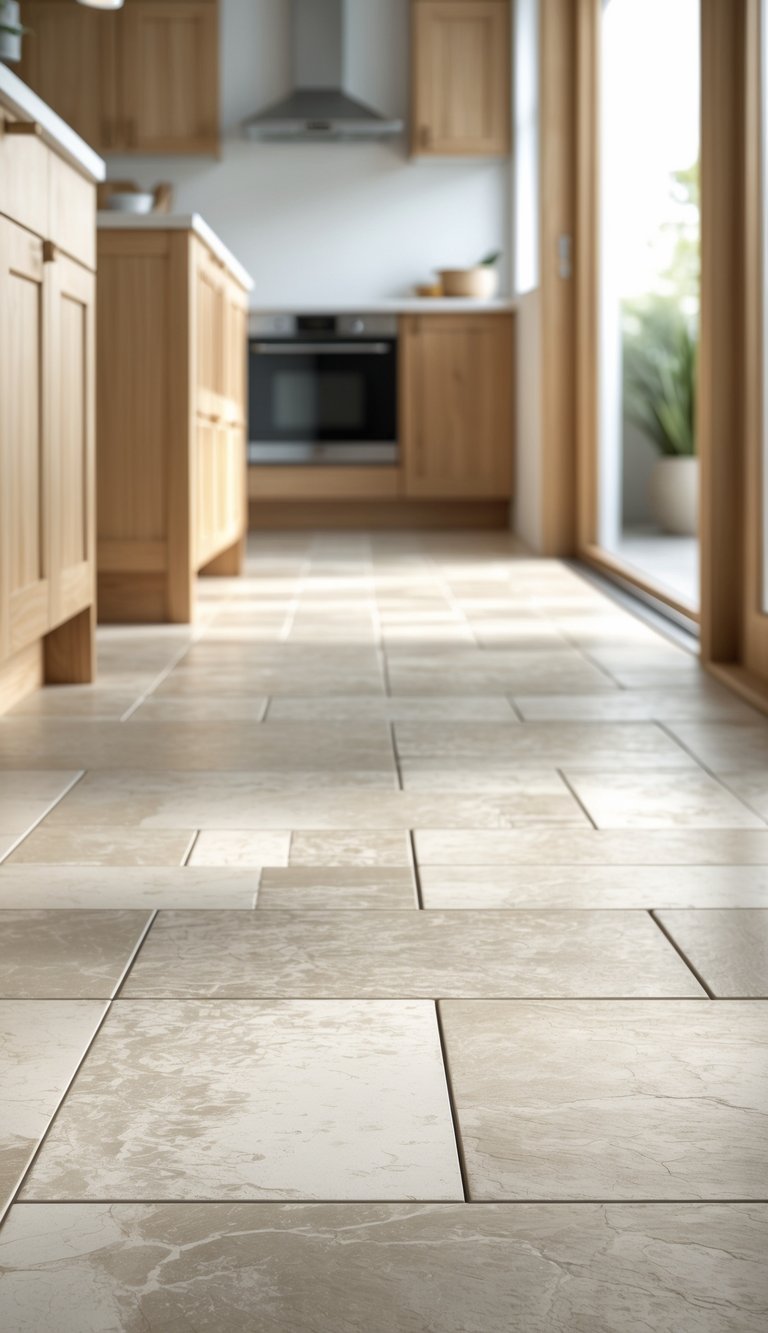
Neutral limestone tiles work well with oak floors. The soft beige and light gray tones blend in with the wood’s warmth.
Limestone gives a calm, natural look and doesn’t overpower the kitchen. It’s also easy to keep up, which is always a win.
Oak Flooring Durability and Maintenance

Oak flooring is tough and lasts for years, but it still needs some love. I pay attention to cleaning and try to protect the floor from scratches and spills to keep it looking sharp.
Cleaning Best Practices
I clean oak flooring often to stop dirt from scratching the surface. A soft broom or a vacuum with a wood floor attachment does the trick.
Damp mopping works best, but I use a microfiber mop and a wood floor cleaner. I never soak the floor or use harsh chemicals—they can mess up the wood.
I just spray a little cleaner and dry things off quickly. Spills? I wipe them up right away so they don’t stain or warp the floor.
Protecting Against Scratches and Moisture
To protect oak flooring, I stick felt pads under furniture legs. That usually keeps scratches at bay.
I never drag heavy stuff across the floor—just not worth the risk. Rugs in high-traffic areas help cut down on wear, too.
Moisture worries me, honestly. I try to keep indoor humidity between 30-50% so the oak doesn’t shrink or swell.
If there’s a water spill, I wipe it up fast. Wet shoes and muddy pet paws? I try to keep those off the floor whenever possible.
Matching Oak Kitchen Flooring With Design Elements
Matching oak kitchen flooring with other design parts really shapes the room’s vibe. The right cabinetry, countertops, and wall colors either make the floor pop or let it blend in.
Color and texture matter a lot here—they kind of decide if everything works together or not.
Coordinating With Cabinetry and Countertops
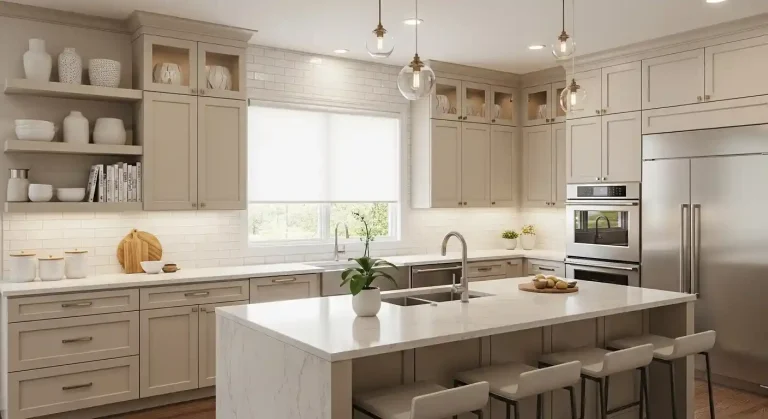
If you’ve got oak cabinets, think about whether you want things to match or contrast. Matching tones give you that smooth, warm flow—especially if you’re working with light or honey oak.
But if you want something bolder, darker floors like walnut or deep gray can make those cabinets stand out. It’s a personal call, really.
Countertops are another piece of the puzzle. For light granite or marble, I’ll usually go for medium to dark floors for a bit of depth.
Darker countertops? I’d lean toward lighter floors to keep things from feeling too heavy. Balancing wood tones with stone is tricky, but it’s worth it—nobody wants a kitchen that feels flat or mismatched.
Choosing Suitable Wall Colors
Walls really change how oak flooring and cabinets look. For lighter oak floors, I usually lean toward soft, neutral walls like beige, cream, or muted gray.
These tones keep the space open and welcoming. Darker oak floors? I think pale blues or greens fit nicely, adding a little calm without taking over the whole vibe.
When the kitchen doesn’t get much natural light, I go for warm wall colors—light tan or a gentle yellow can make the space feel cozier. Neon or super-bright colors just seem to fight with the wood’s natural tones, so I steer clear.
It’s better to pick wall colors that work with both your flooring and cabinets. That way, everything feels balanced—at least, that’s what I’ve noticed.