Is a Fruit Platter Considered a Dish? Understanding Culinary Classification


When planning menus or discussing catering options, a question that occasionally arises is: is a fruit platter considered a dish?
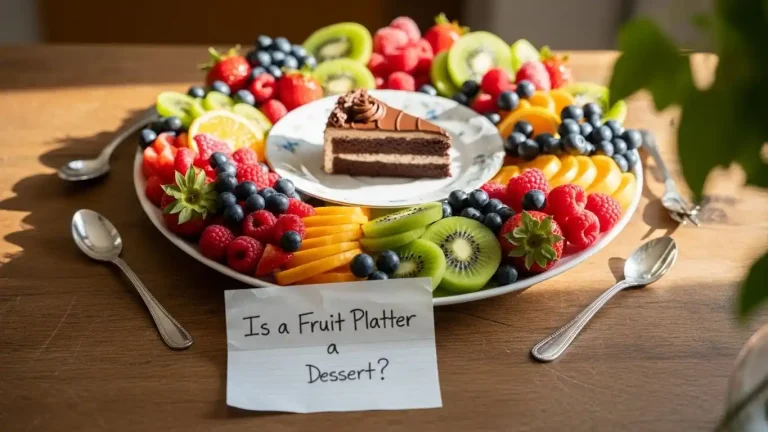
Yes, a fruit platter is considered a dish. It is typically classified as a prepared arrangement of assorted fruits served as an appetizer, side, or dessert.
This comprehensive guide explores the definition of a dish in culinary contexts, examines how fruit platters fit into these classifications, and clarifies why fruit platters absolutely deserve recognition as legitimate dishes in modern cuisine.
Defining What Constitutes a Dish
To answer whether is a fruit platter considered a dish, we first need to establish what culinary professionals mean by the term “dish.”
In culinary terminology, a dish refers to a prepared food item presented for consumption. It encompasses everything from simple preparations to complex multi-component creations.
A dish doesn’t necessarily require cooking—it simply needs to be thoughtfully prepared and presented for serving.
By this definition, a fruit platter clearly qualifies as a dish.
It involves careful selection of ingredients, thoughtful preparation including washing, cutting, and arranging, and intentional presentation designed to appeal to those consuming it.
The fact that minimal or no heat is applied doesn’t disqualify it from being a dish—consider cold soups, salads, or ceviche, which are universally recognized as dishes despite not being cooked.
The Evolution of Culinary Terminology

Contemporary culinary understanding has evolved significantly from traditional definitions that emphasized cooking techniques.
Modern cuisine recognizes an increasingly broad spectrum of preparations as legitimate dishes, reflecting changing food cultures and health consciousness (source: Dish Pairing).
Today’s culinary professionals acknowledge that dishes can be:
- Hot or cold
- Cooked or raw
- Simple or complex
- Single-component or multi-component
- Traditional or contemporary
A fruit platter fits comfortably within this expanded understanding.
It’s a prepared food presentation that requires skill in selection, preparation, arrangement, and presentation—all hallmarks of culinary dishmaking.
Fruit Platters as Professional Culinary Offerings
In professional catering and foodservice contexts, fruit platters are unquestionably classified as dishes.
Catering companies bill them as separate menu items, restaurants feature them on their menus, and culinary schools teach proper fruit platter preparation techniques.
This professional recognition affirms their status as legitimate dishes.
Catering Industry Standards:
Professional catering services list fruit platters alongside other appetizers, desserts, and sides.
They’re priced as distinct menu offerings with specific portion sizes and pricing structures, just like any other dish would be.
The fact that professional caterers and restaurants treat them as billable dishes confirms their legitimate status in the culinary world.
Menu Placement:
When you see a fruit platter on a restaurant menu or catering options list, it appears alongside other dishes—not as a filler option or afterthought.
It commands pricing comparable to other prepared items and is described with the same attention to detail as other menu offerings.
Culinary Training:
Culinary schools teach fruit platter preparation as part of their curriculum, teaching students about knife skills, color theory, composition, and food safety as they relate to fruit preparation.
This academic recognition reflects the dish’s legitimate status in professional cooking.
Components and Complexity of Fruit Platters
Understanding what goes into creating a quality fruit platter helps illustrate why it genuinely qualifies as a dish requiring culinary skill and attention.
Selection and Sourcing:
Creating an excellent fruit platter begins with selecting the right fruits at peak ripeness.
This requires knowledge of seasonal availability, understanding when different fruits are at their best, and having relationships with quality suppliers.
A chef preparing a fruit platter must know which varieties of melons are sweetest, which berries are firmest, and how to select citrus that’s both juicy and visually appealing.
Preparation Techniques:
Preparing fruit professionally involves more than simply cutting it. It requires understanding proper knife techniques, knowing which cuts work best for different fruits, and ensuring food safety throughout the process.
Different fruits demand different approaches—melon might be cut into cubes or decorative shapes, berries might be left whole or halved depending on size, and citrus might be segmented or sliced.
Composition and Arrangement:
Creating a visually appealing fruit platter requires understanding color theory, balance, and composition.
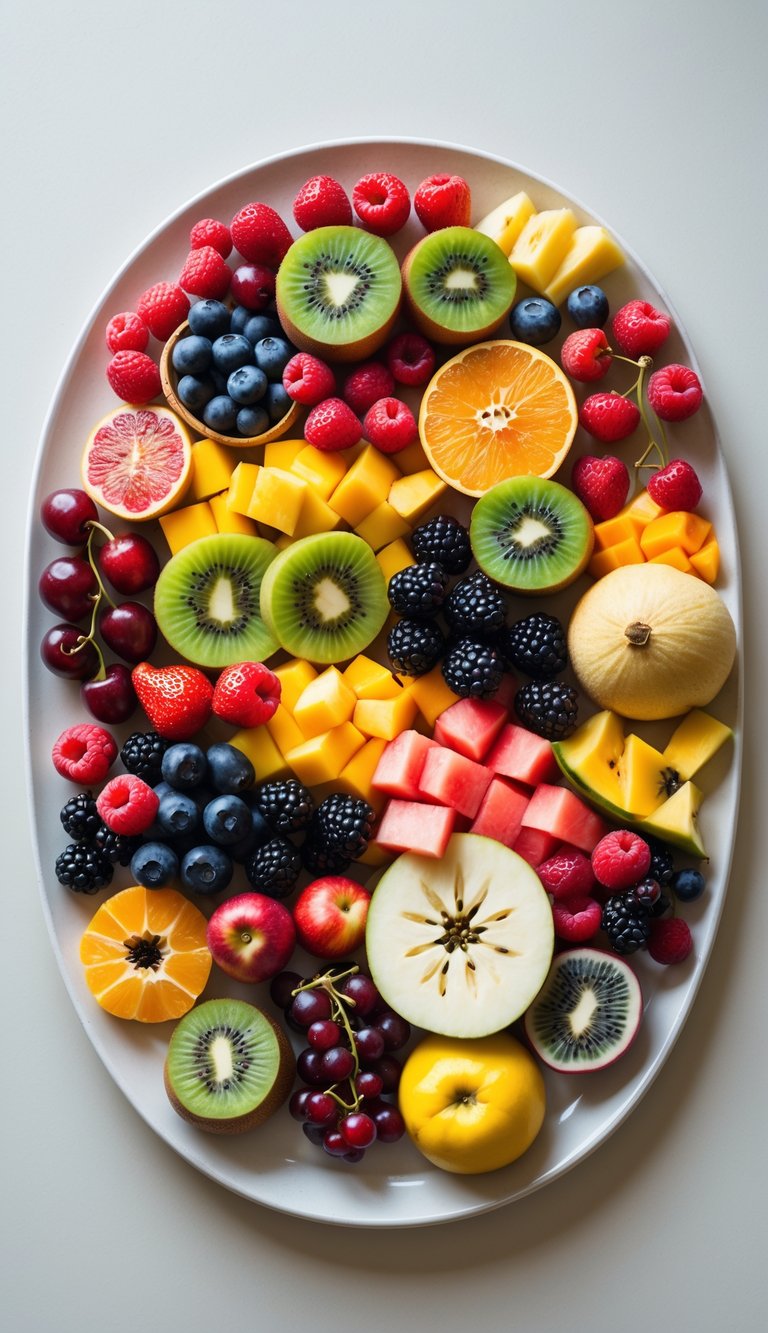
A well-prepared platter demonstrates thoughtful arrangement where colors complement each other, textures vary for visual interest, and the overall presentation is both beautiful and functional for guests to access pieces easily.
Timing and Preservation:
Professional fruit platter preparation involves understanding how different fruits hold up over time, knowing when to cut certain elements to maintain freshness, and employing proper storage techniques.
This technical knowledge is crucial to delivering a quality product.
Complementary Elements:
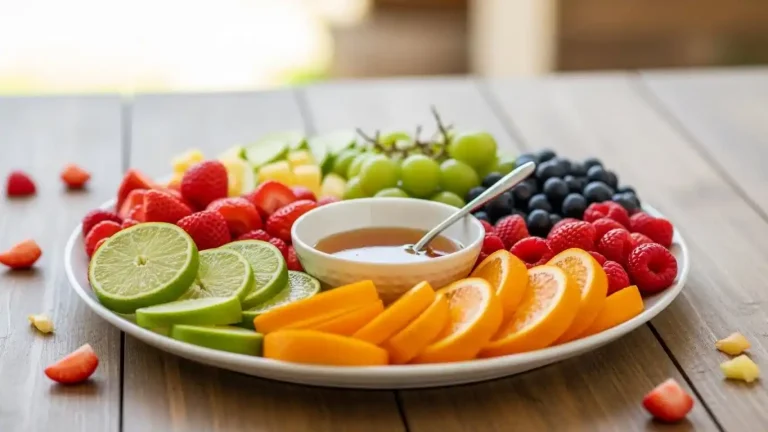
Many fruit platters include accompanying components like chocolate ganache, yogurt dips, honey drizzle, or whipped cream.
Creating these accompaniments and determining how to integrate them requires additional culinary skill (source: Simply Delicious).
Comparative Analysis With Recognized Dishes
Consider how fruit platters compare to other items universally recognized as dishes:
Salads: Salads are widely accepted as dishes despite typically being served cold and uncooked. They require selection of ingredients, cutting techniques, arrangement, and often complementary dressings. Fruit platters involve remarkably similar skill sets and preparation processes.
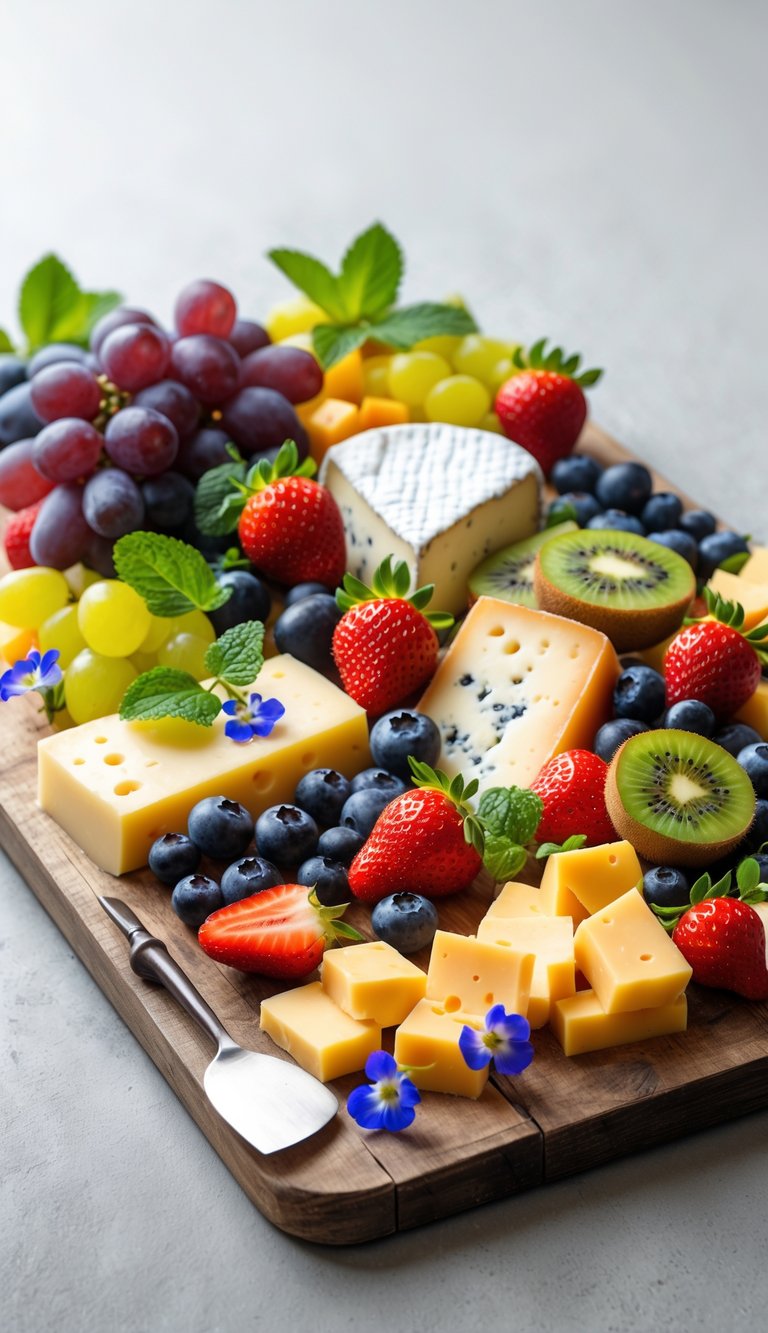
Cheese Boards: Cheese platters and charcuterie boards are enthusiastically recognized as dishes, appearing on restaurant menus and catering options. They involve selection, arrangement, and presentation of ready-to-eat components. Fruit platters are essentially the fruit equivalent of these recognized items.
Sushi: Sushi is universally respected as a legitimate dish despite involving no cooking in many cases. It focuses heavily on ingredient quality, preparation technique, knife skills, and artistic presentation. Fruit platters similarly emphasize these qualities.
Crudités and Vegetable Platters: Raw vegetable platters with dips are standard offerings in catering and entertaining contexts and are recognized as legitimate dishes. Fruit platters are fundamentally similar preparations.
The Role of Presentation in Establishing Dish Status
One key factor that elevates a fruit platter to legitimate dish status is intentional presentation.
A fruit platter isn’t simply fruit thrown together—it’s thoughtfully arranged to create visual appeal and facilitate consumption.
Artistic Arrangement:
Professional fruit platters demonstrate composition principles, color balance, and aesthetic consideration.
The arrangement isn’t haphazard; it’s carefully considered to create visual impact.
Functional Design:
While beautiful, the arrangement also serves function—ensuring pieces are accessible to guests, that juices don’t overwhelm certain areas, and that the presentation remains attractive throughout the event.
Professional Presentation:
Quality fruit platters are often presented on elegant serving pieces, perhaps with complementary linens or garnishes.
This professional presentation reinforces their status as intentional, prepared dishes rather than casual offerings.
Cultural and Culinary Recognition
Different culinary traditions have long recognized fruit presentations as legitimate dishes. In Mediterranean cuisine, fresh fruit is a respected course.
In Middle Eastern cuisine, fruit platters are central to hospitality traditions. These cultural acknowledgments further validate the dish status of fruit platters globally.
Modern Culinary Context
Contemporary food culture increasingly celebrates diverse preparations, including those that challenge traditional cooking-based definitions of “dish.”
Plant-based cuisine, raw food preparations, and health-conscious dining have all expanded what society recognizes as legitimate dishes. Fruit platters fit naturally within these modern culinary movements.
The rise of wellness-focused entertaining, farm-to-table movements, and appreciation for ingredient quality has elevated fruit platters from simple side offerings to respected dishes worthy of attention and skill.
Addressing Common Misconceptions
Some people hesitate to call fruit platters “dishes” because they involve minimal or no cooking. However, this reflects outdated culinary thinking.
Modern professional culinary practice recognizes that cooking isn’t a requirement for something to be a dish.
Many factors beyond heat application determine dish status: intentional preparation, skillful execution, thoughtful presentation, and serving within a meal context.
FinThoughts
Fruit platter meets every reasonable definition of a culinary dish: it’s a prepared food item requiring skill and attention, presented intentionally for consumption.
Professional caterers, restaurants, and culinary schools treat it as a legitimate dish. It involves technique, knowledge, and artistry comparable to other widely recognized dishes.
The fruit platter’s status as a dish is reinforced by its professional presence in catering and foodservice, its appearance on restaurant menus, and its role in culinary education.
It requires understanding ingredient selection, preparation techniques, composition principles, and timing—all hallmarks of professional dishmaking.
Whether served as an appetizer, snack, or dessert, whether presented simply or elaborately, a fruit platter is unquestionably a dish. It represents skilled food preparation deserving recognition and respect alongside other culinary creations.
The next time you encounter a beautifully arranged fruit platter, you can confidently recognize it for what it truly is: a legitimate culinary dish showcasing skill, knowledge, and artistry.