10 Fruit Platter Garnish Ideas to Elevate Your Party Spread

You want your fruit platters to look fresh, festive, and effortless.
I’ll show some simple garnish ideas that lift color, flavor, and texture so your tray looks like it belongs at any party or casual get-together.
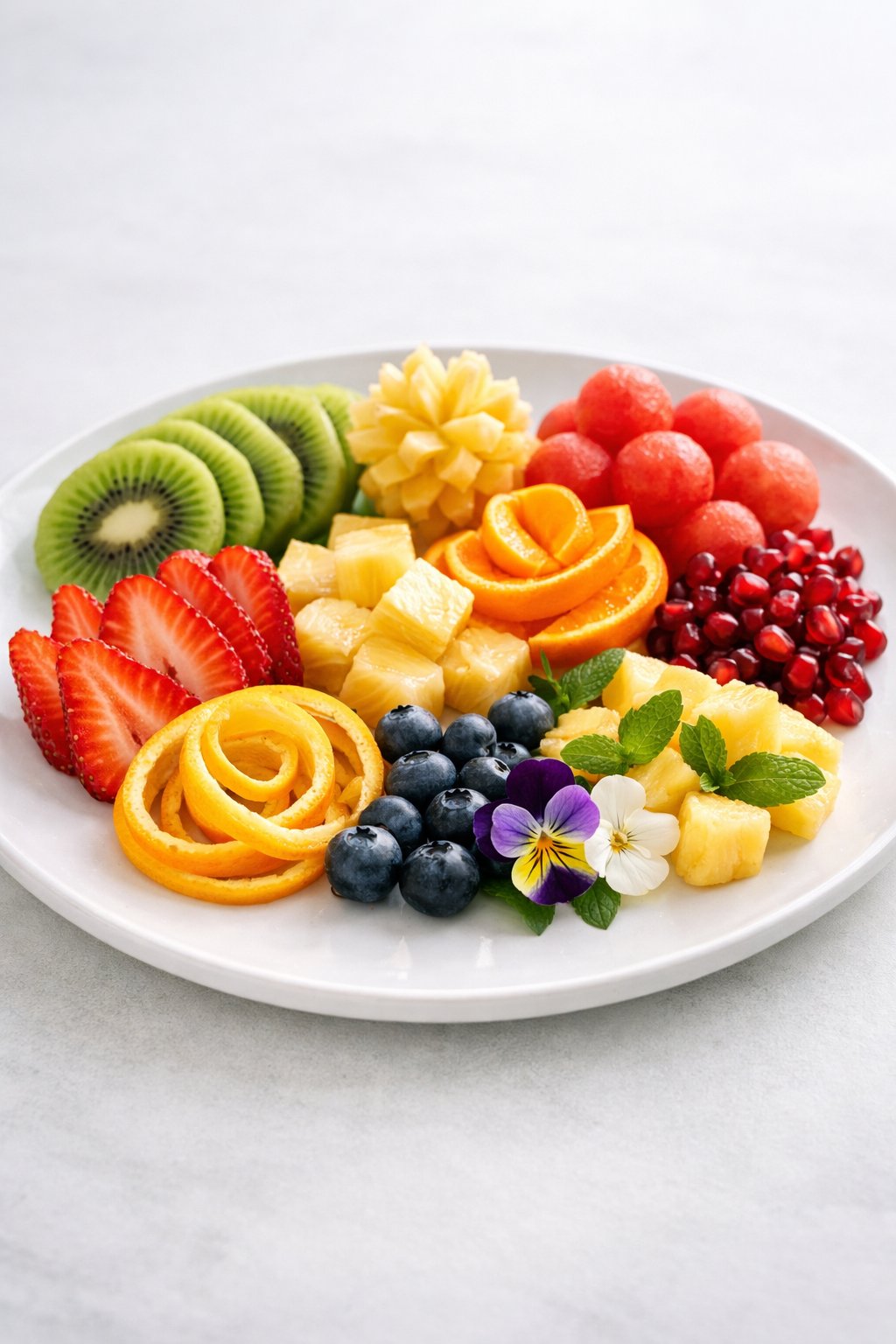
You’ll learn easy, seasonal garnishes that match common fruits and save prep time while making a big visual impact.
I’ll walk you through options from herbs and citrus to bright berries and edible flowers. Expect quick tips to keep each garnish fresh and pretty.
Fresh mint sprigs
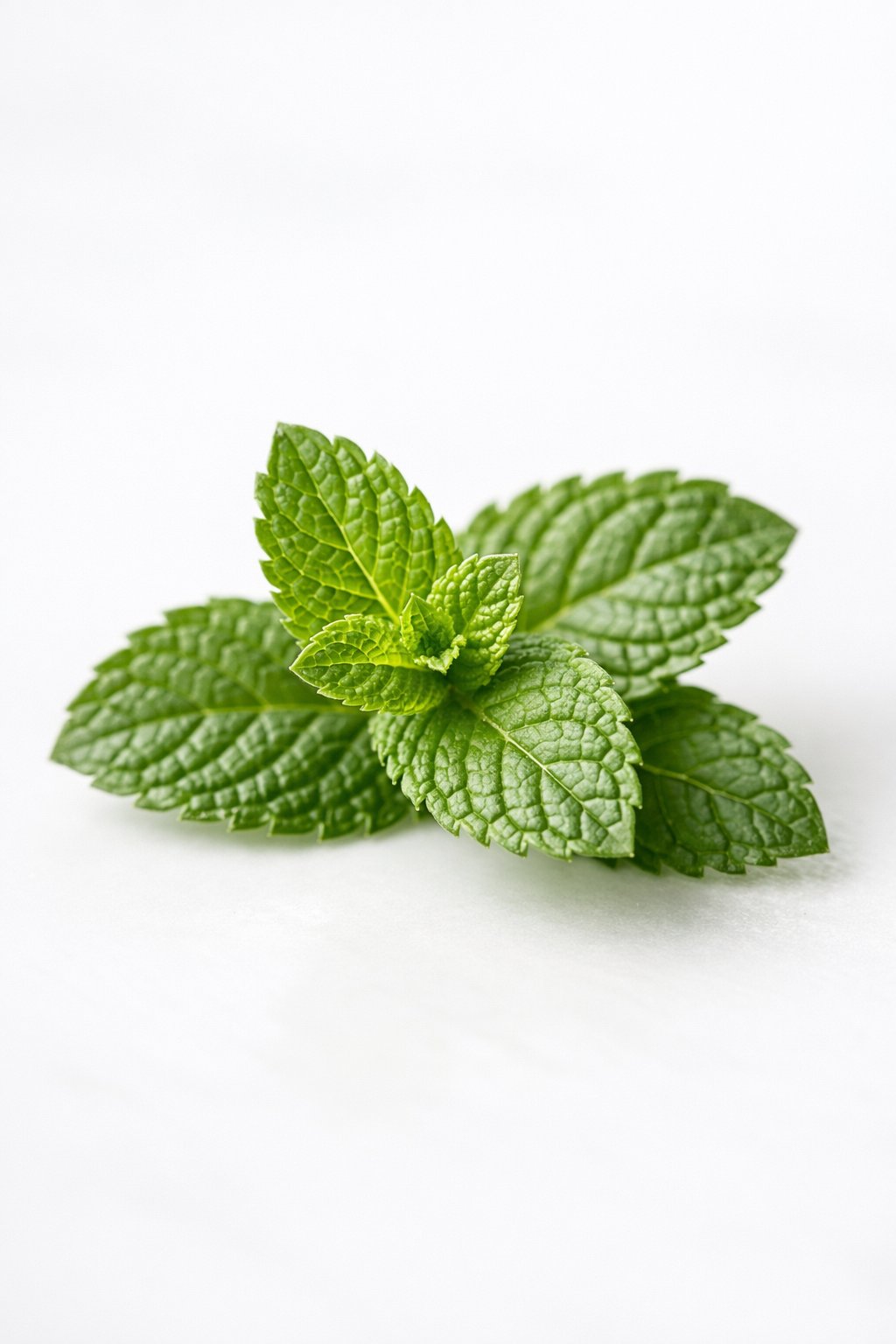
I tuck small mint sprigs between fruit clusters to add a fresh scent and bright green color. The leaves pop against berries and citrus and make the platter look tidy and lively.
I lightly rinse and pat them dry so they stay crisp. If I want a sweeter touch, I pair mint with a drizzle of honey or a yogurt dip.
Edible flowers like pansies or violets
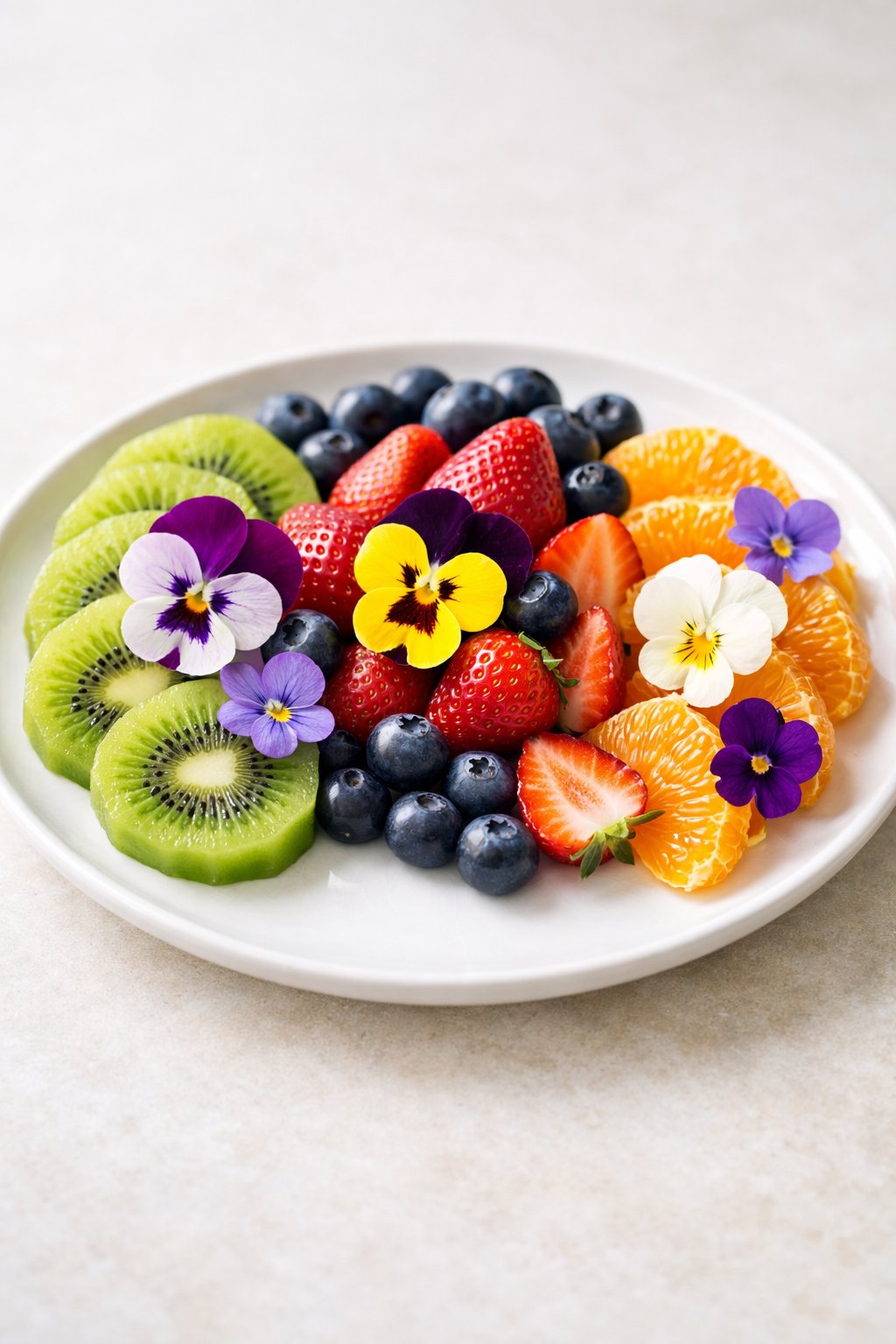
I love adding pansies or violets to fruit platters for color and charm. Their petals taste mild and slightly sweet, and they hold shape well on tarts or sliced fruit.
I pick flowers grown for eating and wash them gently. A few whole blooms or scattered petals make the platter look fresh and special.
Pomegranate seeds
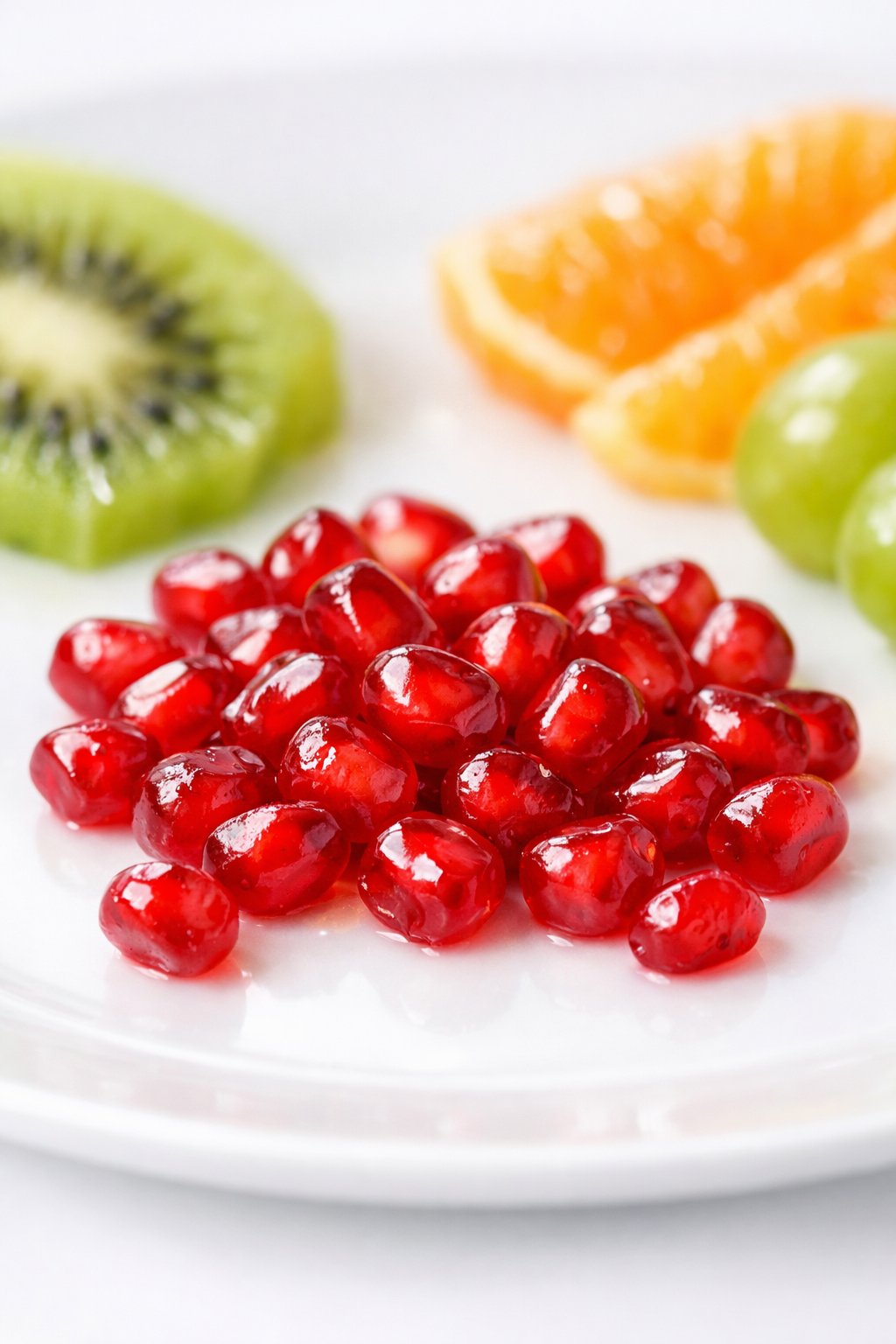
I love sprinkling pomegranate seeds across a fruit platter for color and crunch. They add bright red contrast and a juicy pop that pairs well with cheese and mint.
I often scatter them over yogurt or around a halved pomegranate centerpiece to draw the eye.
Thin lemon or lime slices
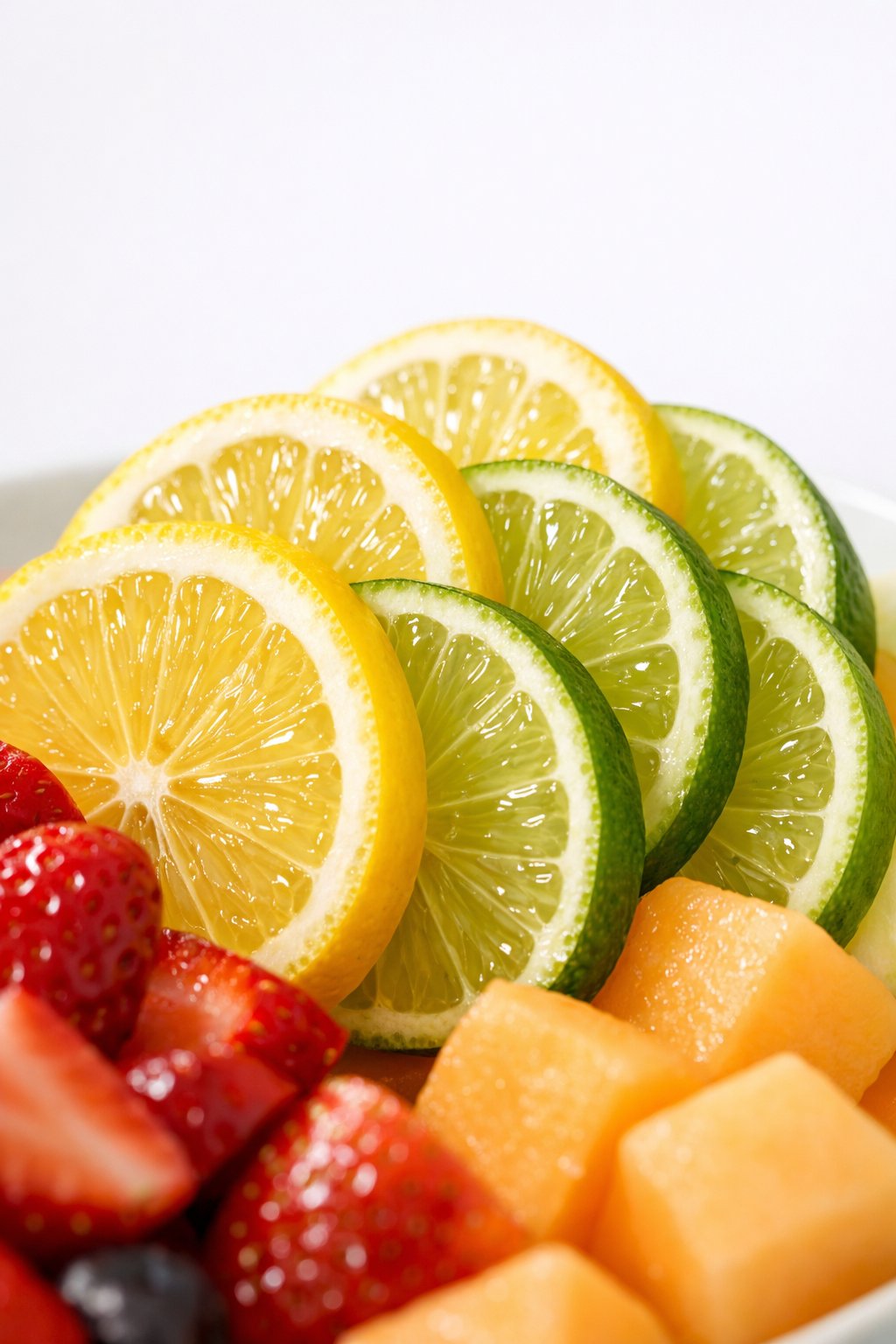
I like thin slices for bright color and light citrus scent. They fit neatly on the edge of a platter or between fruit layers.
I cut them crosswise with a sharp knife for even rounds. A quick squeeze over berries adds fresh flavor without overpowering the dish.
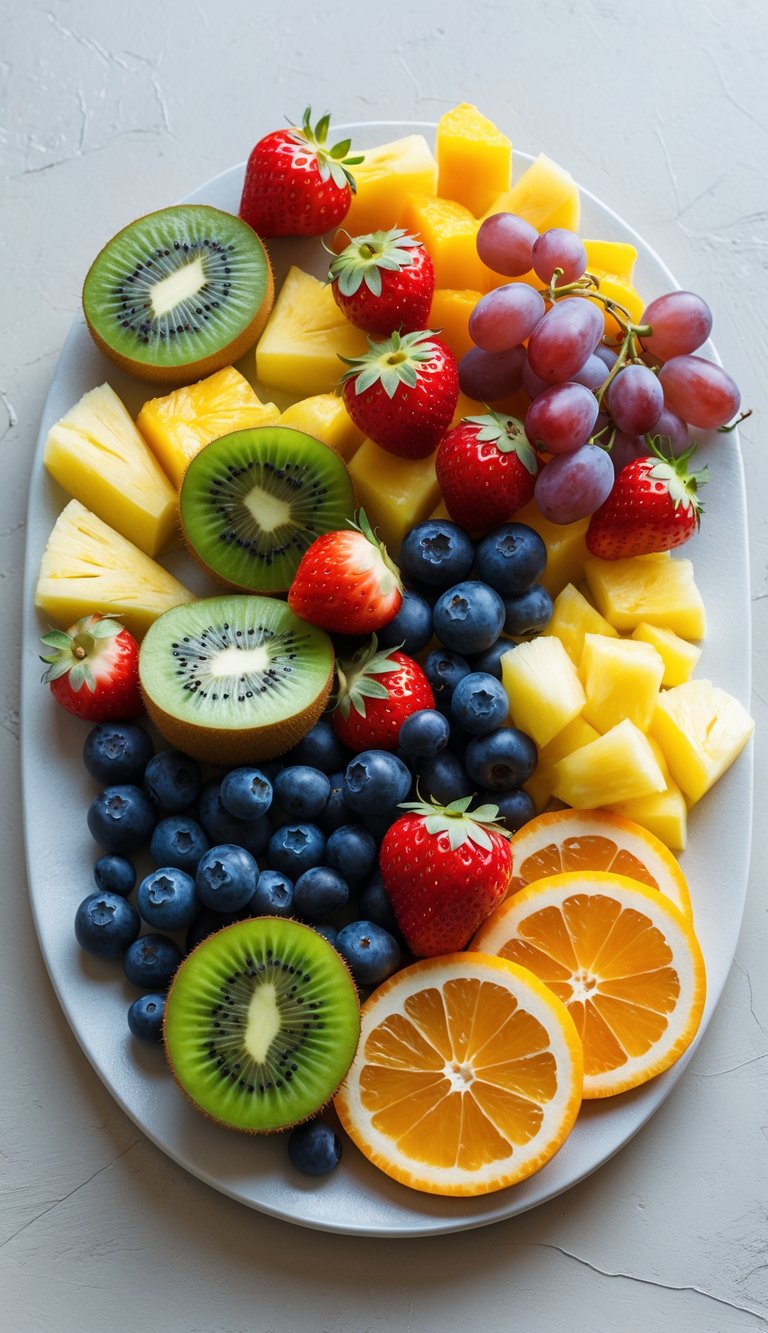
Blueberry clusters
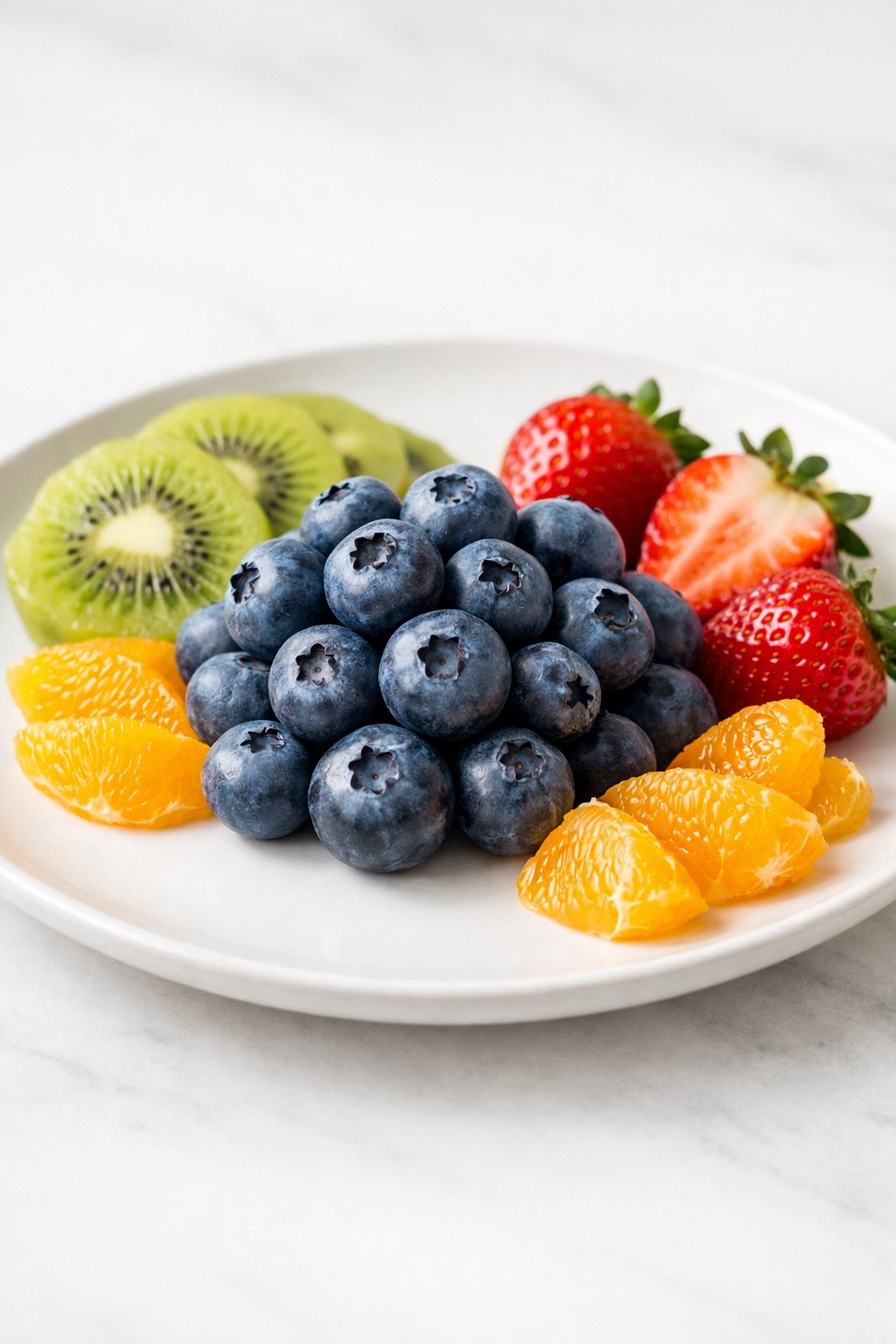
I like to group blueberries into small clusters on a platter. They add deep color and a bite-sized burst of sweetness.
I often leave a few stems on for a rustic look. They pair well with mint sprigs or lemon slices nearby.
Rosemary sprigs
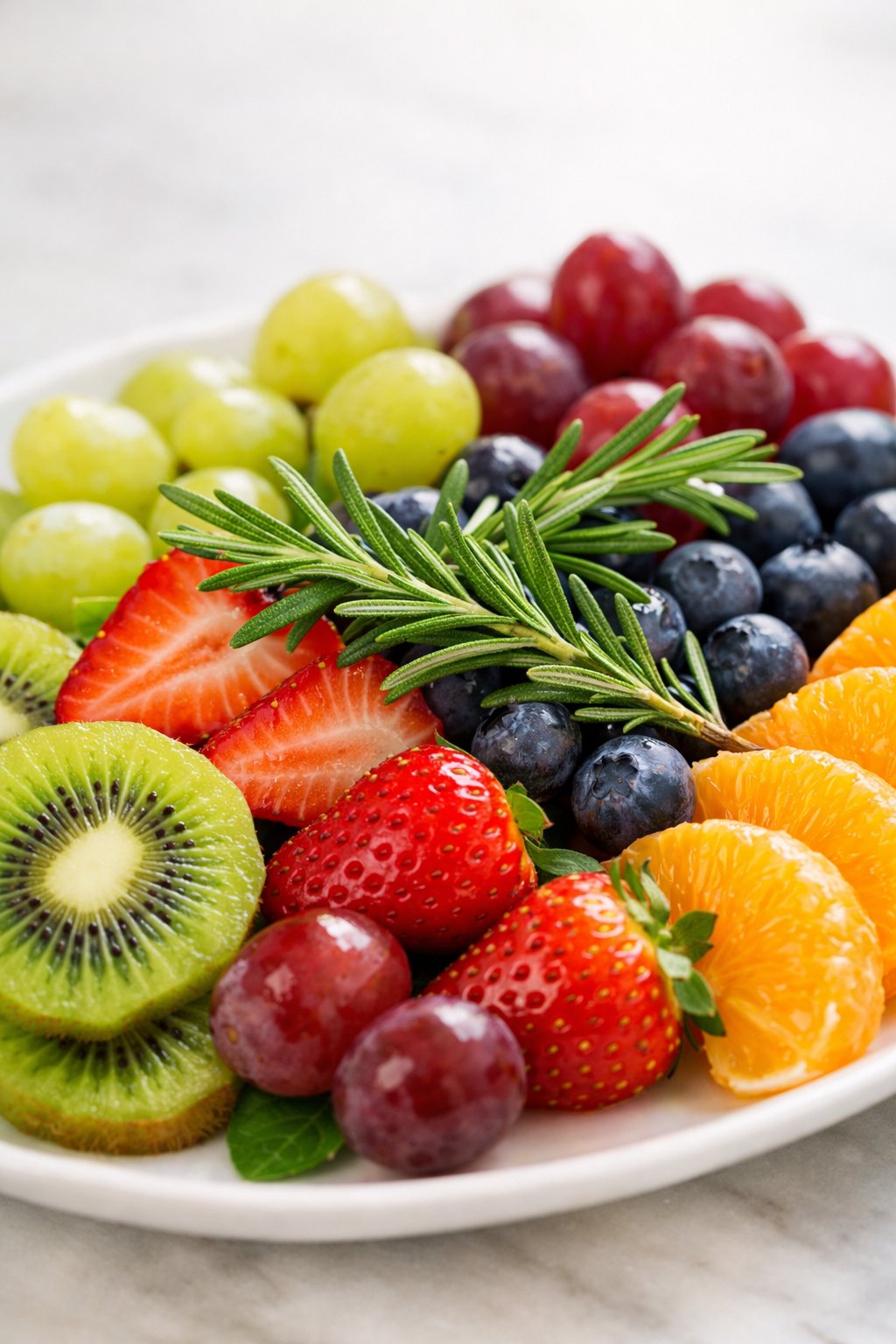
I tuck rosemary sprigs between fruit pieces to give my platter a fresh, evergreen look. The herb adds a subtle pine scent that pairs well with berries and citrus.
Sometimes I dust the tips with sugar for a frosted effect. That little touch makes the platter feel seasonal and festive.
Star anise pods
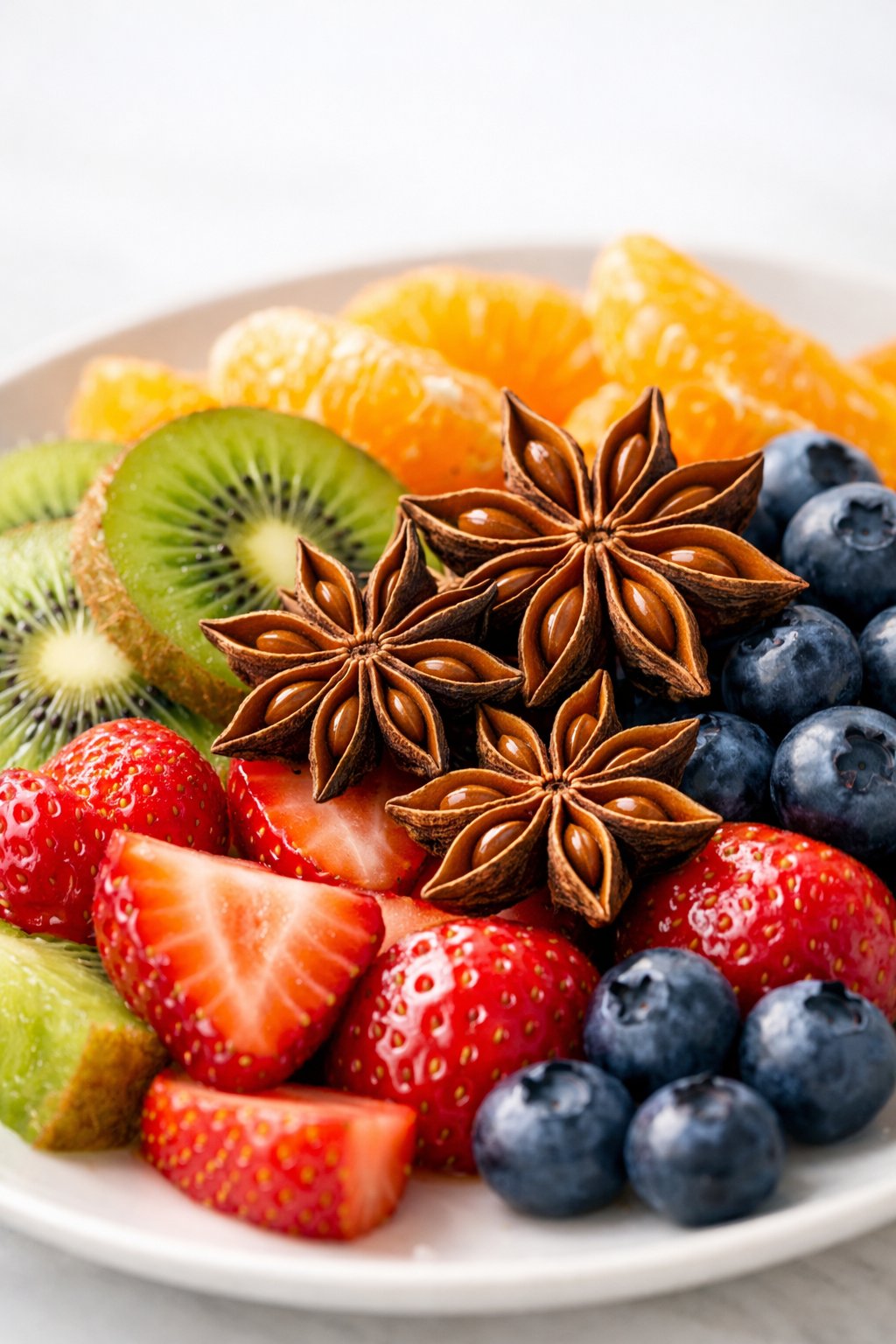
I like adding star anise pods to fruit platters for their pretty star shape and warm look. They give a mild licorice scent that pairs well with citrus and tropical fruits.
I usually scatter a few pods around the platter or add one near a dipping sauce. They’re mainly decorative, so I keep them whole and take them off before anyone eats.
Kiwi slices
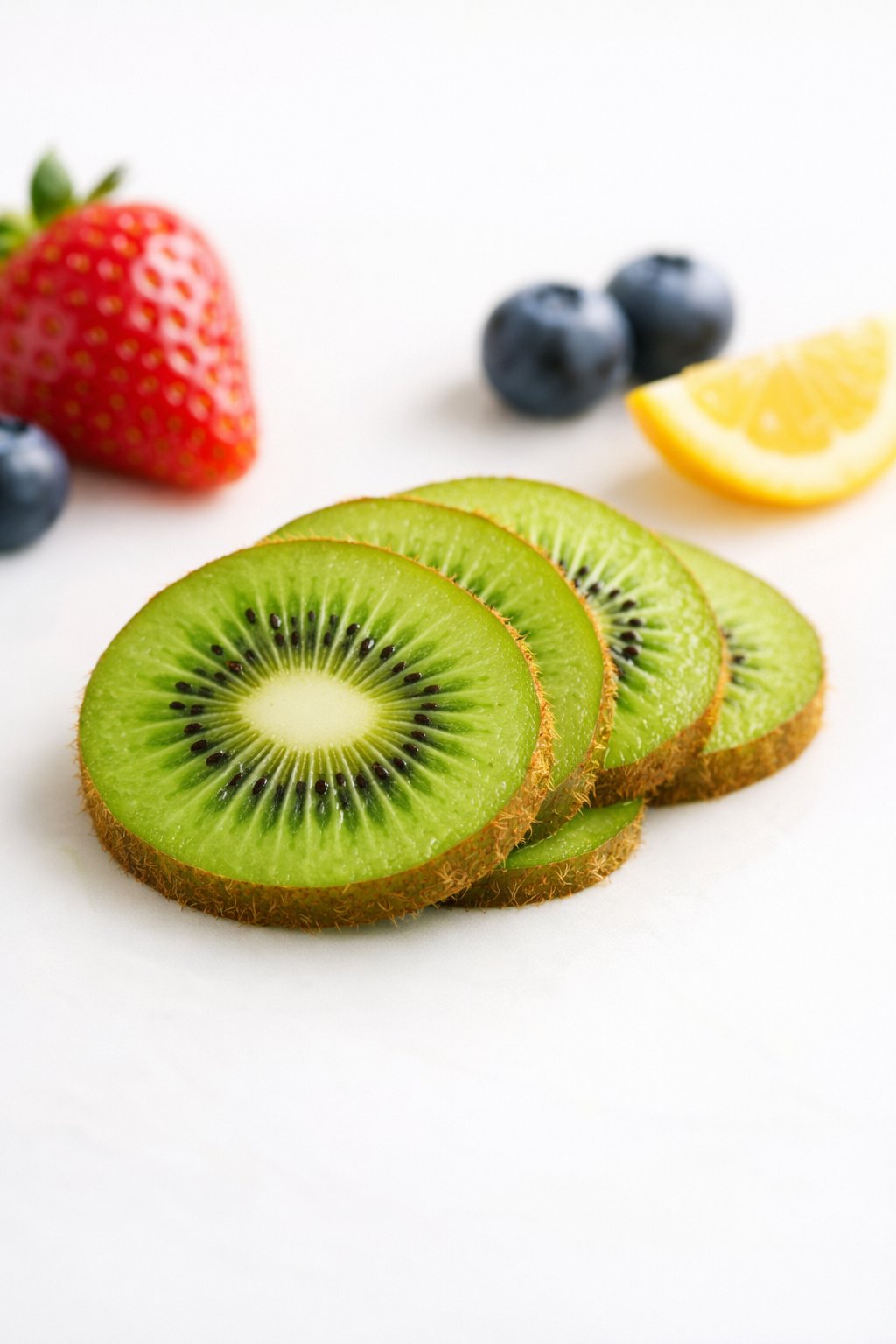
I love using kiwi slices to add bright green color to a fruit platter. I peel and slice them thin so the seeds and flesh show, which looks fresh and neat.
Sometimes I cut kiwis into small flowers or fan the slices for a fancy touch. I pair them with berries or orange wedges to make the colors pop.
Strawberry halves with leaves
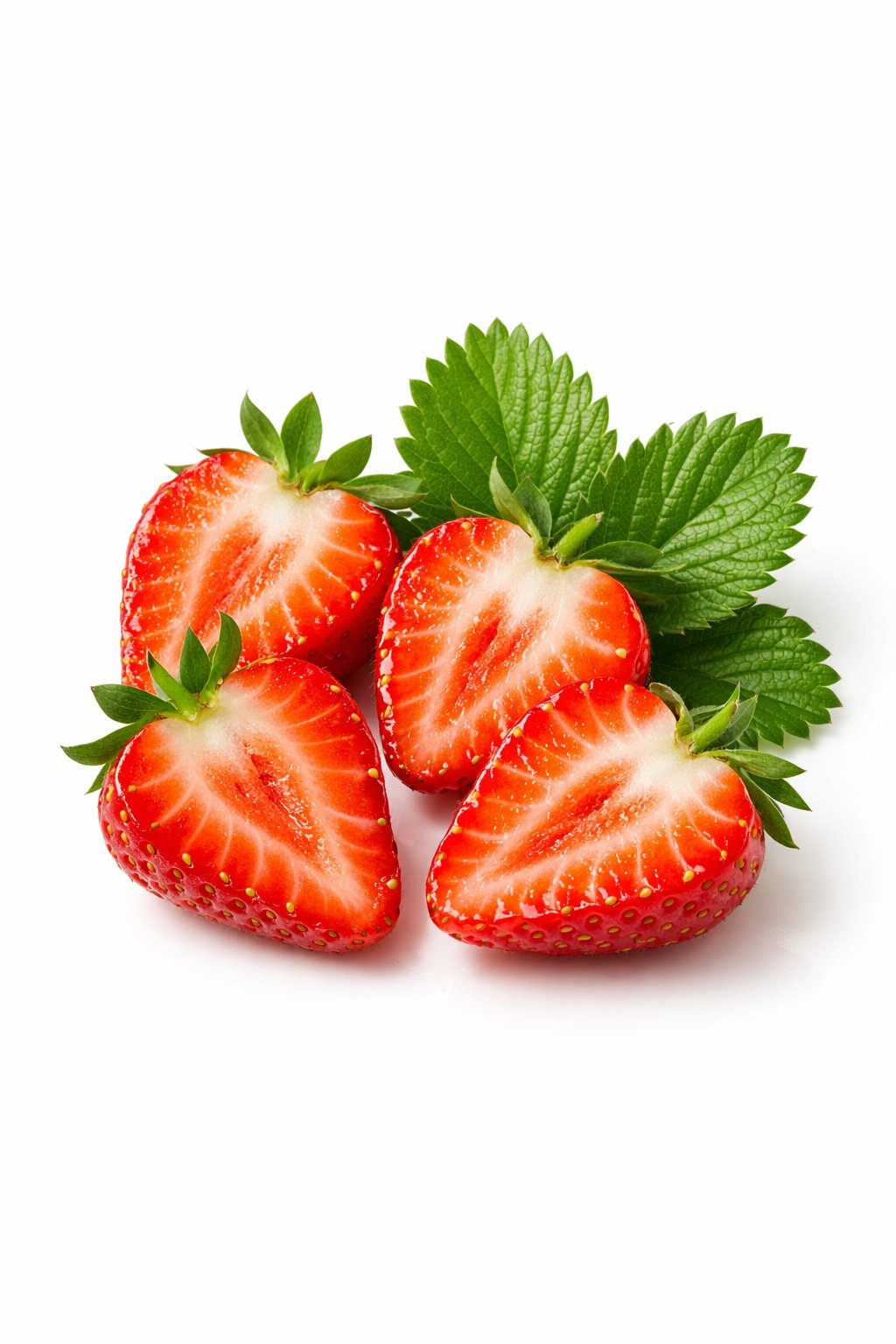
I halve strawberries lengthwise to show the bright red inside and keep the green leaves for color.
I arrange them facing up on the platter so the leaves add a fresh, natural look.
I trim any white core from large berries for a neat finish. A light drizzle of lemon juice keeps them shiny and stops browning.
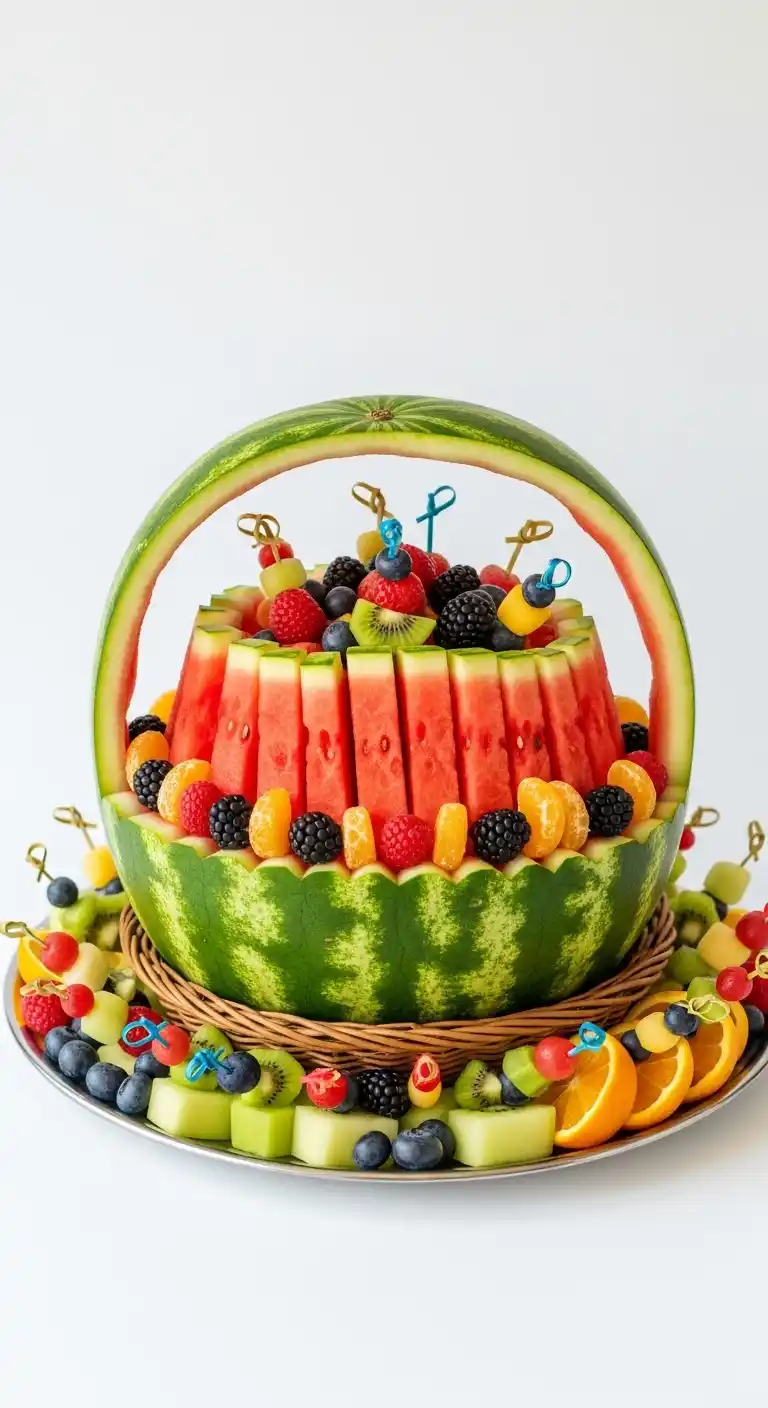
Blackberries
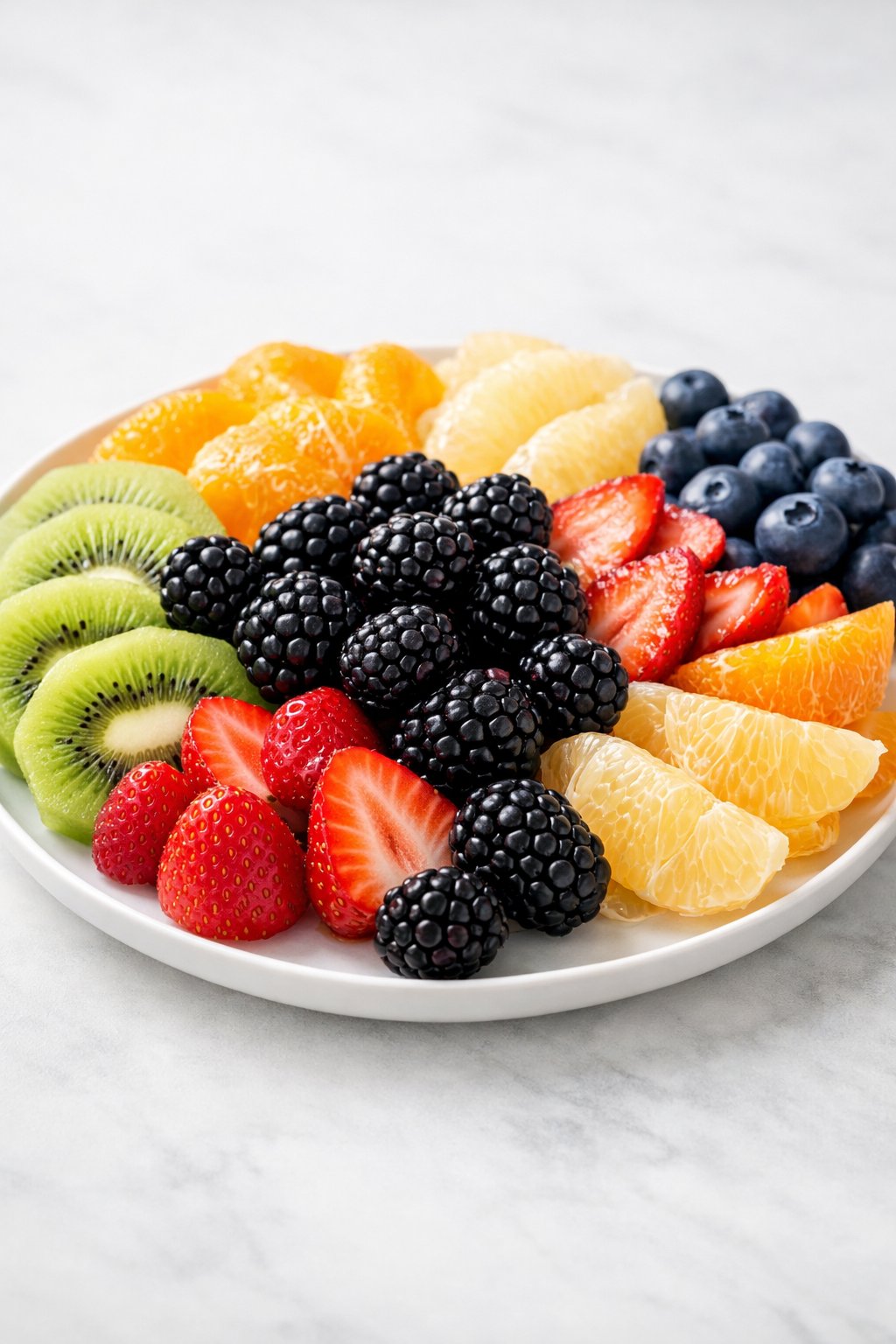
I like to scatter blackberries across a platter for deep color and a juicy bite. Their small size makes them great for filling gaps and adding texture without crowding other fruits.
I often cluster a few on small spoons for easy serving. They pair well with mint sprigs or a light dusting of powdered sugar for a simple, pretty touch.
Seasonal Garnish Tips
I focus on two simple things: keeping fruit as fresh as possible and adding small, safe edible flowers.
Both choices make the platter look better and taste better without extra work.
Maximizing Freshness
I pick fruit that holds up well for the event time. Firm fruits like apples, pears, and clementines stay crisp longer than ripe peaches or berries.
I slice softer fruit right before serving and keep sliced pieces chilled in the fridge on a tray covered with plastic wrap.
I use acid to slow browning. A light brush of lemon or lime juice on apples, avocados, and pears helps them stay bright.
For berries, I rinse them quickly, pat dry, and store in a single layer on paper towels to prevent sogginess.
I also separate juicy fruits like watermelon or pineapple from delicate ones to avoid moisture transfer.
Equipment tips I use: a chilled serving board, small bowls for wet fruit, and toothpicks for easy grabbing.
I arrange heartier fruits on the edges and delicate items in the center to protect them during transport.
Incorporating Edible Flowers
I always pick flowers that are safe to eat and haven’t seen any pesticides. Nasturtiums, violas, calendula petals, and borage are my go-to choices most days.
Florist flowers? I skip them unless I’m sure they’re food-safe. There’s no reason to risk it.
I don’t go overboard with the flowers. Just a few whole blooms on the platter, maybe a scatter of petals over some soft cheese or citrus. That usually does the trick for a nice look.
Before using, I rinse flowers gently and pat them dry. If the blooms are big, I tear the petals so they’re easier to eat—no one wants to wrestle with a giant flower at a party.
Pairing flavors is key. Minty nasturtiums seem to love citrus, while sweet violas work well with berries. Sometimes I wonder if guests even notice, but it feels worth it.
I always label any floral garnishes. Some people have allergies or just don’t want to eat flowers, and that’s totally fair.